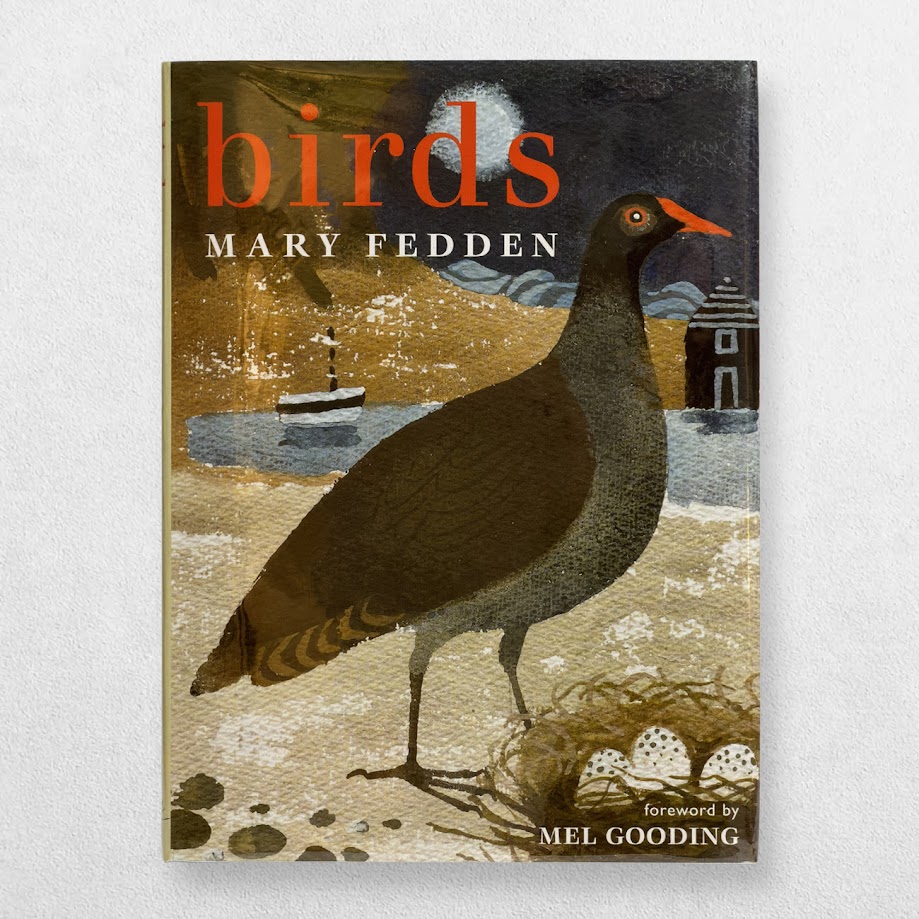
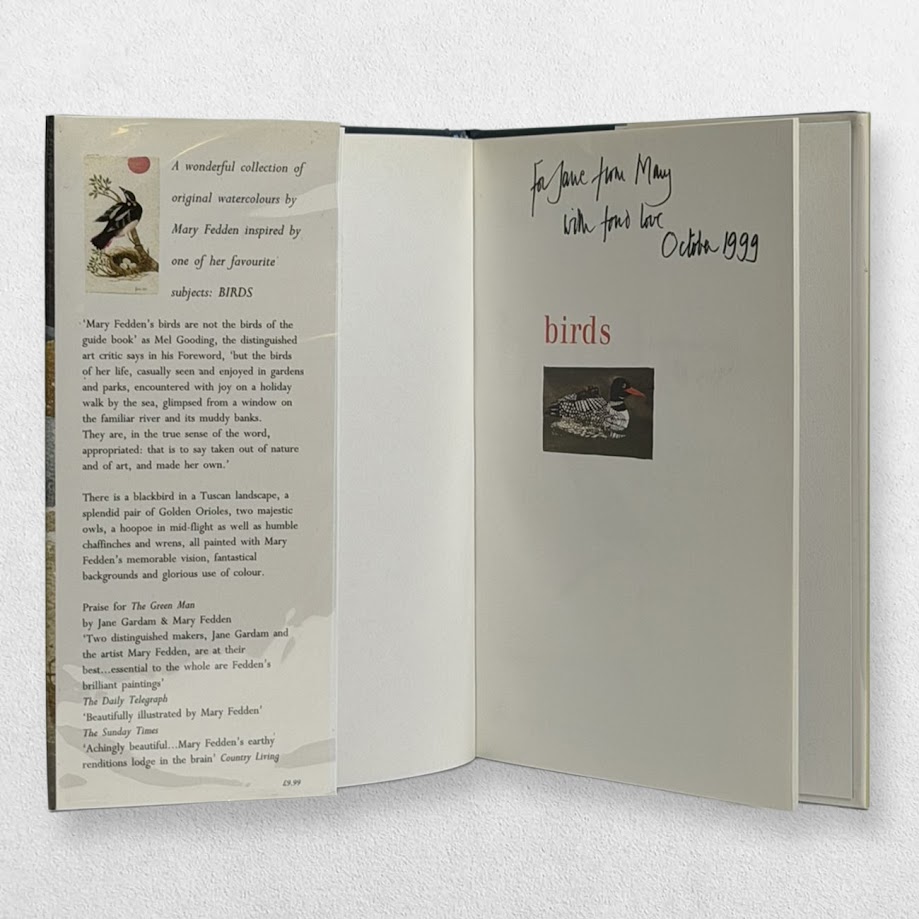
Birds – First Edition – Inscribed By Mary Fedden
Author: Fedden, Mary & Gooding, Mel
Publisher: Windrush Press
Price: £145 including postage in the UK
Publication Date: 1999
Edition: First edition
Size: Octavo
Condition: Fine in fine dustwrapper
Condition:
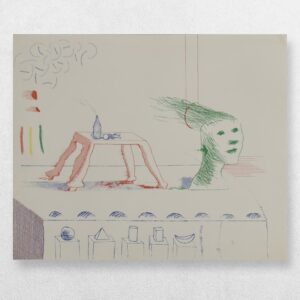
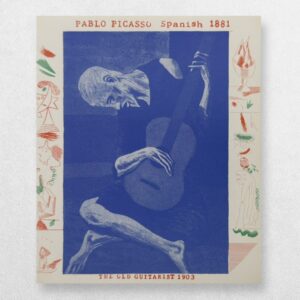
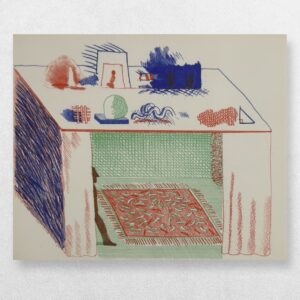
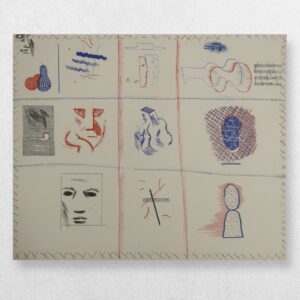
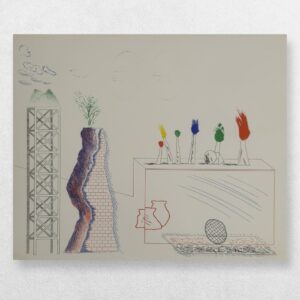
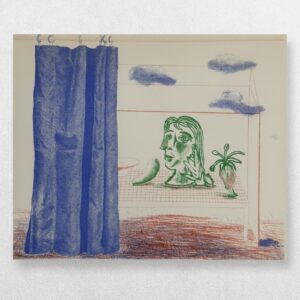
Illustrated throughout by Fedden in colour. Inscribed by the artist: ‘For Jane from Mary, with fond love October 1999’. Fine in fine dustwrapper.
Mary Fedden: A Brief Biography
Overview
Mary Fedden was one of the most recognisable figures in twentieth-century British painting, celebrated for her distinctive still lifes and quietly surreal compositions. Over a career spanning more than six decades, she combined a modern European visual language with an unmistakably English sensibility, achieving both critical respect and sustained commercial success.
Early Life and Formation (1915–1939)
Mary Fedden was born on 14 August 1915 in Bristol into a prosperous middle-class family; her father was a sugar broker, and artistic influence came partly from relatives, including her uncle, the painter Romilly Fedden.
Educated at Badminton School, she demonstrated an early and determined ambition to become a painter. At sixteen she entered the Slade School of Fine Art in London (1932–1936), where she studied under the theatre designer Vladimir Polunin. This period proved formative: she later described the transition from school to the Slade as transformative, both intellectually and creatively.
After graduating, Fedden supported herself through portrait commissions, teaching, and stage design work, including projects for Sadler’s Wells Theatre.
War Service and Early Career (1939–1945)
The outbreak of the Second World War interrupted her early artistic trajectory. Fedden contributed to the war effort through multiple roles: she served in the Women’s Land Army and the Women’s Voluntary Service, later working abroad as a driver for the Navy, Army and Air Force Institutes (NAAFI).
Alongside these duties, she produced commissioned murals linked to wartime propaganda. This period broadened her practical experience and reinforced her adaptability as a working artist.
Post-War Breakthrough and Artistic Maturity (1945–1960s)
Following the war, Fedden returned to painting with renewed focus. Her first solo exhibition in 1947 marked the beginning of a long sequence of regular shows across Britain.
In 1951 she married the painter and printmaker Julian Trevelyan, a partnership that proved both personally and professionally significant. The couple collaborated on mural commissions, including work for the Festival of Britain, and travelled extensively, exposing Fedden to a wide range of visual cultures.
During this period she developed the signature style for which she is best known:
- Bold, flattened forms
- Vivid, often contrasting colour palettes
- Compositions combining still life objects with landscape settings
- A subtle, sometimes whimsical or surreal sensibility
Her influences included modernists such as Henri Matisse and Georges Braque, as well as British contemporaries like Ben Nicholson and Anne Redpath.
Teaching and Influence
Fedden’s authority as an artist was reinforced by her academic role. From 1958 to 1964 she taught at the Royal College of Art, becoming the first woman tutor in the Painting School.
Her students included major figures of post-war British art, notably David Hockney and Allen Jones, indicating her influence on the next generation. She later taught at the Yehudi Menuhin School.
Her teaching combined technical discipline with an openness to stylistic exploration, reflecting her own eclectic approach to influence.
Mature Career and Recognition (1970s–1990s)
From the 1960s onwards, Fedden was firmly established as a leading figure in modern British painting. She exhibited consistently at major London galleries, including the Redfern Gallery and New Grafton Gallery, maintaining an unusually sustained exhibiting career.
Her institutional recognition followed:
- President of the Royal West of England Academy (1984–1988)
- Election as a Royal Academician (1992)
- Awarded an OBE for services to art
These honours reflected both her artistic achievement and her standing within British cultural institutions.
Artistic Practice and Style
Fedden’s work is most closely associated with still life, though she frequently blurred genre boundaries by placing objects within landscape contexts. Her compositions often juxtapose domestic items—fruit, ceramics, flowers—with distant views or architectural elements.
Key characteristics include:
- A strong sense of design and spatial organisation
- Emphasis on colour harmony and contrast
- Flattened perspective, influenced by modernist painting
- A quiet, contemplative mood, sometimes bordering on the surreal
Importantly, Fedden resisted heavy symbolism; she maintained that her subjects were chosen for their visual and personal appeal rather than allegorical meaning.
Later Life and Continuing Practice
Fedden remained remarkably productive well into old age, continuing to paint into her nineties. She lived and worked for decades at Durham Wharf on the River Thames, a studio shared with Trevelyan and central to her artistic life.
Her late work shows a slight shift towards more restrained tonal palettes, though her compositional clarity and stylistic identity remained intact.
Death and Legacy
Mary Fedden died in London on 22 June 2012 at the age of 96.
Her legacy is substantial:
- A large and widely collected body of work across oil, gouache, and collage
- Representation in major public collections, including Tate and regional galleries
- Enduring popularity in the British art market
- Influence on post-war British painters through both her teaching and example
Critically, Fedden occupies a distinctive position within modern British art: neither fully aligned with abstraction nor traditional realism, she forged a highly individual synthesis that remains immediately recognisable.
Conclusion
Mary Fedden’s achievement lies in the refinement of a personal visual language that balanced accessibility with sophistication. Her work demonstrates that modernism in Britain could be both decorative and intellectually grounded, intimate yet formally rigorous. As such, she remains one of the most enduring and widely appreciated painters of her generation.
Why buy from us?
At Hornseys, we are committed to offering items that meet the highest standards of quality and authenticity. Our book collection is meticulously curated to ensure that each edition is a valuable and authentic piece of bibliographical history. Here’s what sets us apart:
Authenticity and Provenance: Every book is researched, collated, and verified for authenticity.
Expert Curation: Each book is selected with a keen eye for significance, condition, and rarity, ensuring a collection that is both diverse and distinguished.
Customer Satisfaction: We strive to provide an exceptional customer experience, from detailed descriptions and provenance to secure and prompt delivery of your purchase.
Returns Policy: We offer an unconditional guarantee on every item. If you wish to make a return, books may be sent back to us within fourteen days of receipt for any reason. We request advance notification of returns, and books must be returned in the same condition as sent for a full refund.
Explore Our Collection:
Established in 1976, Hornseys’ is a family business based in Ripon. We buy and sell rare and signed books, artwork, maps, furnishings, bruins, ‘The Adventures of Tintin’ and many other carefully curated items. We exhibit regularly at London book-fairs. We sell to leading dealers and clients throughout the world. Authenticity is guaranteed on all our products. Postage is free in the UK and we also offer fully-insured and tracked worldwide shipping.