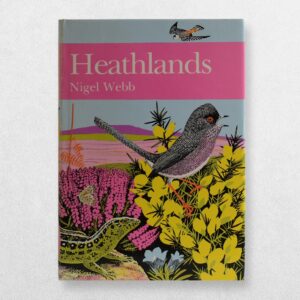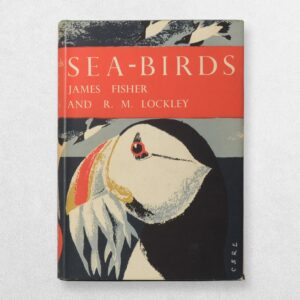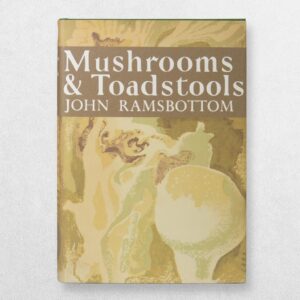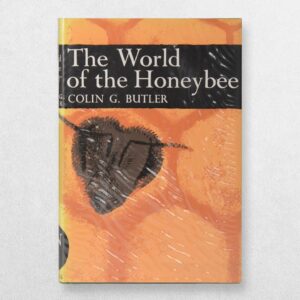
Collins New Naturalist – 83 – The Natural History Of Pollination – First Reprint – 1996
Proctor, Michael, Yeo, Peter & Lack, Andrew
£38.00
Out of stock
Product Description
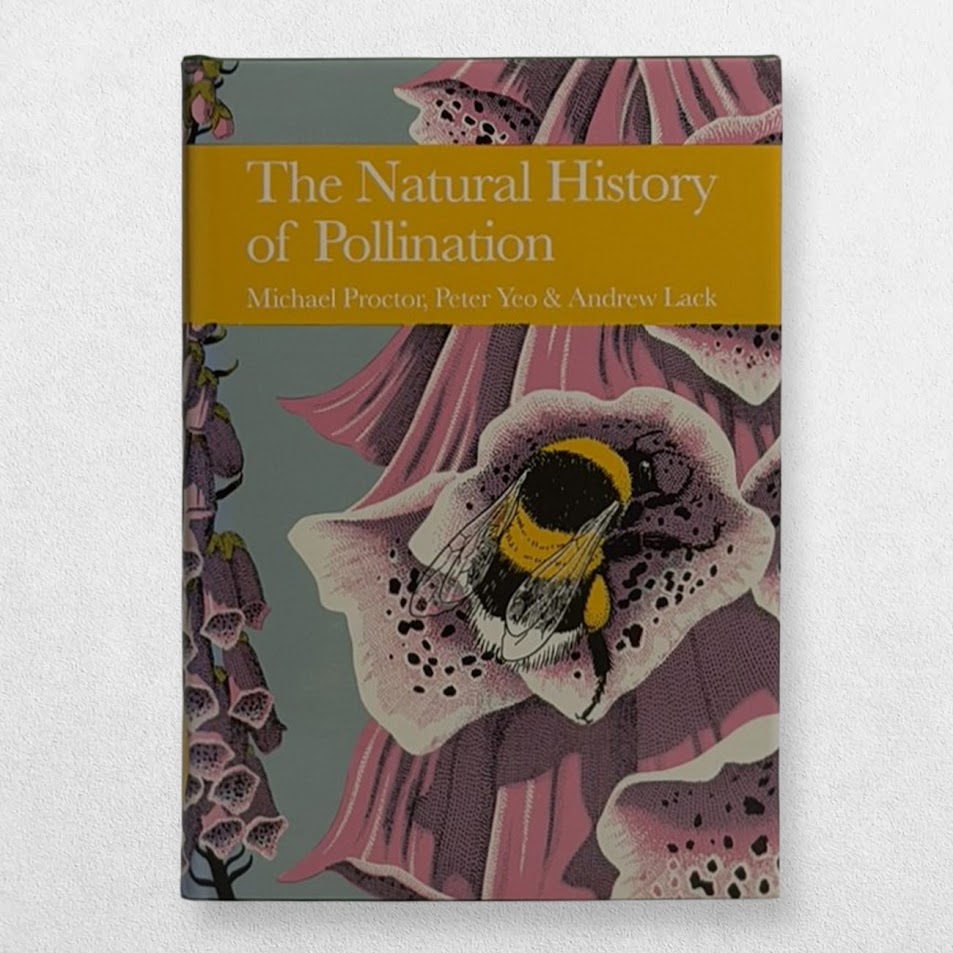
Collins New Naturalist – 83 – The Natural History Of Pollination – First Reprint – 1996
Author: Proctor, Michael, Yeo, Peter & Lack, Andrew
Publisher: Collins
Price: £38 including postage in the UK
Publication Date: 1996
Edition: First reprint
Size: Octavo
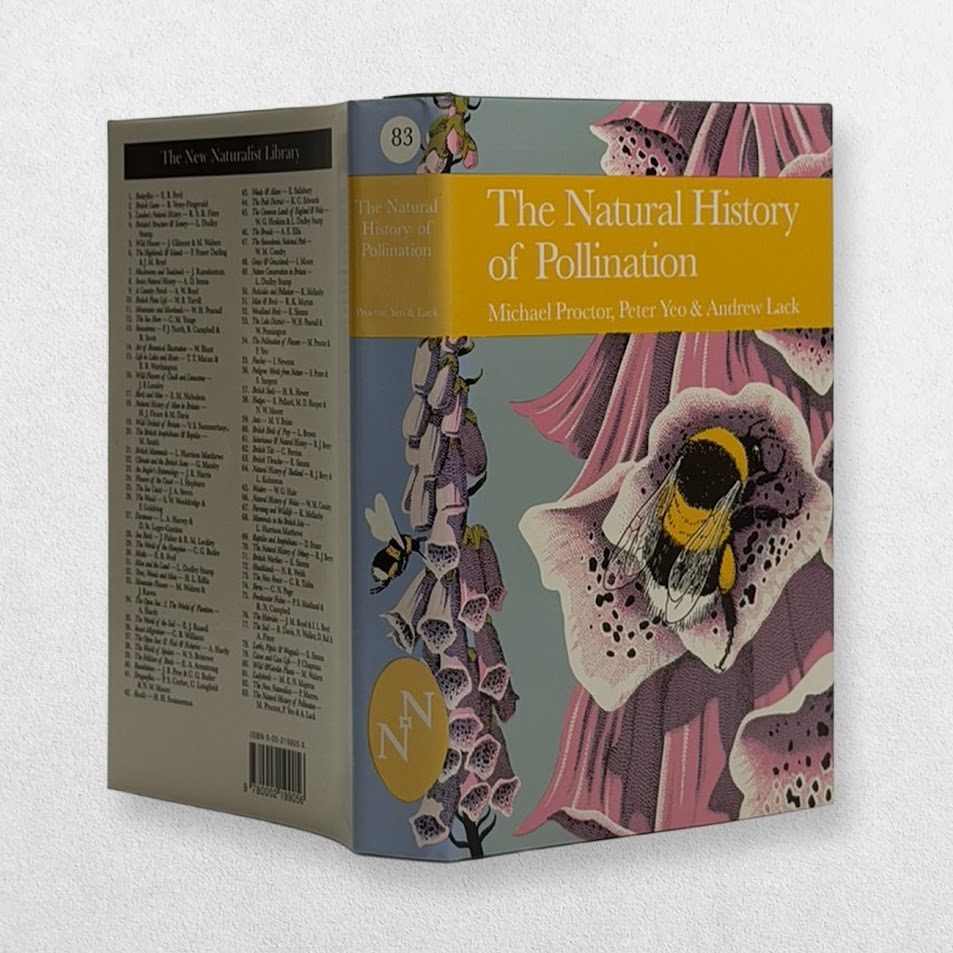
Binding: Original green cloth. Dustwrapper
Condition: Fine in near fine dustwrapper
Condition:
Dustwrapper artwork by Robert Gillmor. Cloth bright and clean with clean text block. A fine, tight, clean copy in very near fine, clean dustwrapper which is very slightly spine-faded. We usually have first editions of all the New Naturalist Series in stock, please contact us for more details.
The Natural History Of Pollination: New Naturalist 83: A Brief Overview
Overview
The Natural History of Pollination, volume 83 in the Collins New Naturalist series (published 1996), is a comprehensive synthesis of pollination biology, integrating botany, entomology, ecology, evolutionary biology, and behaviour. The volume treats pollination not as a single botanical process but as a web of interactions linking flowering plants with insects, birds, mammals and environmental context.
In keeping with the New Naturalist ethos, the book balances scientific depth with accessibility, presenting pollination as one of the most sophisticated examples of co-evolution in the natural world.
Conceptual Framework
Pollination as ecological exchange
At its core, the book frames pollination as a mutualistic interaction:
- Plants require pollen transfer for sexual reproduction
- Animals obtain nectar or pollen as food
However, the relationship is not simplistically harmonious. The volume explores conflict, deception, and evolutionary arms races alongside cooperation.
Types of Pollination
Abiotic pollination
Wind and water pollination are discussed as baseline strategies, particularly in:
- Grasses
- Trees such as hazel and birch
These systems are contrasted with more intricate animal-mediated mechanisms.
Insect pollination
The majority of the book focuses on entomophily (insect pollination), covering:
- Bees (especially social and solitary species)
- Butterflies and moths
- Flies and beetles
The ecological importance of bees as primary pollinators in temperate regions is emphasised.
Vertebrate pollination
Although less common in Britain, the book discusses:
- Bird pollination (hummingbirds globally)
- Bat pollination in tropical systems
These examples illustrate broader evolutionary principles.
Floral Adaptations
Morphology
The volume analyses how flower structure influences pollinator access:
- Tubular corollas for long-tongued insects
- Landing platforms
- Bilateral symmetry
Form is shown to reflect pollinator specificity.
Colour and scent
Pollination systems are linked to sensory ecology:
- Ultraviolet nectar guides
- Scent compounds attractive to specific insects
- Night-scented flowers for moths
The book explains how plants exploit pollinator perception.
Nectar and reward systems
Nectar production, sugar concentration, and timing are examined as adaptive strategies balancing attraction with energy cost.
Co-evolution and Specialisation
Generalists versus specialists
Some plants attract many pollinator species; others rely on a narrow range. The book evaluates:
- Stability of generalist systems
- Vulnerability of specialist relationships
- Evolutionary trade-offs
Orchids receive particular attention for their often elaborate and deceptive strategies.
Deception and mimicry
Not all pollination is based on reward. The book explores:
- Pseudocopulation in orchids
- Food deception
- Batesian and Müllerian mimicry within pollination networks
These cases highlight the evolutionary tension within mutualism.
Pollinator Behaviour
Foraging strategies
Pollinator efficiency depends on:
- Flower constancy
- Learning and memory
- Optimal foraging behaviour
The book integrates behavioural ecology into plant reproductive success.
Navigation and communication
In social bees, communication (e.g. waggle dance) enhances pollination efficiency. Pollinator cognition is treated as an active evolutionary force.
Population Ecology and Landscape Context
Habitat fragmentation
The book addresses how:
- Agricultural intensification
- Hedgerow removal
- Pesticide use
affect pollinator populations and plant reproduction.
Climate and phenology
Flowering times and pollinator emergence must align. Mismatch risks are acknowledged, anticipating later climate-change research.
Conservation Perspective (1996 Context)
By the mid-1990s, concerns included:
- Declines in wild bee populations
- Loss of species-rich grasslands
- Simplification of agricultural landscapes
The book advocates habitat-scale solutions rather than isolated species protection.
Scientific Style and Place in the Series
Volume 83 represents:
- A synthesis of plant and animal ecology
- A move toward more explicit evolutionary biology
- Strong engagement with conservation relevance
It complements botanical volumes such as Wild Flowers while incorporating zoological and behavioural dimensions.
Concluding Assessment
The Natural History of Pollination (New Naturalist 83, 1996) is a wide-ranging and authoritative account of one of nature’s most intricate biological processes. By integrating morphology, behaviour, and ecosystem context, it reveals pollination as a central mechanism underpinning terrestrial biodiversity.
Its enduring significance lies in demonstrating that pollination is not merely a botanical function but a complex network of evolutionary and ecological relationships upon which entire habitats depend.
The Collins New Naturalist Series: A Brief Overview
Introduction
The Collins New Naturalist series is one of the most significant and enduring achievements in British natural history publishing. Launched in 1945 by William Collins, Sons & Co. (now HarperCollins), the series set out to provide authoritative yet accessible accounts of British wildlife, habitats, and ecological principles. Over the decades it has become both a scientific resource and a cultural artefact, revered by naturalists, collectors, researchers, and book lovers alike.
The longevity and influence of the series stem from its commitment to expert authorship, high editorial standards, and a consistent mission: to bring the study of nature to the general reader without compromising scientific integrity.
Origins and Founding Vision
The series emerged in post-war Britain, during a period when public interest in the natural world was expanding. Scientific knowledge had accelerated rapidly during the first half of the twentieth century, and there was a growing appetite for well-written, engaging texts that could bridge the divide between academic research and amateur natural history.
The founding editors—most notably Sir Julian Huxley, James Fisher, and Dudley Stamp—had a clear and ambitious vision:
- To promote ecological literacy among the wider public
- To document the natural history of the British Isles in a coherent, scientifically rigorous format
- To invite leading authorities in their fields to contribute specialist volumes
- To cultivate an informed readership capable of understanding conservation issues
This vision aligned with a broader national desire to reconnect with the British landscape after the dislocation of the war years.
The Early Volumes
The first title, Butterflies by E. B. Ford, set the tone for the series: scholarly yet readable, richly illustrated, and grounded in the most current scientific thinking of its time. The format was instantly recognisable: octavo hardbacks with striking dust-jacket designs by the celebrated artists Clifford and Rosemary Ellis. These covers remain iconic for their bold, stylised depictions of flora and fauna.
Early volumes covered a wide range of subjects, including:
- Birds
- Wild Flowers
- British Plant Life
- Mushrooms and Toadstools
- The Sea Shore
The series helped unify disparate strands of biological knowledge, presenting them in a systematic programme that readers could follow book by book.
Editorial Philosophy and Scientific Approach
The New Naturalist books have always been written by experts—academics, professional naturalists, ecologists, and field researchers—who bring first-hand experience and original research to their subjects.
Key editorial principles include:
- Accuracy and Depth
Each volume is grounded in contemporary scientific understanding, often incorporating cutting-edge research. Many authors have been leading authorities in their fields.
- Accessibility
Although scholarly, the books avoid jargon and are aimed at a broad readership. Field observations, historical anecdotes, and clear explanations help convey complex ecological processes.
- Ecological Perspective
The series pioneered ecosystem-based approaches, examining species and habitats within broader environmental contexts. This ecological viewpoint was ahead of its time and has contributed to the series’ enduring relevance.
- Long-term Documentation
Many volumes remain standards in their fields; some have become important historical records of environmental change across the twentieth and twenty-first centuries.
Design and Production
The visual identity of the series is a major part of its appeal. The Ellis designs, used for most of the twentieth century, are among the most recognisable dust-jackets in publishing history. They combine decorative patterning with scientifically accurate depictions, transforming each book into an artwork as well as a source of information.
Internally, the books are distinguished by:
- High-quality monochrome photographs
- Detailed diagrams and distribution maps
- Clear typography and durable binding
Collectors prize first editions for their craftsmanship and rarity, particularly those with unfaded, unpriced jackets.
Themes and Range of Subjects
The scope of the New Naturalist is unusually broad, covering:
- Individual species groups (e.g., dragonflies, bats, hedgehogs)
- Ecosystems and habitats (e.g., moorlands, woodlands, the sea shore)
- Geographic regions (e.g., the Hebrides, the New Forest, the Yorkshire Dales)
- Ecological phenomena (e.g., animal migration, climate and the landscape)
- Human–nature interactions (e.g., conservation, farming and wildlife)
This diversity ensures that the series provides a near-encyclopaedic survey of British natural history.
Evolution and Continuing Legacy
Despite changes in publishing and scientific practice, the New Naturalist series has continued into the twenty-first century with new volumes commissioned regularly. Contemporary authors maintain the tradition of expert, research-led writing, while incorporating modern ecological concerns such as:
- Biodiversity loss
- Rewilding
- Climate change
- Shifting baselines in environmental science
The series also serves as a historical archive, documenting ecological changes across nearly eighty years. Early volumes can be read alongside recent ones to trace shifts in species distribution, land use, and national conservation priorities.
Impact on British Natural History
The New Naturalist series has shaped generations of British naturalists, influencing both professional scientific development and amateur enthusiasm. Its contributions include:
- Inspiring careers in ecology, zoology, and conservation
- Providing reference texts for universities, libraries, and field groups
- Raising public awareness of environmental issues long before they became mainstream
- Preserving detailed accounts of habitats and species now threatened or transformed
For many readers, the series has been a gateway to lifelong engagement with the natural world.
Collecting and Cultural Status
Beyond its scientific importance, the New Naturalist series is a major collecting field. First editions in pristine condition can command high prices, particularly rare or limited print runs. The combination of scholarly value, artistic design, and bibliophilic appeal gives many volumes a dual identity as both scientific texts and cultural objects.
Special editions, including leather-bound or slip-cased versions, have added further layers of desirability among collectors.
Conclusion
The Collins New Naturalist series stands as a monumental achievement in British publishing and environmental education. It has succeeded, for nearly eight decades, in balancing scientific rigour with literary clarity, making complex ecological knowledge available to the general reader. Its influence on conservation, ecological awareness, and natural history writing is profound and enduring.
Through its expert authorship, iconic design, and unwavering commitment to quality, the series remains a cornerstone of British natural history and continues to inspire readers, researchers, and collectors alike.
Cataloguer: Daniel Hornsey of Hornseys, Ripon: Specialist Dealer in First Editions and Fine Copies of the Collins New Naturalist Series
Daniel Hornsey, a partner of Hornseys in Ripon, is widely regarded as a trusted specialist in the field of modern British natural history books, with a particularly strong reputation for handling first editions and fine copies of the Collins New Naturalist series. His expertise has been built over many years of professional bookselling, during which he has developed a deep understanding of the series’ publishing history, bibliographic nuances, and the specific qualities that distinguish truly exceptional copies.
As a long-standing member of the antiquarian book trade, he has advised private collectors, curated catalogues, and sourced works for leading dealers, libraries and institutions across the world.
Hornseys, an established independent bookshop and gallery, is known for its careful curation and its emphasis on quality. Under Daniel Hornsey’s guidance, the shop has become a respected destination for collectors seeking rare, well-preserved, and accurately described volumes. He is recognised for his meticulous approach to condition assessment, his knowledge of dust-jacket variants and print histories, and his ability to source scarce titles—including early post-war first impressions, fine first editions and variant editions.
Collectors value his transparency, his attention to detail, and his commitment to presenting books exactly as they are, without exaggeration. This reliability is essential in a field where subtle differences in condition or printing can dramatically influence desirability and value. Whether advising a new collector or assisting an experienced bibliophile in completing a long-standing run, Daniel Hornsey combines practical bookselling experience with a genuine enthusiasm for the New Naturalist series.
Through Hornseys, he continues to contribute to the preservation, appreciation, and responsible circulation of these landmark works of British natural history publishing.
Hornseys’ exhibit regularly at book and map fairs in London and throughout the UK and as long-established specialists in fine books, maps, prints and ephemera, Hornseys maintains full professional membership of the Provincial Booksellers Fairs Association (PBFA). The PBFA is one of the most respected trade bodies in the rare and antiquarian book world, with strict standards of expertise, authenticity and ethical trading. Our verified member listing can be viewed here: Hornseys – PBFA Member Profile.
Why buy from us?
At Hornseys, we are committed to offering items that meet the highest standards of quality and authenticity. Our book collection is meticulously curated to ensure that each edition is a valuable and authentic piece of bibliographical history. Here’s what sets us apart:
- Authenticity and Provenance: Every book is researched, collated, and verified for authenticity.
- Expert Curation: Each book is selected with a keen eye for significance, condition, and rarity, ensuring a collection that is both diverse and distinguished.
- Customer Satisfaction: We strive to provide an exceptional customer experience, from detailed descriptions and provenance to secure and prompt delivery of your purchase.
- Returns Policy: We offer an unconditional guarantee on every item. If you wish to make a return, books may be sent back to us within fourteen days of receipt for any reason. We request advance notification of returns, and books must be returned in the same condition as sent for a full refund.
Explore Our Collection:
Visit Hornseys to explore our fine collection of rare and signed books. Whether you are an avid collector or looking for a special gift, our selection offers something truly unique. Located in the picturesque Yorkshire Dales, our Ripon gallery has been a haven for book lovers, art enthusiasts, and collectors since 1976.
Thank you for looking.
Related products

Collins New Naturalist – 83 – The Natural History Of Pollination – First Edition – 1996
£1,000.00Proctor, Michael, Yeo, Peter & Lack, Andrew


You may also like…
Collins New Naturalist – 27 – Dartmoor – First Edition – 1953
£18.00Harvey, L.A & St Leger-Gordon, D
Collins New Naturalist Series – 7 – Mushrooms And Toadstools – First Facsimile Edition
£33.00Ramsbottom, John
Collins New Naturalist Series – 15 – Life In Lakes And Rivers – Third Edition
£33.00Macan, T.T. & Worthington, E.B
Collins New Naturalist Series – 27 – Dartmoor – Third Edition
£23.00Harvey, L.A & St Leger-Gordon, D
Collins New Naturalist Series – 6 – The Highlands And Islands – Reprint
£23.00Fraser Darling, F & Morton Boyd, J
Collins New Naturalist Series – 5 – Wild Flowers – 5th Edition Reprinted
£25.00Gilmour, John & Walters, Max