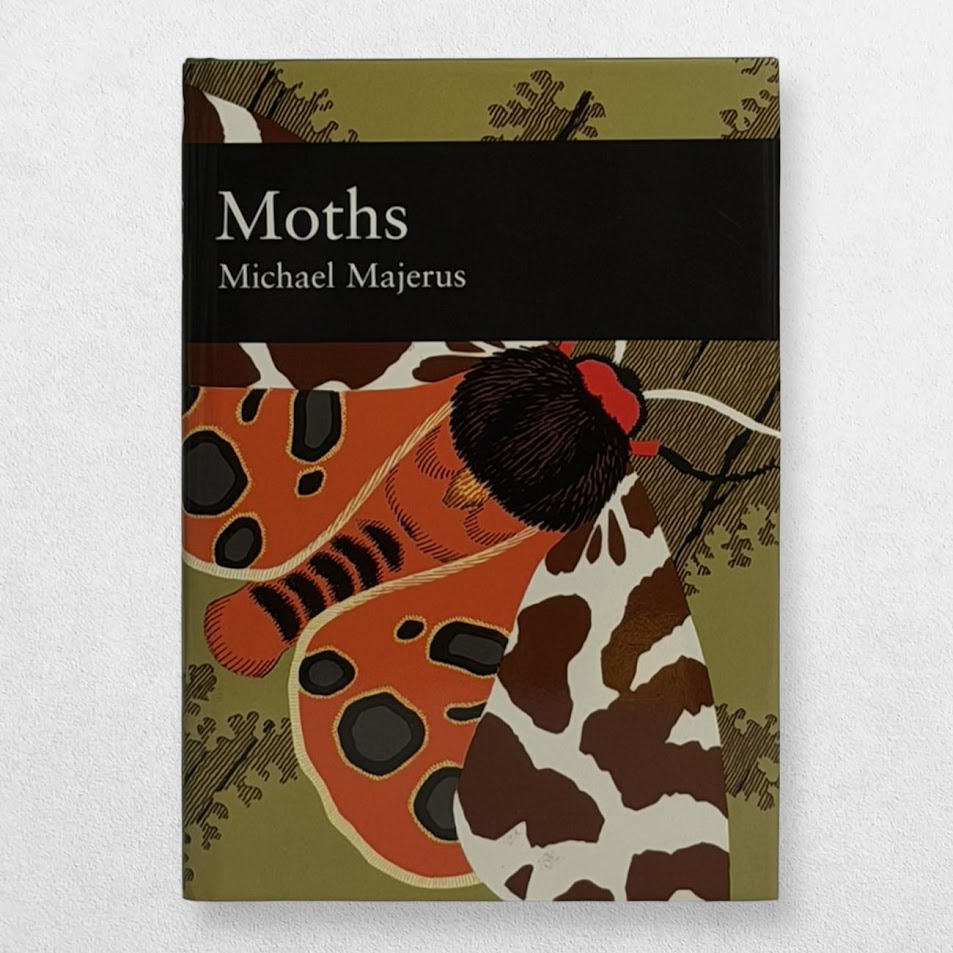
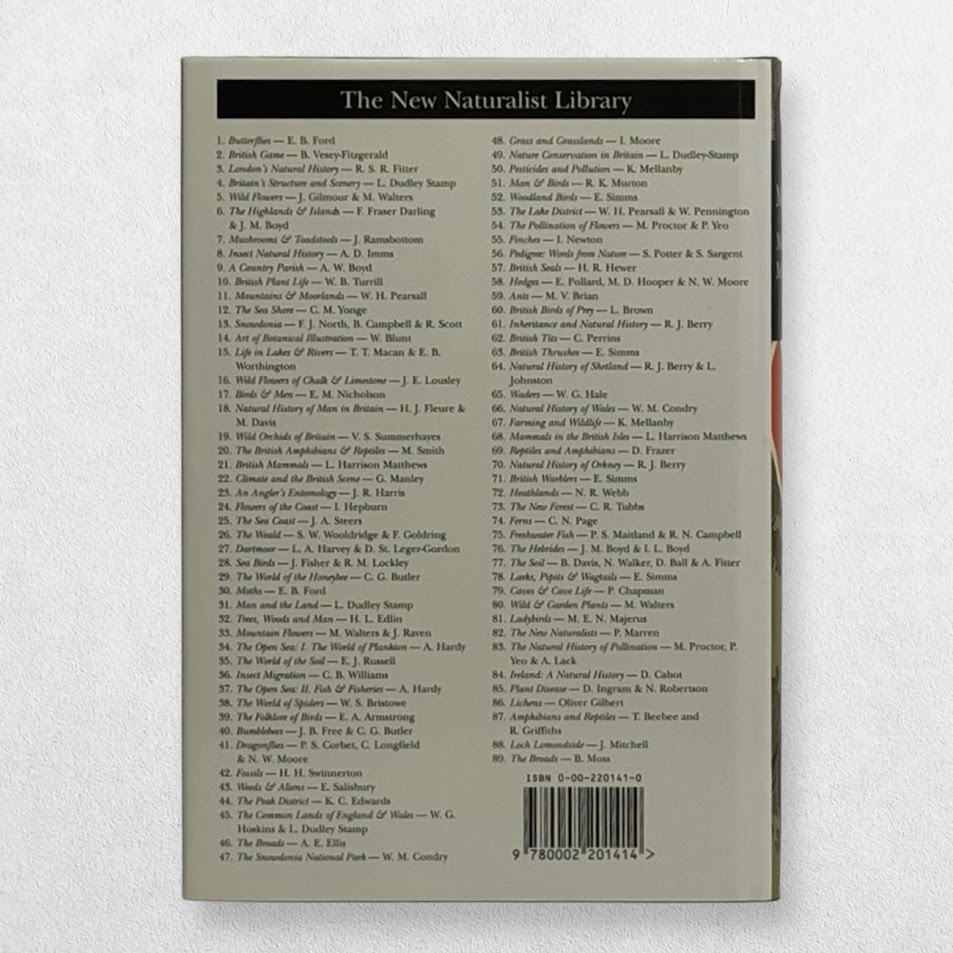
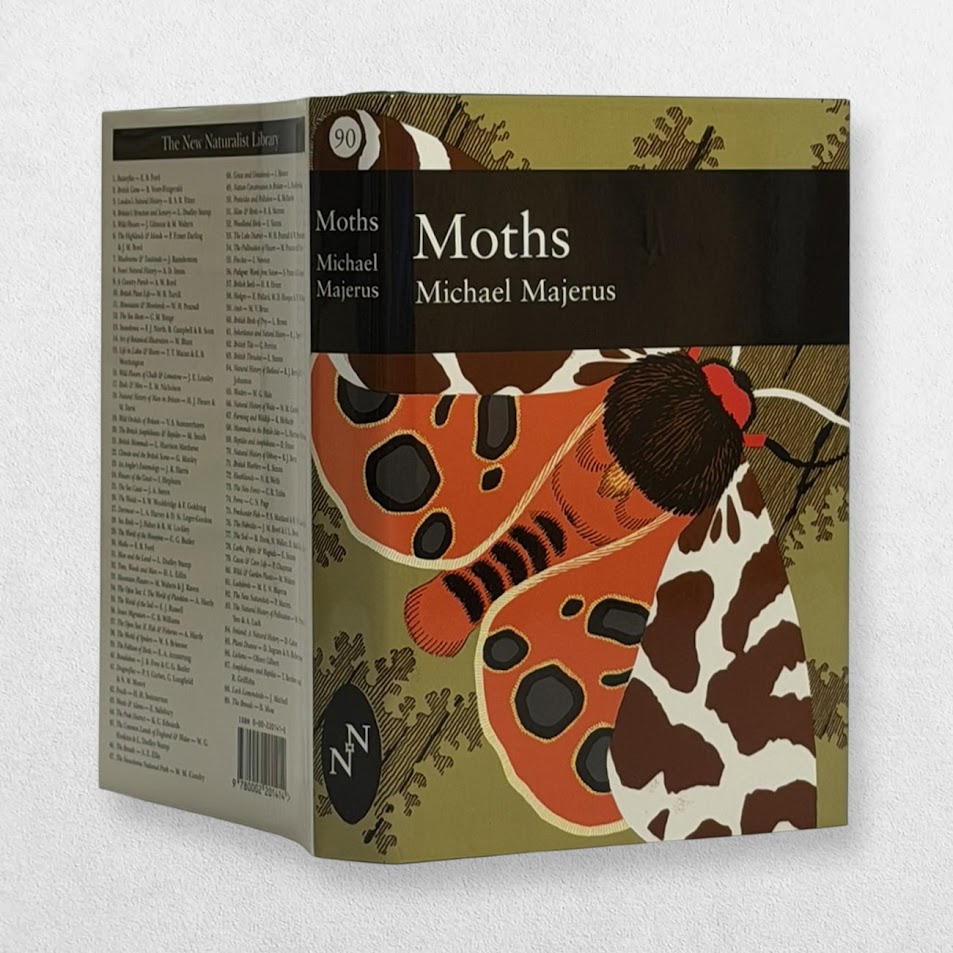
Collins New Naturalist – 90 – Moths – First Edition – 2002
Majerus, Michael E. N.
£45.00
Availability: In stock
Product Description
Collins New Naturalist – 90 – Moths – First Edition – 2002
Author: Majerus, Michael E. N.
Publisher: William Collins
Price: £45
Publication Date: 2002
Edition: First edition
Size: Octavo
Binding: Original green cloth gilt. Dustwrapper
Condition: Fine in fine dustwrapper
Condition:
Dustwrapper artwork by Robert Gillmor. Cloth bright and clean with clean text block. A fine, tight, clean copy in fine, clean dustwrapper which has the tiniest amount of fading to the spine. We usually have first editions of all the New Naturalist Series in stock, please contact us for more details.
Moths: A Brief Overview
Moths, volume 90 in the Collins New Naturalist series (published 2002), is a comprehensive synthesis of the moths of Britain and Ireland. It treats moths not simply as taxonomic subjects for collectors but as ecologically significant, evolutionarily sophisticated insects central to terrestrial ecosystems.
The volume integrates systematics, morphology, life cycles, behaviour, population dynamics, light-trapping, and conservation, reflecting the increasingly data-driven direction of British entomology at the turn of the twenty-first century.
Scope and Taxonomic Breadth
Britain supports over 2,500 moth species, far exceeding its butterfly fauna. The book addresses:
- Macromoths (larger, more conspicuous species)
- Micromoths (often overlooked but highly diverse groups)
- Representative families such as Noctuidae, Geometridae, Sphingidae, Saturniidae, and others
Rather than listing species exhaustively, the volume focuses on ecological patterns and representative examples.
Morphology and Adaptation
Wing structure and scales
Moths are characterised by wings covered in microscopic scales, which:
- Produce colour and pattern
- Aid thermoregulation
- Contribute to predator avoidance
The structural basis of pattern formation is explained in functional terms.
Camouflage and defence
Many moths exhibit:
- Cryptic coloration matching bark or leaves
- Disruptive patterns
- Startle displays
- Chemical defence (notably in tiger moths)
The evolutionary logic behind these adaptations is examined in detail.
Life Cycle and Development
Metamorphosis
The complete life cycle — egg, larva (caterpillar), pupa, adult — is analysed ecologically:
- Host plant specificity
- Overwintering strategies
- Pupation sites
Larval feeding is shown to drive much of moth ecological impact.
Host plant relationships
Many species exhibit strict host plant associations, linking moth diversity directly to plant community structure.
Behaviour
Nocturnality
Most moths are nocturnal. The book examines:
- Sensory adaptation to low light
- Attraction to artificial light
- Bat–moth predator–prey dynamics
The development of ultrasonic hearing in moths as a defence against echolocating bats is a particularly striking evolutionary example.
Migration
Certain species, such as the Silver Y and Hummingbird Hawk-moth, are migratory. Their movements are linked to climatic conditions and continental airflows.
Population Dynamics and Monitoring
Light trapping
The book discusses the methodology of:
- Light trapping
- Recording schemes
- Long-term datasets
By 2002, Britain possessed one of the most detailed moth monitoring networks in the world.
Decline and change
The volume acknowledges early evidence of widespread moth declines linked to:
- Agricultural intensification
- Habitat loss
- Nitrogen deposition
- Climate change
These trends have since become central to conservation concern.
Case Study: The Peppered Moth
The Peppered Moth (Biston betularia) is treated as a classic example of industrial melanism. The book explains:
- The rise of dark morphs during heavy industrial pollution
- Subsequent reversal following air quality improvements
- The role of natural selection
This case illustrates rapid evolutionary response to environmental change.
Conservation Context (2002)
By the early 2000s, conservation priorities included:
- Habitat restoration
- Hedgerow management
- Woodland structural diversity
- Reduction of pesticide use
The book emphasises that moths are vital as:
- Pollinators
- Herbivores
- Prey for birds and bats
Their decline signals broader ecological disruption.
Style and Place within the Series
Volume 90 marks:
- A strong entomological contribution to the series
- Increasing reliance on quantitative monitoring data
- Clear integration of evolutionary theory and conservation biology
It complements volumes such as Ladybirds (NN 81) and The Natural History of Pollination (NN 83), but is broader in taxonomic scale.
Concluding Assessment
Moths (New Naturalist 90, 2002) presents Britain’s moth fauna as ecologically central and evolutionarily revealing. By combining behavioural ecology, long-term monitoring, and conservation analysis, the volume elevates moths from peripheral nocturnal insects to indicators of environmental change and keystone components of food webs.
Its enduring importance lies in documenting moth ecology at a critical moment, just as evidence of large-scale insect decline was becoming scientifically undeniable.
Its lasting value lies in documenting warbler ecology at a pivotal moment before accelerating habitat change and climate-driven phenological shifts reshaped migratory dynamics.
The Collins New Naturalist Series: A Short History
The Collins New Naturalist series is one of the longest-running and most celebrated series on natural history ever published, providing an extensive exploration of British wildlife, habitats, and ecology since its inception in 1945. Published by William Collins, the series was launched to offer a comprehensive, scientifically rigorous, yet accessible account of the natural history of the British Isles, appealing to both specialists and general nature enthusiasts alike. Renowned for its iconic cover designs, informative content, and ground-breaking illustrations, the New Naturalist series has been instrumental in fostering an appreciation for nature across generations.
Origins and Development
The series was the brainchild of Sir William Collins, who recognised a post-war desire for accessible and reliable information on the natural world. The initial aim was to create high-quality books that combined scientific accuracy with readability, crafted to be as engaging as they were informative. The first book, Butterflies by E.B. Ford, was published in 1945 and set a standard for the books that followed.
Topics and Structure
Each volume in the series is dedicated to a particular aspect of British natural history, with subjects ranging from specific groups of species, like Moths, Birds, and Warblers, to broader ecosystems and habitats, such as Woodlands, Rivers and Streams, and Mountain Flowers. Some volumes address particular ecological phenomena or geographical regions, giving readers an in-depth look at complex natural processes and interactions. Authors are typically experts in their fields, providing scientifically accurate yet highly accessible content. The volumes are filled with high-quality illustrations, photographs, and detailed diagrams, enhancing the textual information and bringing the subjects to life.
Illustrations and Cover Art
One of the most recognisable aspects of the New Naturalist series is its distinctive cover art, often created by celebrated wildlife artists. The covers feature striking depictions of British flora, fauna, and landscapes, with the illustrations becoming iconic in their own right. These visually appealing designs are as much a part of the series’ appeal as the content itself, establishing a cohesive and recognisable identity that is highly regarded by collectors.
Influence and Legacy
The Collins New Naturalist series has become a cornerstone of British natural history literature, influencing both academic study and public awareness of the natural world. For more than 75 years, the series has inspired naturalists, conservationists, and ordinary readers, encouraging a deeper understanding of British ecology and the environmental challenges facing the region. The series’ continued publication reflects its ongoing relevance, with new volumes addressing contemporary concerns such as climate change, habitat loss, and biodiversity conservation.
Each book in the series combines a passion for nature with academic insight, presenting complex ecological ideas in a way that is accessible and engaging. Its success has established Collins New Naturalist as a respected name in natural history, and the books remain highly sought after by collectors, scholars, and anyone with an interest in British wildlife and the natural world.
Why buy from us?
At Hornseys, we are committed to offering items that meet the highest standards of quality and authenticity. Our book collection is meticulously curated to ensure that each edition is a valuable and authentic piece of bibliographical history. Here’s what sets us apart:
- Authenticity and Provenance: Every book is researched, collated, and verified for authenticity.
- Expert Curation: Each book is selected with a keen eye for significance, condition, and rarity, ensuring a collection that is both diverse and distinguished.
- Customer Satisfaction: We strive to provide an exceptional customer experience, from detailed descriptions and provenance to secure and prompt delivery of your purchase.
- Returns Policy: We offer an unconditional guarantee on every item. If you wish to make a return, books may be sent back to us within fourteen days of receipt for any reason. We request advance notification of returns, and books must be returned in the same condition as sent for a full refund.
Explore Our Collection:
Visit Hornseys to explore our fine collection of rare and signed books. Whether you are an avid collector or looking for a special gift, our selection offers something truly unique. Located in the picturesque Yorkshire Dales, our Ripon gallery has been a haven for book lovers, art enthusiasts, and collectors since 1976.
Thank you for looking.
Related products


You may also like…

Collins New Naturalist – 77 – The Soil – First Edition – 1992
£200.00Davis, B, Walker, N, Ball, D & Fitter, A
Collins New Naturalist – 83 – The Natural History Of Pollination – First Edition – 1996
£1,000.00Proctor, Michael, Yeo, Peter & Lack, Andrew