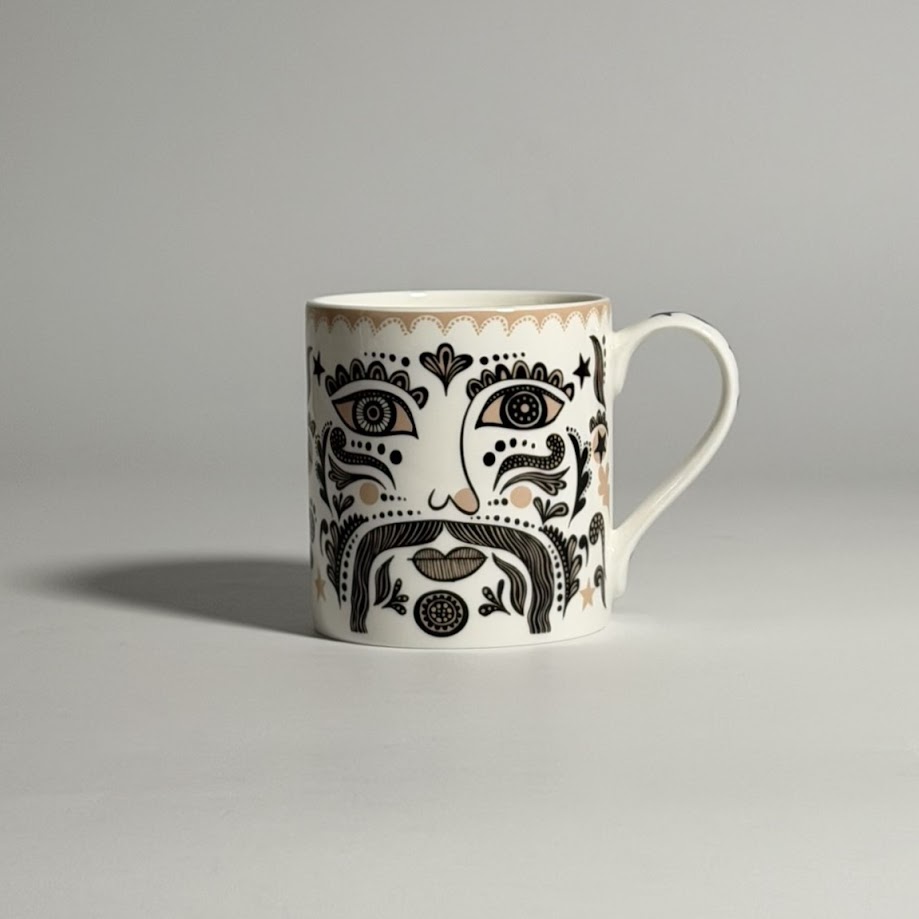
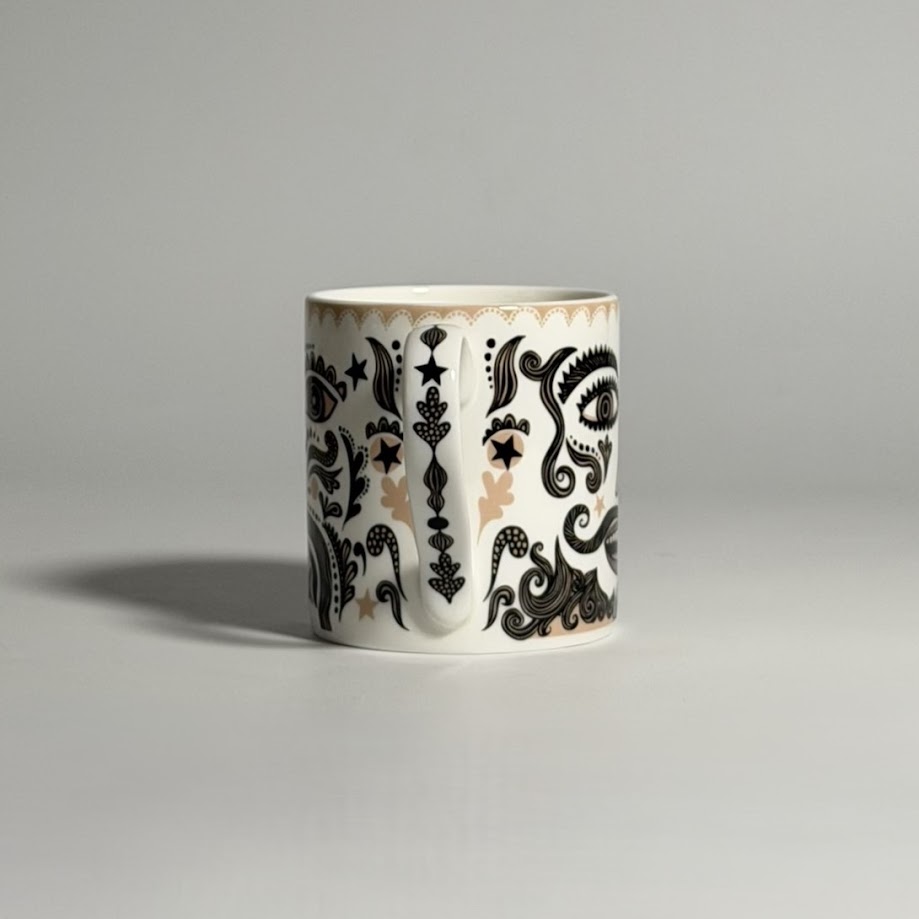
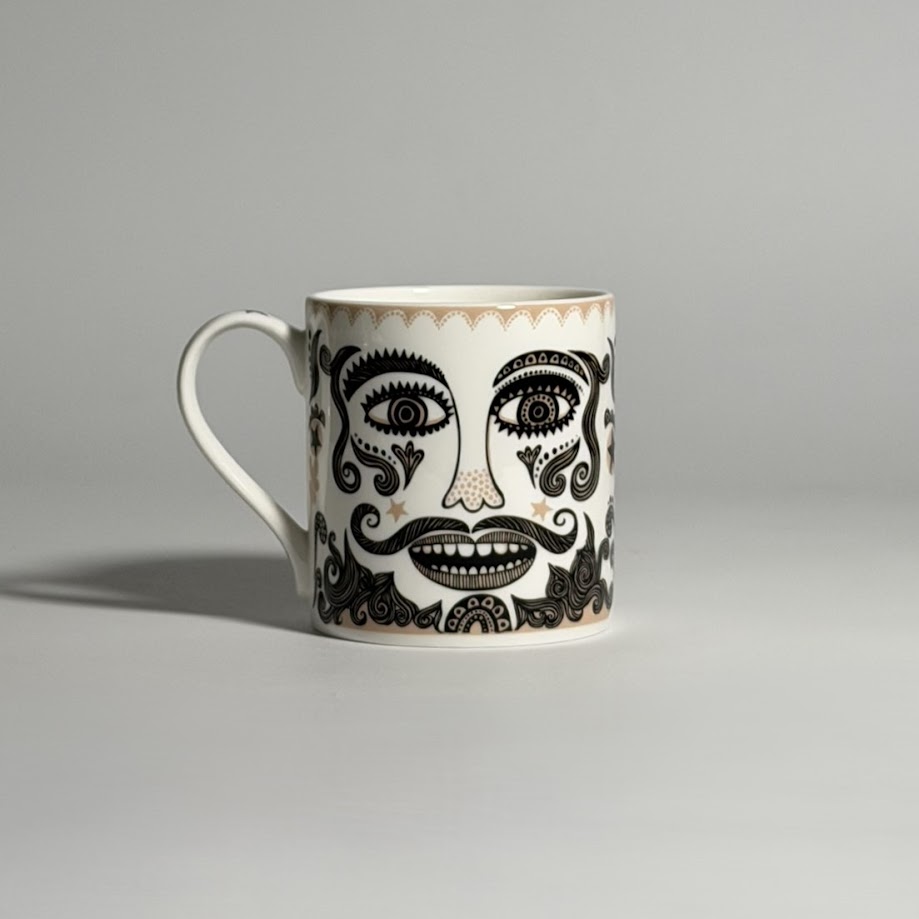
Lush Designs – Bone China Mug – Fancy Handle Moustache Mug
Lush Designs
£23.00
Availability: In stock
Product Description
Lush Designs – Bone China Mug – Fancy Handle Moustache Mug
Artist: Lush Designs
Price: £23.00 (Free Postage In The UK)
Material: Bone china
Condition: New
Size: 8.5cm high 8.5cm diameter
Bone china with delicate detail and embellishment.
The Moustache: A Brief History
The moustache—facial hair grown on the upper lip—has functioned variously as a marker of status, masculinity, ethnicity, profession, and fashion across cultures and periods. Its history is cyclical, shaped by military norms, political symbolism, hygiene concerns, and aesthetic trends.
- Ancient Origins
Early Civilisations
Archaeological and artistic evidence indicates that moustaches were worn in several early cultures:
- Ancient Mesopotamia: Assyrian reliefs show elaborately groomed facial hair, often combining beard and moustache as symbols of power.
- Ancient Persia: Moustaches were associated with nobility and warrior identity.
- Scythians and Central Asian peoples: Frequently depicted with prominent moustaches, sometimes without full beards.
In contrast:
- Ancient Egypt: Clean-shaven faces were the norm, though artificial beards were worn ceremonially; moustaches were not culturally prominent.
Classical Antiquity
- Ancient Greece: Early Greeks wore moustaches and beards, but by the Classical period, shaving became fashionable among elites.
- Ancient Rome: Moustaches were generally not worn independently; Roman men favoured a clean-shaven appearance after adolescence, making facial hair a marker of youth or foreignness.
- Early Medieval to High Medieval Period (c. 500–1300)
- Among Germanic and Viking cultures, moustaches were common, often paired with beards.
- In Anglo-Saxon England, moustaches could signify warrior status.
- The Norman Conquest (1066) introduced a more clean-shaven aesthetic among elites in England, though moustaches persisted among certain classes.
By the High Middle Ages:
- Facial hair styles varied widely, but the moustache alone was less common than the full beard.
- Late Medieval and Renaissance (c. 1300–1600)
The moustache re-emerged as a distinct style:
- In continental Europe, particularly Spain and Italy, the moustache became associated with:
- soldiers
- courtly masculinity
- The “handlebar” style began to appear in early forms, often waxed and shaped.
In England:
- Under the Tudors, facial hair styles varied dramatically, though the moustache was usually part of a beard rather than worn alone.
- Early Modern and 18th Century Decline (c. 1600–1800)
- In the 17th century, moustaches were worn by soldiers and aristocrats, especially in continental armies.
- By the 18th century, particularly in Britain and France:
- clean-shaven faces became dominant
- wigs and powdered faces replaced facial hair as markers of refinement
The moustache became:
- associated with foreign soldiers, especially from Central and Eastern Europe
- relatively unfashionable in polite civilian society
- 19th Century Revival: Military and Masculinity
The 19th century marked a decisive return of the moustache.
Military Influence
- In many European armies, moustaches were:
- encouraged or required (e.g. British cavalry regiments)
- They became associated with:
- discipline
- virility
- imperial authority
In Britain:
- Officers and soldiers returning from imperial campaigns popularised the moustache in civilian life.
Victorian Culture
By the mid- to late 19th century:
- The moustache was a dominant male fashion
- Styles included:
- full, natural moustaches
- waxed and curled forms
It was often seen as:
- a sign of manliness and maturity
- an emblem of respectability and strength
- Early 20th Century (c. 1900–1945)
Edwardian and Interwar Periods
The moustache remained widespread but diversified in style:
- Neat, trimmed moustaches became common among professionals
- Military styles persisted but were less exaggerated
Notable associations:
- authority figures (officers, civil servants)
- political leaders (with varying styles)
Cultural Divergence
Different moustache styles began to carry distinct connotations:
- narrow and precise styles → discipline and control
- fuller styles → traditional masculinity
- Mid-20th Century Decline (Post-1945)
After the Second World War:
- The moustache declined sharply in Western fashion
- Clean-shaven faces became associated with:
- modernity
- corporate professionalism
- hygiene
By the 1950s–60s:
- Moustaches were relatively uncommon, often associated with:
- older generations
- specific professions (e.g. military holdovers)
- Late 20th Century Reinterpretation (1960s–1990s)
The moustache returned in new cultural contexts:
1960s–70s
- Linked to:
- counterculture
- artistic and intellectual circles
- Often worn with longer hair and beards
1970s–80s
- Became associated with:
- masculinity in popular culture
- specific subcultures (e.g. gay identity, fashion, sport)
1980s
- The moustache appeared in:
- police and military imagery
- media representations of authority
- 21st Century: Revival and Irony
In recent decades, the moustache has undergone periodic revivals:
- Movember (founded 2003) promoted moustaches for charitable awareness
- Retro and “heritage” styles have re-emerged
- The moustache can now signal:
- irony or self-awareness
- vintage aesthetics
- personal branding
Cultural Meanings Across Time
The moustache has repeatedly shifted in meaning:
| Period | Dominant Meaning |
| Ancient | Power, warrior identity |
| Medieval | Martial and regional identity |
| 18th century | Unfashionable, foreign |
| 19th century | Masculinity, military authority |
| Early 20th century | Respectability, professionalism |
| Post-1945 | Decline, conservatism |
| Late 20th century | Subculture, identity |
| 21st century | Style, revival, irony |
Conclusion
The history of the moustache is not linear but cyclical. Its prominence rises and falls in response to:
- military influence
- social norms
- aesthetic preferences
- cultural symbolism
At different times, it has signified authority, rebellion, conformity, or individuality, making it one of the most culturally loaded forms of personal adornment in human history.
Lush Designs: A Brief Description
Lush Designs is a British company that creates a wide array of beautifully illustrated homeware, with designs that capture a sense of whimsy and charm. Their collections include lampshades, cushions, ceramics, and tea towels, all featuring hand-drawn artwork inspired by nature, wildlife, and folklore.
With vibrant colours, bold patterns, and playful motifs, Lush Designs’ products are ideal for adding character and warmth to any space. Their lampshades, in particular, are known for their striking appearance, with intricate details and rich story-telling elements. We hold a large range in our Ripon gallery but we do not sell them online.
Sustainability is an important aspect of their work, and they focus on creating long-lasting, high-quality pieces. If you’re interested in British-made home décor that brings artistry and creativity to the forefront, Lush Designs offers distinctive items with a signature British touch.
Why Buy from Us?
At Hornseys, we are committed to offering items that meet the highest standards of quality and authenticity. Our collection of objects and fine gifts is meticulously curated to ensure that it reflects refined taste and elegance.
Here’s what sets us apart:
- Authenticity and Provenance: Every range is thoroughly researched and vetted to ensure that it meets our exacting standards.
- Expert Curation: We select each range with an eye for tastefulness, refinement, condition, and visual appeal.
- Customer Satisfaction: We strive to provide an exceptional customer experience, from detailed descriptions to secure and prompt delivery.
- Returns Policy: We offer an unconditional guarantee on every item. If you wish to make a return, any item may be sent back to us within fourteen days of receipt for any reason. We request advance notification of returns, and items must be returned in the same condition as sent for a full refund.
Explore Our Collection:
Visit Hornseys to explore our exceptional collection of fine art, illustration, rare books, gifts and objects. Located in the picturesque Yorkshire Dales, our Ripon gallery has been a haven for art lovers and collectors since 1976.