
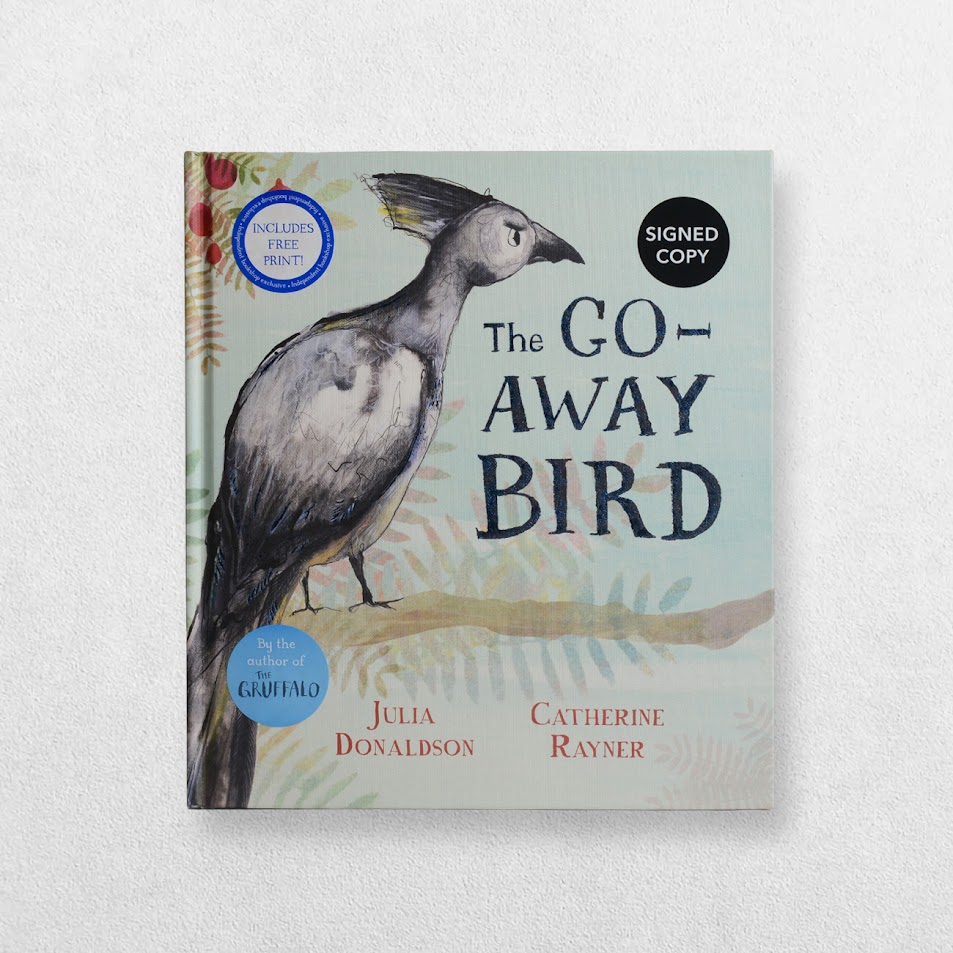
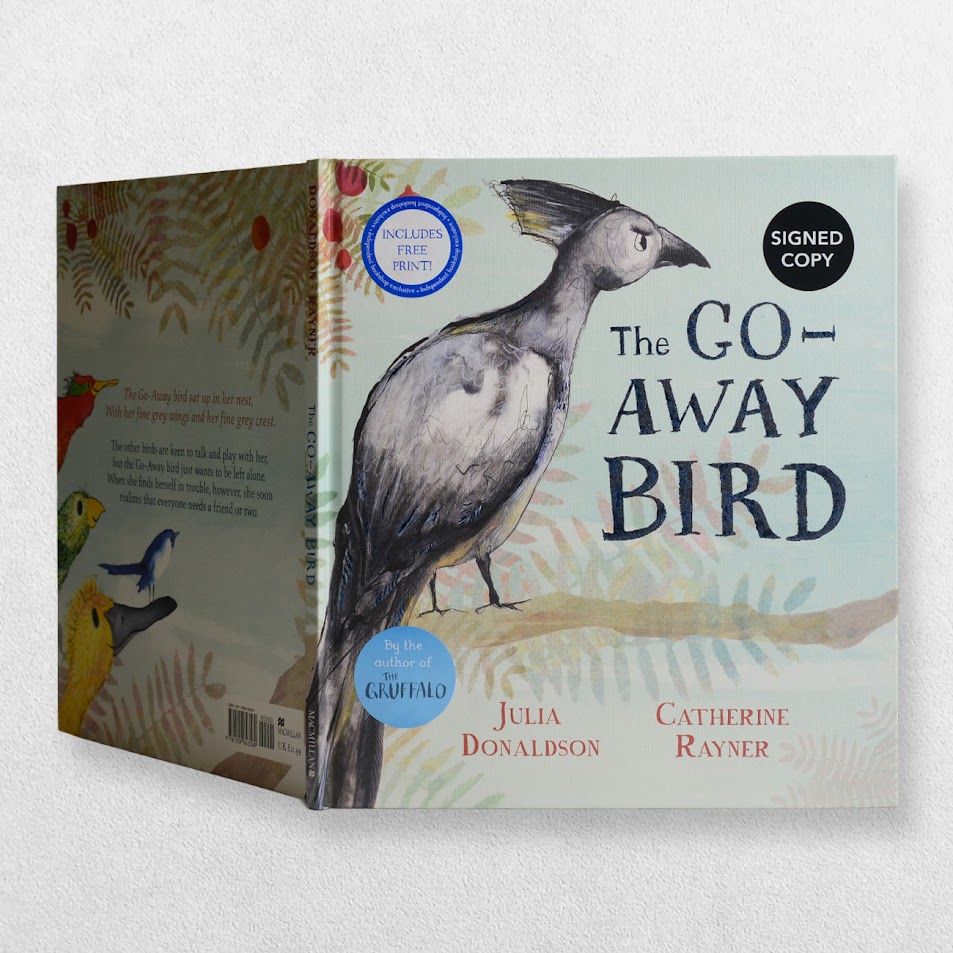
The Go-Away Bird Signed By Julia Donaldson And Catherine Rayner With Free Print
Donaldson, Julia & Rayner, Catherine
£50.00
Availability: In stock
Product Description
The Go-Away Bird Signed By Julia Donaldson And Catherine Rayner With Free Print
Author: Donaldson, Julia
Illustrator: Rayner, Catherine
Price: £50
Publisher: Macmillan, London, UK
Publication Date: 2019
Format: Original pictorial boards
Condition: Fine
Edition: First edition, first impression
Condition:
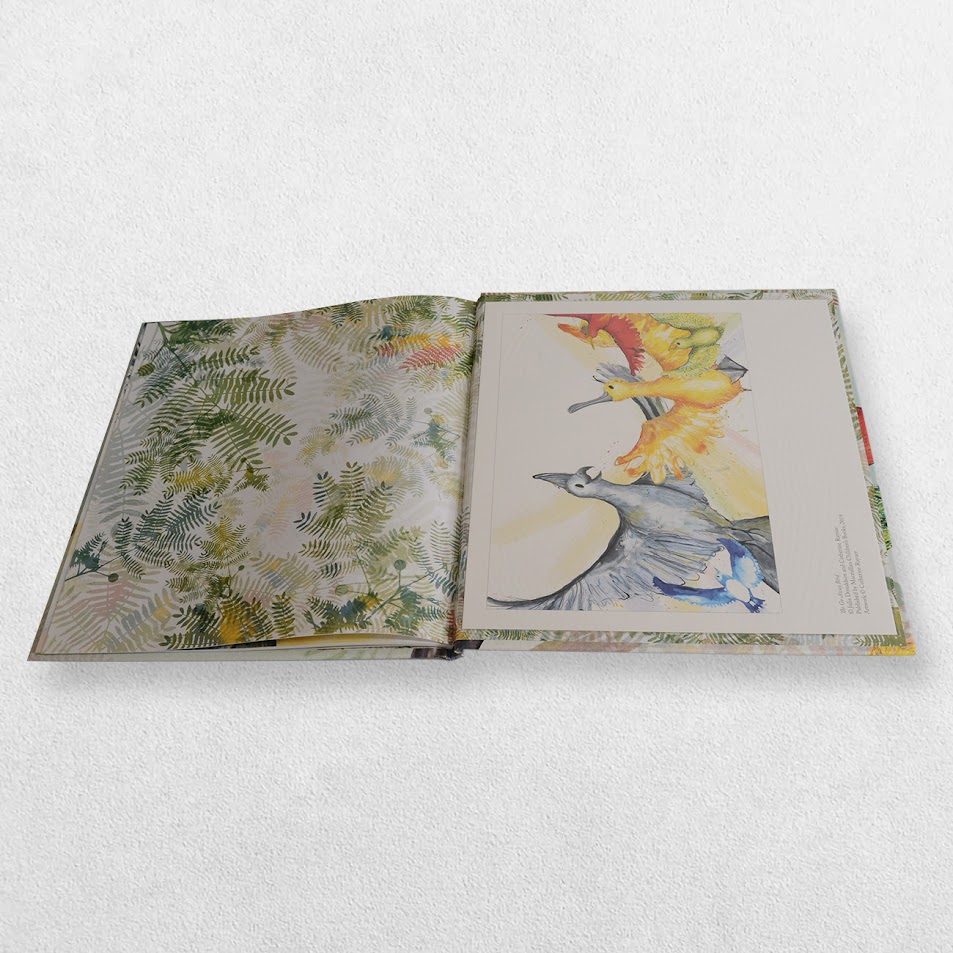
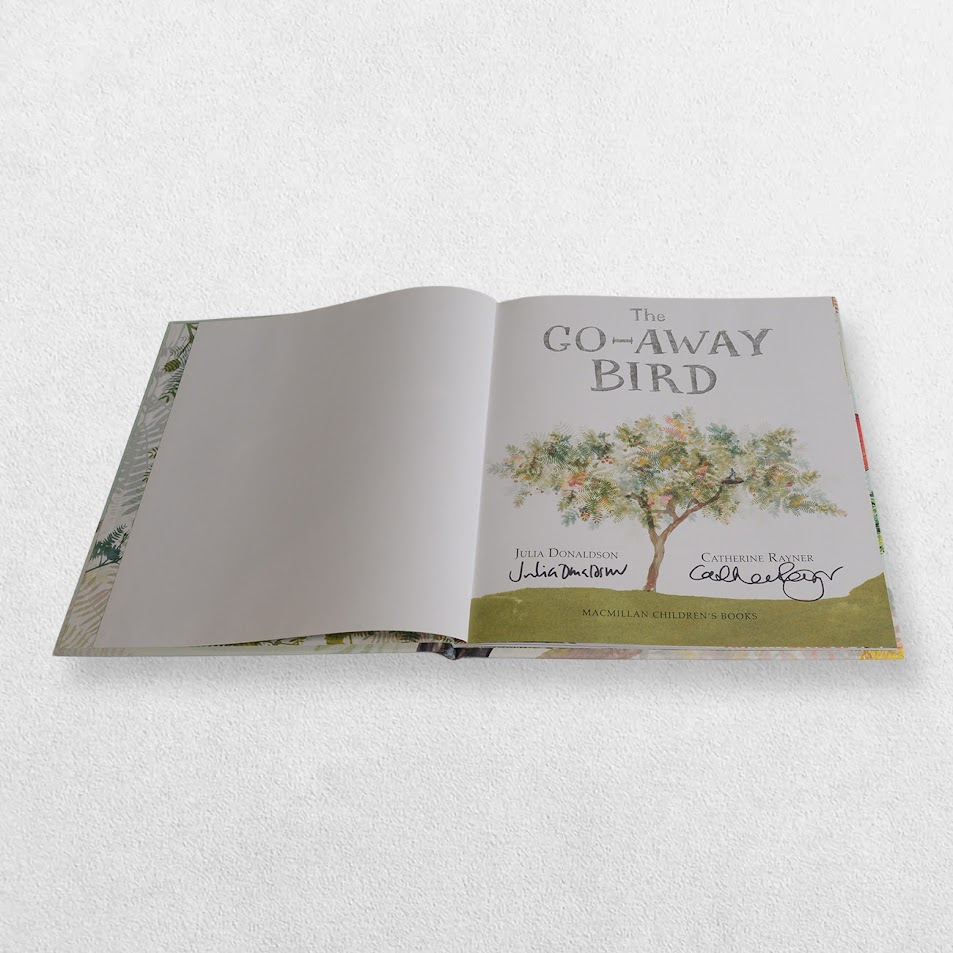
First edition with the number ‘1’ in the number line. Original pictorial boards. Signed by author and illustrator. Illustrated throughout in colour. Includes the free print in rear sleeve. A fine, tight, clean copy.
Julia Donaldson: A Short Biography
Julia Donaldson (born September 16, 1948) is a highly acclaimed British author, best known for her children’s books, which have captivated young readers around the world. Born in Hampstead, London, Julia grew up in a family that valued creativity and storytelling. Her early interest in music and literature led her to study drama and French at the University of Bristol, where she further developed her love for the arts.
Before becoming a full-time author, Donaldson worked as a songwriter for children’s television. Many of her early songs were for the BBC’s Play School and Play Away. This background in music and rhyme is evident in her writing style, which often features rhythmic and rhyming text that makes her books especially engaging for children.
Donaldson’s breakthrough as a children’s author came with the publication of The Gruffalo in 1999, illustrated by Axel Scheffler. The book became an instant classic, winning numerous awards and establishing her as a leading voice in children’s literature. The story’s success led to a long and fruitful partnership with Scheffler, resulting in other beloved titles such as “Room on the Broom”, “Stick Man”, and “The Snail and the Whale”.
Julia Donaldson’s books are known for their playful language, memorable characters, and moral lessons that resonate with both children and adults. Her ability to blend humour, adventure, and heart-warming themes has made her one of the most successful and beloved children’s authors of her generation. Her works have been translated into over 75 languages and have sold millions of copies worldwide.
In addition to her writing, Donaldson has been an active advocate for literacy and children’s education. She served as the UK’s Children’s Laureate from 2011 to 2013, during which time she championed initiatives to promote reading among children and support libraries. Her contributions to literature and education have been widely recognised, earning her numerous awards and honours, including an MBE (Member of the Order of the British Empire) in 2011 for services to literature.
Julia Donaldson continues to write, perform, and inspire, with her work remaining a cherished part of childhood for countless readers around the world.
Catherine Rayner: A Short Biography
Biography & Background
- Catherine Rayner was born in Harrogate, in 1982, and spent her early years in Boston Spa, in the West Yorkshire region.
- She grew up in a rural environment, which fostered her love of animals and nature from a young age.
- Rayner studied Art & Design / Foundation Studies (at Leeds College of Art and Design) before going on to pursue a degree in Illustration (Visual Communication) at Edinburgh College of Art.
- She continues to live and work in Edinburgh, with her family and pets, and maintains a studio there.
Career & Works
Book Projects
- Rayner is both a writer and an illustrator of children’s books. She has published more than twenty titles, whether fully her own (text + illustration) or in collaboration with other authors.
- Among her best-known works as author-illustrator are Harris Finds His Feet, Solomon Crocodile, Abigail, Iris and Isaac, Ernest, Norris, the Bear Who Shared, Sylvia and Bird, and Smelly Louie.
- She has also illustrated books written by others — for example, The Tales of Olga da Polga by Michael Bond, Gobbolino the Witch’s Cat, and Clare and her Captain by Michael Morpurgo.
- Her debut picture book was Augustus and His Smile, published soon after graduation.
Awards & Recognition
- Rayner has earned numerous accolades. Early on, she won the Best New Illustrator Award (BookTrust) soon after publishing her first book.
- In 2009, she won the Kate Greenaway Medal for Harris Finds His Feet, one of the most prestigious honours in British children’s illustration.
- Her works have been shortlisted for multiple awards and have been recognised internationally (for example, Solomon Crocodile being named Picture Book of the Year in the Netherlands).
- She is frequently celebrated for her capacity to imbue creatures — wild or domestic — with personality, movement and emotional depth.
Style, Technique & Themes
Visual Style & Approach
- Rayner’s illustrations are distinguishable by expressive line work, delicate textures, and a sense of life and motion. She often balances loosely flowing forms with more carefully observed detail.
- Her colour palettes tend to be subtle yet evocative — she uses washes, diluted pigments (especially acrylic inks), and lighter tones to suggest lightness and space.
- Backgrounds are sometimes printed or textured (e.g. via silkscreen methods) rather than densely illustrated, thus giving prominence to the characters.
- Her approach tends to allow breathing room in illustrations — white space or minimal backgrounds help to focus attention on the animal subjects and their emotional narrative.
Subjects & Motifs
- Animals (both exotic and everyday) are her primary subjects. Rayner has repeatedly said she’s drawn creatures for as long as she has held a pencil.
- Her pets — dog, cat, horse, goldfish — serve both as personal inspiration and observational models. These intimate connections help make her animal portraits feel immediate and authentic.
- Emotion and personality are central: her animals are not mere “cute” figures, but expressive characters with inner life — via posture, gaze, ears, whiskers, tails.
- Themes of friendship, belonging, self-discovery, loneliness, change, courage and empathy frequently recur in her narratives and illustrations.
- There is often a quiet quality to her storytelling; much is left to the reader’s imagination, and mood and atmosphere matter as much as plot.
Process & Working Methods
- Rayner typically begins with pencil sketches, exploring form, gesture, composition.
- She then works in acrylic inks or diluted pigments to build up washes, textures, shadows, and to bring life to the figures.
- Some elements are created via print techniques (silkscreen or layered printing) to add subtle texture or pattern.
- Her studio practice is interspersed with observation, drawing from life, and keeping sketchbooks. She emphasises experimentation and spontaneity, while also attending to detail through careful revision.
Impact & Legacy
- Rayner is widely admired by readers, critics, librarians and fellow illustrators for her ability to bring animals to life with emotional resonance.
- Her books are used in educational settings, libraries, and homes; children often respond to the animal protagonists, identifying with their journeys.
- Her illustrations also appear as artworks in galleries, and she makes prints and cards for broader audiences beyond books.
- Through her body of work, she contributes to the tradition of British children’s illustration, blending a distinctive personal style with accessibility, emotional depth and narrative clarity.
The Go-Away Bird: A Short Account
The name “Go-Away Bird” is a vernacular name applied primarily to certain species in the family Musophagidae (the turaco family), especially in Africa. The best known is the grey go-away bird (Crinifer concolor, formerly Corythaixoides concolor). This bird is also called the grey lourie, grey loerie, or in Afrikaans kwêvoël, reflecting its distinctive vocalisation.
There are related species, such as the white-bellied go-away bird (Crinifer leucogaster) and the bare-faced go-away bird (Crinifer personatus), which differ in colouring, range and some behavioural features.
Physical Description
Size and Build
- The grey go-away bird typically measures 47 to 51 cm from the tip of its bill to the tip of its tail.
- Its mass is in the range of approximately 200 to 300 g (slight variation by subspecies).
- Males and females are broadly similar in appearance; sexual dimorphism is minimal in most populations.
Plumage and Colouration
- The general plumage is a soft, smoky grey — fairly uniform, lacking bright or contrasting colours.
- The chin and throat regions tend to be a darker grey, while the belly and lower underparts are somewhat paler.
- On the upperparts (back, wings, tail), flight feathers and coverts may be a slightly darker grey than the body plumage.
- Some subspecies or local populations display a faint olive wash on the breast area.
- The face region is paler around the eyes than on the crown or nape.
Crest and Head
- One of the most conspicuous features is the crest: a wispy, back-swept crest of feathers about 6 to 7 cm long.
- The crest can lie flat or be raised almost vertically, especially when the bird is agitated, alarmed or displaying.
- The bill is short, strong, and black, with a decurved shape (i.e. it curves downward slightly).
- The gape interior and the tongue may show a pinkish hue, contrasting with the black bill.
- Eyes are dark (usually brown), and legs and feet tend to be dark/blackish or grey.
Juveniles
- Young birds are generally drabber, with browner tones, and their crest is shorter and less developed.
- The plumage is more muted, lacking the crispness of the adult’s greys.
Voice and Communication
- The Go-Away Bird earns its name from its nasal, wheezy calls, often rendered as “g’wa-ay, g’wa-ay” (or “go-way”). The second syllable often has a descending drawl.
- The call is loud and carried; it functions as an alarm signal to other birds or animals when disturbance or danger is nearby.
- They often call when flushed, or when moving through woodland, and instances of repeated calling are common — especially at dawn or dusk, or when the group is in motion.
Distribution, Habitat and Movements
Range
- The grey go-away bird inhabits much of southern and east Africa: countries such as South Africa, Botswana, Zimbabwe, Mozambique, Namibia, Malawi, parts of Angola, Zambia, and surrounding regions.
- Related species, like the white-bellied and bare-faced go-away birds, occupy more easterly or central African ranges.
Habitat Preferences
- They favour open woodland, thornveld, savanna with scattered trees, riparian woodland, and thorn bush country.
- They also frequent suburban gardens, parks, and cultivated areas provided suitable fruiting trees or shrubs are present.
- A dependable water source is important; so they are often found in proximity to rivers, streams or seasonal waterholes.
Movements
- Go-away birds are non-migratory in the strict sense, but they may undertake local or seasonal wanderings in search of food and water, especially during dry periods.
- They tend to disperse or shift within their broader range, rather than making long, directed migrations.
Behaviour and Ecology
Social Structure
- These birds are gregarious. It is common to see them in small groups or flocks, often numbering from a handful up to 20 or more individuals.
- They forage and move together, often maintaining vocal contact.
Locomotion
- Their flight is relatively slow and laboured, but they are capable of covering moderate distances.
- Within tree canopies, they show agility: they may run along branches, leap between limbs, and manoeuvre adeptly among twigs.
- On the ground, they may dust-bathe or forage for fallen fruit or insects.
Diet and Feeding
- Their diet is largely frugivorous — eating fruits, berries, figs, and fleshy plant parts.
- They also consume buds, leaves, flowers, nectar, and occasionally insects, snails and other small invertebrates.
- They are important seed dispersers, especially for fruiting trees: by consuming fruit and excreting or regurgitating seeds, they help to distribute plant species across their habitat.
- They may also act as pest species in orchards or plantations, particularly when they feed on cultivated fruit or damage trees.
Breeding and Reproduction
- Breeding generally aligns with rainy seasons or times of food abundance, though the precise timing varies regionally.
- The nest is a loose, flat platform made of sticks, twigs and thorny material. The platform may be 20–25 cm or so in diameter.
- Nests are placed in trees — often acacias or thorny species — typically between 3 and 20 m above the ground, sometimes higher.
- Clutch size is usually 2 to 3 eggs, occasionally up to 4. The eggs are pale, bluish-white or white and slightly glossy.
- Both parents share duties of incubation (around 26–28 days) and feeding the young.
- The chicks are born with dense down, and before fledging they begin to move about in the nest and arms of branches.
- Young birds fledge (i.e. take flight) roughly 3 to 4 weeks after hatching, but they remain dependent on parental feeding for several more weeks as they grow in skill and strength.
Conservation and Interactions
- The grey go-away bird is generally regarded as Least Concern in IUCN assessments, owing to its broad distribution, stable populations and adaptability to modified habitats.
- Nevertheless, in areas where they raid crops or orchards, they may be persecuted or considered pests.
- Predation pressure comes from birds of prey (raptors) and possibly mammalian predators targeting nests or fledglings.
- Their role in seed dispersal and as part of the ecosystem’s fruit-forest dynamics is ecologically significant.
Why Buy From Us?
At Hornseys, we are dedicated to offering rare and first edition books of the highest quality and authenticity. Each item in our collection is meticulously researched and carefully curated to ensure it meets the exacting standards of discerning collectors.
Here’s what sets us apart:
- Authenticity and Provenance: Every item is verified for authenticity and provenance.
- Expert Curation: We select books based on their historical significance, condition, and rarity, ensuring a distinguished collection.
- Customer Satisfaction: We are committed to providing a seamless and satisfactory customer experience, from detailed descriptions to secure, prompt delivery.
- Returns Policy: We offer an unconditional guarantee on all items. If for any reason you are not satisfied, returns are accepted within fourteen days of receipt, provided the item is returned in the same condition as sent.
Explore Our Collection:
Visit Hornseys to explore our fine collection of rare and first edition books. Whether you are an avid collector or seeking a unique literary treasure, our selection offers something truly exceptional. Our gallery, located in Ripon, has been a destination for book lovers and collectors since 1976.
Related products

When We Were Very Young – Winnie The Pooh – Now We Are Six – The House At Pooh Corner – The Collectors’ Facsimile Edition – Four Volumes In Slipcase
£85.00Milne, A. A. & Shepard, Ernest H
Paddington Marches On With Card Signed By Michael Bond Loosely Inserted
£545.00Bond, Michael Illustrated By Fortnum, Peggy


You may also like…
Charlie Cook’s Favourite Book Illustrated By Axel Scheffler
£175.00Donaldson, Julia & Scheffler, Axel
The Gruffalo & The Gruffalo’s Child: First Deluxe Miniature Editions Both Signed By Julia Donaldson & Axel Scheffler
£495.00Donaldson, Julia & Scheffler, Axel

