‘The Summoner’s Tale’ – Original Etching With Aquatint From ‘Canterbury Tales’ – 1972
Frink, Elisabeth
£500.00
Availability: In stock
Product Description
‘The Summoner’s Tale’ – Original Etching With Aquatint From ‘Canterbury Tales’ – 1972
Artist: Elisabeth Frink
Price: £500.00
Publisher: Waddington Galleries
Publication date: 1972
Format: Original etching with aquatint
Condition: Fine condition, unframed
Sheet Size: 65.6cm x 45.7cm
Edition Number: 1/300
Description
Original etching with aquatint. One from the edition of 300 which was published in 1972. In fine, bright, clean condition. Unframed. Sheet size: 65.6cm x 45.7cm.
The Canterbury Tales Illustrated by Elisabeth Frink: A Brief Account
Introduction
Elisabeth Frink’s illustrations for The Canterbury Tales represent one of the most significant intersections between modern British art and medieval English literature. Undertaken at the height of her artistic maturity, the project allowed Frink to engage deeply with Geoffrey Chaucer’s complex vision of humanity, morality, and social power. Her response was neither decorative nor antiquarian. Instead, she produced a cycle of images that reinterpreted Chaucer’s characters through a twentieth-century lens, marked by psychological intensity, corporeal vulnerability, and moral ambiguity. The result is a body of work that stands independently as a major achievement in British book illustration.
Context and Commission
By the time Frink was invited to illustrate The Canterbury Tales, she was already internationally established as one of Britain’s leading figurative sculptors and graphic artists. Her reputation rested on her uncompromising treatment of the human figure and her willingness to confront violence, sexuality, and authority without sentimentality. These qualities made her an unexpected but ultimately compelling choice for Chaucer’s text, which itself balances earthy realism with moral complexity.
The commission emerged in a cultural climate increasingly receptive to modern reinterpretations of canonical texts. Rather than seeking fidelity to medieval visual traditions, the project deliberately foregrounded an artist whose sensibility was rooted in post-war experience. Frink approached the work as a sustained act of interpretation rather than illustration in the conventional sense.
Medium and Technique
Frink executed the Canterbury Tales illustrations primarily as etchings, a medium well suited to her graphic language. Etching allowed her to exploit line, abrasion, and tonal contrast, producing images that feel incised rather than drawn. The figures often appear scraped out of the surface, echoing the scarified textures of her sculpture.
Her line is assertive and economical, favouring distortion and emphasis over descriptive detail. Faces are frequently masked, blinded, or reduced to essential features, while bodies are rendered as armoured or wounded forms. This approach aligns with her broader graphic practice, in which the human figure becomes a site of psychological inscription rather than narrative description.
Interpretation of Chaucer’s Characters
Frink’s illustrations focus less on narrative episodes than on character types. Chaucer’s pilgrims are not treated as historical figures but as embodiments of enduring human traits: aggression, desire, hypocrisy, piety, and endurance. In this respect, Frink’s work resonates strongly with Chaucer’s own moral strategy, which exposes character through behaviour rather than authorial judgement.
Male figures dominate the cycle, reflecting both Chaucer’s social world and Frink’s long-standing artistic preoccupation with masculinity. Knights, clerics, and authority figures appear physically imposing yet psychologically exposed. Armour, weapons, and clerical garments become symbols of power that fail to conceal vulnerability or moral tension.
Female figures, though fewer, are rendered with equal force. They resist idealisation and are presented as active, embodied presences rather than allegorical abstractions. Frink avoids medieval conventions of beauty, instead emphasising agency, resilience, and corporeal reality.
Violence, Sexuality, and Moral Ambiguity
One of the defining characteristics of Frink’s Canterbury Tales illustrations is their refusal to sanitise Chaucer’s text. Sexuality and violence are integral to her vision, not as sensational elements but as structural forces shaping human interaction. Her figures often appear constrained, bound, or confrontational, suggesting systems of dominance and submission rather than isolated acts.
This approach aligns closely with Frink’s broader artistic philosophy. She rejected illustration as mere accompaniment and instead used Chaucer’s work as a framework for examining power relations. In doing so, she brought Chaucer’s medieval social critique into dialogue with twentieth-century concerns about authority, masculinity, and moral responsibility.
Relationship to Frink’s Wider Oeuvre
The Canterbury Tales illustrations are inseparable from Frink’s sculptural and graphic practice of the same period. The same motifs recur: helmeted heads, blindfolded figures, animalistic postures, and bodies marked by tension. The pilgrims could be seen as cousins to her public sculptures of warriors, saints, and anonymous men under pressure.
At the same time, the literary context encouraged a degree of narrative concentration not always present in her autonomous graphic work. The illustrations demonstrate her ability to adapt her language to a textual framework without diluting its intensity.
Reception and Critical Standing
The publication of The Canterbury Tales with Frink’s illustrations was recognised as a serious artistic undertaking rather than a commercial embellishment. Critics noted the intellectual seriousness of the project and the congruence between Chaucer’s unsparing view of human nature and Frink’s own artistic concerns.
While some viewers found the images challenging, this response was consistent with Frink’s reception more broadly. The illustrations have since been reassessed as a major contribution to modern British illustration, distinguished by their refusal of nostalgia and their insistence on moral engagement.
Significance within British Book Illustration
Frink’s Canterbury Tales occupies a distinctive position within the tradition of illustrated English literature. Unlike earlier illustrators who sought historical reconstruction or decorative harmony, Frink treated Chaucer as a contemporary moral voice. Her work aligns with a modernist lineage of illustration in which the artist assumes interpretative authority equal to that of the text.
The project also reinforced the legitimacy of graphic work within Frink’s career, demonstrating that illustration could serve as a site of serious artistic inquiry rather than secondary practice.
Conclusion
Elisabeth Frink’s illustrations for The Canterbury Tales stand as a powerful reimagining of a foundational English text. Through etching, she translated Chaucer’s exploration of human complexity into a visual language shaped by post-war experience and moral seriousness. The resulting images neither explain nor soften the text; instead, they confront the reader with the enduring realities of power, desire, and vulnerability.
In doing so, Frink confirmed her capacity to engage with literary tradition on her own terms, producing a body of work that is intellectually rigorous, emotionally demanding, and enduringly relevant.
Elisabeth Frink: A Detailed Biography
Introduction
Dame Elisabeth Jean Frink occupies a central position in post-war British sculpture. Emerging in the aftermath of the Second World War, she became internationally recognised for a powerful body of work that confronted violence, vulnerability, and the human condition with uncompromising directness. Working primarily in sculpture but also producing a substantial graphic oeuvre, Frink forged a distinctive visual language rooted in figuration at a time when abstraction dominated critical discourse. Her career combined artistic independence, institutional recognition, and sustained public engagement, securing her status as one of the most significant British sculptors of the twentieth century.
Early Life and Education (1930–1956)
Elisabeth Frink was born on 14 November 1930 in Thurlow, Suffolk, but spent much of her childhood in the West Country, particularly in Devon and Cornwall. Her formative years coincided with the Second World War, an experience that profoundly shaped her imagination. The presence of military airfields, aircraft, and the threat of violence left lasting impressions that later surfaced in her imagery of aggression, flight, and existential tension.
Frink demonstrated artistic aptitude from an early age and enrolled at the Guildford School of Art in 1946. She later transferred to the Chelsea School of Art, where she studied sculpture under Willi Soukop and drawing under Bernard Meadows. Meadows, a former assistant to Henry Moore, introduced Frink to rigorous figurative discipline while encouraging independence of vision. Unlike many of her contemporaries, Frink resisted abstraction, choosing instead to confront the human figure directly.
Emergence and Early Recognition (late 1950s)
Frink’s professional breakthrough came rapidly. In 1957, while still in her twenties, she was included in the exhibition New Aspects of British Sculpture, which identified a group of young artists—later associated with the so-called “Geometry of Fear”—whose work expressed anxiety, aggression, and psychological intensity. Although Frink resisted strict categorisation, her early sculptures aligned with this sensibility through their emphasis on mutilation, threat, and bodily tension.
Her early works, including bird-like figures, menacing heads, and wounded animals, were executed in plaster before being cast in bronze. The surfaces were aggressively worked, scored, and scarified, rejecting smoothness in favour of tactile violence. These works immediately distinguished Frink from both academic tradition and the prevailing modernist orthodoxy.
Themes and Artistic Language
Throughout her career, Frink returned obsessively to certain motifs: the male figure, the animal, the bird, and the hybrid creature. Violence, power, and vulnerability are constant themes, but they are never gratuitous. Her work examines the psychological structures underlying aggression rather than depicting narrative acts of brutality.
The male nude became a central subject, treated not as an idealised form but as a site of existential exposure. Her figures often appear blinded, bound, or armoured, suggesting both dominance and fragility. Animals—particularly dogs, horses, and birds—are rendered as embodiments of instinct and survival, occupying an ambiguous space between menace and protection.
Frink’s commitment to figuration was philosophical as well as aesthetic. She believed that abstraction evaded moral responsibility, whereas the figure demanded ethical engagement. This conviction positioned her as an independent voice within post-war British art.
International Career and Maturity (1960s–1970s)
By the early 1960s, Frink had achieved international standing. Her work was exhibited extensively in Europe, North America, and Japan, and was collected by major public institutions. In 1962, she represented Britain at the Venice Biennale, a significant endorsement of her artistic authority.
During this period, her style evolved. While retaining its expressive intensity, her sculpture became more monumental and architectonic. The figures gained weight and clarity, and her engagement with public sculpture increased. Commissions for civic and ecclesiastical spaces allowed her to explore themes of faith, sacrifice, and endurance on a larger scale.
Frink also developed a substantial practice in printmaking and drawing, particularly through etching and lithography. These works reveal a parallel investigation of form and psychology, often more intimate but no less forceful than her sculpture.
Public Commissions and Religious Works
Religious imagery became increasingly prominent from the late 1960s onwards. Frink, a committed Roman Catholic, approached sacred subjects with a modern sensibility, rejecting sentimentality in favour of suffering, doubt, and redemption. Her crucifixions and saints are marked by bodily strain and psychological intensity, aligning spiritual experience with human vulnerability.
Notable public commissions include works for cathedrals, universities, and civic spaces in Britain and abroad. These sculptures demonstrate her ability to balance expressive force with architectural integration, reinforcing her reputation as a sculptor of public consequence.
Later Years and Personal Adversity (1980s–1993)
In the early 1980s, Frink relocated to Dorset, where she established a new studio and entered a period of renewed productivity. However, her later years were marked by serious illness. Diagnosed with cancer, she continued to work with determination, producing some of her most resolved and introspective sculptures.
Despite declining health, Frink maintained an active professional life and continued to accept commissions. Her later works often exhibit a quieter authority, with simplified forms and a deepened emotional gravity.
Honours and Institutional Recognition
Elisabeth Frink received numerous honours during her lifetime, reflecting her standing within British cultural life. She was appointed a Commander of the Order of the British Empire and later elevated to Dame Commander. She was elected a Royal Academician and served as Professor of Sculpture at the Royal Academy, becoming the first woman to hold the position.
These roles reinforced her authority not only as a practitioner but as a leader and advocate for sculpture within public and institutional contexts.
Death and Legacy
Dame Elisabeth Frink died on 18 April 1993. Her death marked the loss of a singular artistic voice, but her influence has endured. Major retrospectives and sustained scholarly attention have confirmed her position within the canon of twentieth-century British art.
Frink’s legacy rests on her refusal to compromise. She maintained figuration in the face of critical fashion, confronted difficult subject matter without evasion, and expanded the possibilities of public sculpture. Her work continues to resonate for its emotional honesty, moral seriousness, and formal power.
Conclusion
Elisabeth Frink’s career exemplifies artistic integrity sustained across four decades. Through sculpture and drawing, she articulated a vision of humanity defined by struggle, endurance, and dignity. Her contribution to British and international art lies not only in her distinctive forms but in her insistence that art remain engaged with the fundamental conditions of human existence.
SHOP WITH CONFIDENCE AT HORNSEYS
At Hornseys, we are dedicated to offering items that uphold the highest standards of quality and authenticity. Our collection of artwork is carefully curated to ensure that each item we offer is authentic, collated, and complete.
Here’s what sets us apart:
- Authenticity and Provenance: Each print is researched and verified for authenticity, guaranteeing that you receive a genuine signature from the artist.
- Expert Curation: We wholly own all our artworks. We trust our taste and have invested heavily in it. We have confidence in all artwork that we offer for sale.
- Customer Satisfaction: We strive to provide an exceptional customer experience, from detailed descriptions and provenance to secure and prompt delivery of your purchase.
- Returns Policy: We offer an unconditional guarantee on every item. If, however, you wish to make a return, artworks may be sent back to us within fourteen days of receipt for whatever reason. We request that we are notified in advance if you wish to do so. They must be returned to us in the same condition as they were sent for a full refund.
OUR COMMITMENT TO QUALITY AND SERVICE
Understanding the value and rarity of these items, we ensure that every aspect of your purchase meets the highest standards of quality and service. This includes:
- Free Expedited, Tracked, and Insured Delivery within the UK: Ensuring that your artwork arrives safely and promptly.
- Fully-Insured Worldwide Delivery: Offering peace of mind for international collectors with reliable and secure shipping options.
EXPLORE OUR COLLECTION
Visit Hornseys today to explore our fine collection of Mark Hearld’s prints and other artworks. Whether you are an avid collector or looking for a special gift, our selection offers something truly unique. Located since 1976 in Ripon in the picturesque Yorkshire Dales, we are recognized as a destination gallery for tastefully curated artwork, design, and fine books.
Related products


You may also like…

Elisabeth Frink: Sculpture And Drawings 1952-1984: Signed By Elisabeth Frink
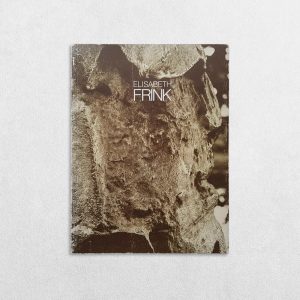
£145.00Frink, Elisabeth & Kent, Sarah