

Tintin – La Fusée 60 – The 60cm Lunar Rocket – Limited Edition – 46994
HERGÉ & MOULINSART
£595.00
Availability: In stock
Product Description
Tintin – La Fusée 60 – The 60cm Lunar Rocket – Limited Edition – 46994
Artist: Hergé
Price: £595 including UK postage (Global Postage will be over the default amount)
Publisher: Moulinsart
Format: Resin in original packaging
Condition: Brand new
Size: 60cm
The Tintin Moulinsart 60cm rocket is a highly detailed and iconic collectible, inspired by the classic illustrations from Destination Moon and Explorers on the Moon, two of Hergé’s celebrated Tintin adventures. This replica faithfully reproduces the vibrant red-and-white chequered design of the rocket, a hallmark of the series’ retro-futuristic aesthetic.
Crafted from high-quality resin, the rocket boasts a sleek finish and precise attention to detail, reflecting the original artwork’s proportions and style. Standing at an impressive 60cm tall, it serves as a striking centrepiece for any display of Tintin artefacts. The carefully rendered design captures the timeless charm and adventurous spirit of Tintin, making it highly desirable for fans and collectors alike.
The base of the rocket is subtly weighted to ensure stability, while its smooth contours and glossy surface highlight the craftsmanship involved. Its bold yet minimalistic design appeals not only to enthusiasts of the Tintin series but also to those with a love of mid-20th-century design. The 60cm rocket is a testament to the enduring legacy of Hergé’s work and a celebration of imagination and exploration.
The Tintin Lunar Rocket: A Brief Account
The Moon Rocket in The Adventures of Tintin is one of the most recognisable and celebrated icons in twentieth-century visual culture. It appears in Hergé’s two-part masterpiece — Destination Moon (Objectif Lune, 1953) and Explorers on the Moon (On a marché sur la Lune, 1954) — and symbolises the perfect synthesis of scientific imagination, artistic precision, and moral optimism that defines the mature Tintin series.
Design and Technical Conception
The rocket, officially named the X-FLR6, is presented as a nuclear-powered spacecraft designed by Professor Calculus (Professeur Tournesol) and built under strict secrecy in the fictional European kingdom of Syldavia. Hergé’s depiction of the rocket is both imaginative and astonishingly prescient. Its tall, slender, conical shape, supported by three red landing fins, immediately evokes the streamlined futurism of 1950s aerospace design. The distinctive red-and-white chequered pattern, alternating diagonally around the fuselage, became a defining visual motif — simultaneously playful, futuristic, and unmistakably European.
Hergé developed the rocket’s design in close collaboration with scientific and technical consultants, including the Swiss engineer Alexis L. de Pommereul, who advised on propulsion, trajectory, and the physics of space travel. The result is a craft that, while fictional, adheres closely to the engineering logic of its time. The rocket’s multi-stage propulsion, pressurised crew cabin, onboard laboratory, and retro-rockets for lunar landing all anticipate real-world technologies used in the Apollo missions — more than a decade before they occurred.
Narrative Role
In Destination Moon, the rocket’s conception, construction, and testing form the core of the story. Professor Calculus leads a team of scientists and engineers at a vast secret research base carved into the Syldavian mountains, where Tintin, Captain Haddock, and Snowy become involved in the project. The narrative emphasises teamwork, intellect, and moral discipline — qualities that allow human beings to achieve the seemingly impossible.
In Explorers on the Moon, the rocket carries Tintin, Haddock, Calculus, and two engineers, Frank Wolff and Colonel Boris Jorgen, on the first manned mission to the Moon. The story follows every phase of the journey with convincing realism: launch, weightlessness, lunar orbit, landing, and return. The rocket thus serves not merely as a means of transport but as a self-contained world, where moral courage and scientific ingenuity are tested under extreme conditions.
The drama reaches its climax on the lunar surface, where Tintin becomes the first human to step onto the Moon — an act rendered with both poetic awe and technical credibility. The rocket, standing upright against the desolate grey landscape, symbolises human aspiration and curiosity — a triumph of reason and imagination.
Symbolism and Themes
The Moon Rocket represents the optimism of post-war science — the belief that knowledge and cooperation could lead humanity beyond the confines of Earth. It stands as a monument to peaceful exploration, in stark contrast to the destructive uses of nuclear power that had defined the previous decade. Hergé uses the rocket to express faith in the moral potential of science when guided by conscience and humility.
At the same time, the rocket embodies the duality of technology. Its power to inspire and unite is shadowed by danger and moral fragility — evident in the themes of espionage and sabotage that run through both albums. Calculus’s scientific genius, though benevolent, is pursued and exploited by those who would weaponise his discoveries, echoing real-world Cold War anxieties.
Artistic Achievement
Visually, the Moon Rocket is a masterpiece of design. Hergé’s ligne claire style — clean lines, flat colours, and geometric clarity — lends the rocket a sculptural elegance. The surrounding environments, from the control room to the lunar surface, are drawn with architectural precision, based on extensive reference material. The rocket’s launch sequences, shown in perfectly composed panels, convey both the scale and rhythm of modern engineering.
In Explorers on the Moon, Hergé achieves moments of breathtaking visual poetry: the rocket floating in orbit against the black void; its shadow stretching across the Moon’s surface; the astronauts moving slowly beneath its fins. These images transcend comic illustration to become enduring works of visual storytelling.
Cultural and Historical Legacy
The Moon Rocket’s influence extends far beyond the Tintin series. It has become a universal symbol of space exploration, appearing in museums, model collections, and even architectural references. The design has inspired generations of artists, engineers, and space enthusiasts. When the Apollo 11 mission landed on the Moon in 1969, many commentators noted that Hergé’s depiction had anticipated the real event with uncanny accuracy — in layout, technology, and spirit.
For readers, the rocket encapsulates the essence of Tintin’s world: scientific precision united with moral idealism and human curiosity. It represents the belief that exploration, when guided by courage and conscience, can expand not only human knowledge but also human empathy.
Conclusion
The Moon Rocket of The Adventures of Tintin stands as one of Hergé’s crowning achievements — a seamless fusion of art, science, and imagination. Beyond its elegant form and technical foresight, it endures as a symbol of humanity’s aspiration toward discovery and understanding. More than a machine, it is a metaphor for progress itself: fragile, noble, and propelled by the belief that knowledge, used wisely, can lift us beyond our limitations.
The Adventures Of Tintin: A Short Description
The Adventures of Tintin is a globally renowned comic book series created by Belgian artist Georges Remi, better known as Hergé. First appearing in 1929, the series chronicles the exploits of Tintin, a young, intrepid reporter, and his loyal fox terrier, Snowy. Spanning 24 albums, The Adventures of Tintin is a masterpiece of storytelling and art, blending mystery, humour, action, and social commentary.
Main Elements of the Series
1. The Protagonist: Tintin
Tintin is a young journalist, although his reporting work often takes a back seat to his daring escapades. He is intelligent, resourceful, and morally upright, embodying the classic hero archetype. While his backstory is largely unexplored, his courage and quick thinking define his character. Tintin’s ability to adapt to diverse cultures and situations reflects his universal appeal.
2. Snowy (Milou)
Snowy is Tintin’s loyal and witty canine companion. While mostly providing comic relief, Snowy often plays a crucial role in saving Tintin from peril. His love for bones and occasional lapses into self-serving behaviour make him an endearing character.
3. Recurring Characters
Hergé created a rich supporting cast, each with distinct personalities:
- Captain Haddock: Tintin’s best friend and a sea captain known for his colourful vocabulary and love of whisky. His emotional outbursts provide comic relief, but he is also brave and dependable.
- Professor Calculus (Professeur Tournesol): A brilliant but absent-minded scientist, often at the centre of the series’ technological inventions and comic misunderstandings.
- Thomson and Thompson (Dupond et Dupont): Identical-looking detectives whose clumsiness contrasts with their self-perceived competence.
- Bianca Castafiore: The “Milanese Nightingale,” an opera singer whose dramatic flair and piercing voice often unsettle Haddock.
- Villains and Adversaries: Memorable antagonists like Rastapopoulos, Allan, and Colonel Sponsz drive many of the series’ conflicts.
Themes and Settings
1. Global Adventures
The series takes Tintin across the globe—from the bustling streets of Europe to the deserts of the Middle East, the jungles of South America, the snowy Himalayas, and even the Moon. Hergé’s meticulous research ensures each setting is rendered with authenticity.
2. Mystery and Intrigue
Most of Tintin’s adventures involve solving mysteries, unravelling conspiracies, or battling criminal networks. Stories like The Secret of the Unicorn and The Calculus Affair showcase intricate plots with twists and suspense.
3. Humour and Satire
Hergé incorporates humour through character interactions, situational comedy, and satirical depictions of contemporary politics and society. For example, The Blue Lotus critiques Western imperialism and King Ottokar’s Sceptre foreshadows the political tensions leading to World War II.
4. Science and Exploration
Hergé’s fascination with technology is evident in albums like Destination Moon and Explorers on the Moon, where he combines scientific accuracy with imaginative storytelling. These stories reflect the spirit of discovery prevalent during the 20th century.
Art Style: The Ligne Claire
Hergé’s signature “ligne claire” (clear line) style is characterised by precise lines, bold colours, and detailed backgrounds. This approach ensures that the action is easy to follow while maintaining a high level of visual storytelling. The meticulous attention to detail extends to vehicles, architecture, and clothing, enhancing the realism of Tintin’s world.
Legacy and Cultural Impact
- Universal Appeal: Tintin’s adventures have been translated into over 70 languages, making the series a cornerstone of global comic literature.
- Adaptations: The series has inspired animated TV shows, radio dramas, and the 2011 Steven Spielberg-directed film The Adventures of Tintin: The Secret of the Unicorn.
- Influence: Hergé’s work has influenced generations of artists and writers, elevating the comic medium to a sophisticated form of art and storytelling.
- Controversy: Some early albums, like Tintin in the Congo, reflect the colonial attitudes of the time and have drawn criticism for outdated racial stereotypes. Hergé later revised his approach, as seen in culturally sensitive works like The Blue Lotus.
Notable Works In The Series
- The Secret of the Unicorn and Red Rackham’s Treasure: A swashbuckling treasure hunt.
- The Calculus Affair: A Cold War espionage thriller.
- The Blue Lotus: A gripping story set in China, highlighting Hergé’s anti-imperialist stance.
- Destination Moon and Explorers on the Moon: Ground-breaking science fiction.
- The Black Island: A classic mystery with a British setting.
Enduring Appeal
The combination of Tintin’s heroic spirit, Hergé’s masterful art, and the series’ blend of humour, adventure, and cultural awareness make The Adventures of Tintin timeless. It continues to captivate readers of all ages, embodying the thrill of exploration and the universal struggle between good and evil.
HORNSEYS: A DESTINATION FOR TINTIN MEMORABILIA
Since 1976, Hornseys has established itself as a trusted source for collectors and enthusiasts seeking unique and eclectic items. Our commitment to quality and authenticity has earned us a reputation for excellence. Among our most collections is our extensive range of products related to Hergé’s iconic series, “The Adventures of Tintin”. This beloved series, which has captivated audiences for decades, is celebrated through our carefully curated selection of rare first edition books and exquisitely crafted 1/24 scale model cars, figures, and resin models. All of these items are available to view in our Ripon gallery.
WHY BUY FROM US?
At Hornseys, we only offer items that meet the highest standards of quality and authenticity. Our inventory is carefully curated to ensure each piece is authentic and of high quality.
HERE’S WHAT SETS US APART
Authenticity and Provenance: Every item is researched, collated, and verified for authenticity.
Expert Curation: Each item is selected with a keen eye for historical significance, condition, and rarity, ensuring a collection that is both diverse and distinguished.
Customer Satisfaction: We strive to provide an exceptional customer experience, from detailed descriptions and provenance to secure and prompt delivery of your purchase.
Returns Policy: We offer an unconditional guarantee on every item. If you wish to make a return, items may be sent back to us within fourteen days of receipt for any reason. We request advance notification of returns, and items must be returned in the same condition as sent for a full refund.
EXPLORE OUR COLLECTION
Visit Hornseys to explore our fine collection of rare and antique prints, posters, models and photographs. Whether you are an avid collector or looking for a unique historical piece, our selection offers something truly exceptional. Located in the picturesque Yorkshire Dales, our Ripon gallery has been a haven for art enthusiasts, historians, and collectors since 1976.
Thank you for looking.
Related products

42233 – ALLAN PROVOQUE HADDOCK – FIGURINE RESINE 12CM – ALLAN PROVOKES HADDOCK – 12CM RESIN FIGURE
£32.00HERGÉ & MOULINSART



You may also like…
42190 TINTIN EN TRENCH – FIGURINE RESINE 12CM – TINTIN IN TRENCHCOAT – 12CM RESIN FIGURE
£32.00HERGÉ & MOULINSART
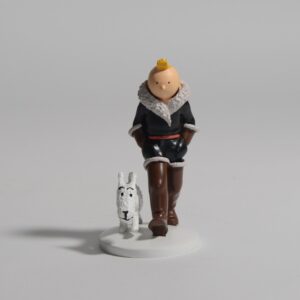
42186 TINTIN COSMONAUTE – FIGURINE RESINE 12CM – TINTIN ASTRONAUT – 12CM RESIN FIGURE
£32.00HERGÉ & MOULINSART
42198 RASCAR CAPAC – FIGURINE RESINE 12CM – RASCAR CAPAC – 12CM RESIN FIGURE
£35.00HERGÉ & MOULINSART





Privacy Overview
| Cookie | Duration | Description |
|---|---|---|
| cookielawinfo-checkbox-analytics | 11 months | This cookie is set by GDPR Cookie Consent plugin. The cookie is used to store the user consent for the cookies in the category "Analytics". |
| cookielawinfo-checkbox-functional | 11 months | The cookie is set by GDPR cookie consent to record the user consent for the cookies in the category "Functional". |
| cookielawinfo-checkbox-necessary | 11 months | This cookie is set by GDPR Cookie Consent plugin. The cookies is used to store the user consent for the cookies in the category "Necessary". |
| cookielawinfo-checkbox-others | 11 months | This cookie is set by GDPR Cookie Consent plugin. The cookie is used to store the user consent for the cookies in the category "Other. |
| cookielawinfo-checkbox-performance | 11 months | This cookie is set by GDPR Cookie Consent plugin. The cookie is used to store the user consent for the cookies in the category "Performance". |
| viewed_cookie_policy | 11 months | The cookie is set by the GDPR Cookie Consent plugin and is used to store whether or not user has consented to the use of cookies. It does not store any personal data. |