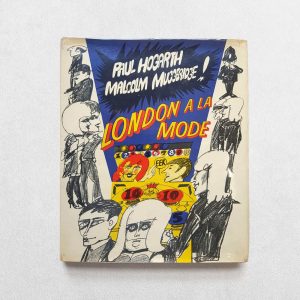
Tower Bridge: Original Lithograph
Hogarth, Paul OBE RA
£195.00
Availability: In stock
Product Description
Tower Bridge: Original Lithograph
Artist: Paul Hogarth
Price: £195.00
Publisher: The Artist & The Curwen Studio, UK
Publication date: c.1995
Format: Original lithograph
Condition: Very near fine to fine condition, unframed
Sheet Size: 54cm x 74cm
Edition: 66/150, signed by the artist
Description
This original lithograph by Paul Hogarth is one from a number that he produced at the Curwen Studio. The print, measuring 54cm x 74cm, is number 66 from the edition of 150 and is signed and numbered by the artist. The overall condition is very near fine to fine. It has never been framed.
Paul Hogarth: A Short Biography
Paul Hogarth (1917–2001) was a distinguished British artist and illustrator, widely recognised for his work in the fields of drawing and illustration, particularly his depiction of architectural and urban landscapes. Hogarth’s work is celebrated for its detailed and evocative portrayals of the human experience within the built environment.
Early Life and Education
Paul Hogarth was born on October 4, 1917, in Kendal, Cumbria, England. He grew up in a working-class family, which later influenced his political views and the themes in his work. Hogarth’s formal art education began at the Manchester School of Art in 1934, where he developed his skills in drawing and painting. He later continued his studies at St. Martin’s School of Art in London.
Career and Artistic Development
During the 1930s, Hogarth became involved with leftist political movements, including the Communist Party of Great Britain. This political engagement deeply influenced his early work, which often depicted the struggles of the working class and the impact of industrialization. In 1936, he joined the Mass Observation project, a social research organization that documented everyday life in Britain. Hogarth’s artistic career was interrupted by World War II, during which he served in the British Army. After the war, he travelled extensively, and his experiences abroad became a significant influence on his work. Hogarth’s travels took him across Europe, Africa, and Asia, where he documented his surroundings through detailed sketches and watercolours.
Collaboration with Writers
One of Hogarth’s most significant contributions to the arts was his collaboration with renowned writers, including Graham Greene and Lawrence Durrell. His illustrations for Greene’s novels, such as “Our Man in Havana” and “Travels with My Aunt”, brought him widespread acclaim. Hogarth’s ability to capture the essence of a story through his drawings made these collaborations particularly successful.
Later Life and Legacy
In the later years of his career, Paul Hogarth continued to travel and create, with his work becoming more focused on urban landscapes and the interaction between people and their environments. He was elected a Royal Academician in 1974, a testament to his impact on the British art scene. Hogarth’s work is held in numerous public and private collections, and he is remembered as one of the most significant British illustrators of the 20th century. His legacy lives on through his detailed and evocative illustrations that continue to inspire and captivate audiences.
Paul Hogarth passed away on December 27, 2001, leaving behind a rich legacy of artwork that documented the world with a unique blend of realism and social commentary.
Tower Bridge: A Short History
Background and Planning
Tower Bridge, one of London’s most iconic landmarks, was constructed in response to the city’s need for increased infrastructure to accommodate its growing population and booming commercial activity in the late 19th century. The East End of London was rapidly expanding, and with it came the need for a new crossing over the River Thames, one that would not disrupt river traffic. In 1876, a Special Bridge or Subway Committee was formed to address this issue. After nearly a decade of deliberation and the consideration of over 50 designs, the committee selected the design submitted by Sir Horace Jones, the City Architect, in collaboration with civil engineer Sir John Wolfe Barry. Their proposal was unique in that it combined elements of a suspension bridge with a bascule (drawbridge), allowing the structure to accommodate both pedestrians and vehicles while still permitting tall ships to pass through.
Design and Construction
The construction of Tower Bridge began in 1886 and was completed in 1894. The bridge took eight years to build, employing over 400 workers. The design is a hybrid of a bascule and suspension bridge, with two large towers connected by walkways and two central bascules that can be raised to allow ships to pass. The bascules are powered by hydraulic mechanisms, which were originally driven by steam engines. The bridge’s towers were constructed using over 11,000 tons of steel, and the structure is clad in Cornish granite and Portland stone, chosen to protect the underlying steelwork and to give the bridge a more aesthetically pleasing appearance that would complement the nearby Tower of London. The final cost of constructing Tower Bridge was about £1,184,000, a considerable sum at the time.
Opening and Early Use
Tower Bridge was officially opened on June 30, 1894, by the then Prince of Wales, who later became King Edward VII. It quickly became a vital artery for traffic across the Thames, as well as a symbol of London’s industrial strength and ingenuity. The upper walkways, intended for use by pedestrians when the bridge was raised, were initially unpopular due to the lengthy climb and the bridge’s relatively isolated location. These walkways were eventually closed in 1910 due to lack of use and concerns about their potential use by petty criminals.
Modernisation and Preservation
Throughout the 20th century, Tower Bridge underwent various modifications and upgrades to keep it functional and in line with modern standards. The original steam-powered hydraulic machinery was replaced with an electro-hydraulic system in 1974, and the bridge was repainted in the now-famous red, white, and blue colour scheme in 1977 to celebrate Queen Elizabeth II’s Silver Jubilee. The walkways were reopened in 1982 as part of the Tower Bridge Exhibition, a museum and tourist attraction that allows visitors to explore the bridge’s history, mechanics, and panoramic views of London.
Cultural and Symbolic Significance
Tower Bridge is not just a functional piece of infrastructure; it has become a global symbol of London. Its distinctive Gothic Revival style, with its imposing towers and dramatic bascules, makes it one of the most photographed landmarks in the city. The bridge has appeared in countless films, television shows, and pieces of literature, further embedding it in the cultural consciousness of both Londoners and visitors from around the world.
Recent Developments
In recent years, Tower Bridge has continued to undergo maintenance and improvements to ensure its longevity. In 2016, the bridge was closed for three months to undergo essential structural maintenance, including the replacement of its road surface and the refurbishment of its walkways. Today, Tower Bridge is both a vital transportation link and a major tourist attraction, drawing millions of visitors each year who come to admire its historic architecture, explore its exhibition, and enjoy the stunning views it offers of the Thames and the London skyline.
Legacy
Tower Bridge remains an engineering marvel and a testament to Victorian innovation. Its combination of functionality, architectural beauty, and historical significance make it one of the most beloved and enduring symbols of London.
SHOP WITH CONFIDENCE AT HORNSEYS
At Hornseys, we are dedicated to offering items that uphold the highest standards of quality and authenticity. Our collection of artwork is carefully curated to ensure that each edition is a valuable and authentic piece. Here’s what sets us apart:
Authenticity and Provenance: Each print is researched and verified for authenticity, guaranteeing that you receive a genuine signature from the artist.
Expert Curation: We wholly own all our artworks. We trust our taste and have invested heavily in it. We have confidence in all artwork that we offer for sale.
Customer Satisfaction: We strive to provide an exceptional customer experience, from detailed descriptions and provenance to secure and prompt delivery of your purchase.
Returns Policy: We offer an unconditional guarantee on every item. If, however, you wish to make a return, artworks may be sent back to us within fourteen days of receipt for whatever reason. We request that we are notified in advance if you wish to do so. They must be returned to us in the same condition as they were sent for a full refund.
OUR COMMITMENT TO QUALITY AND SERVICE
Understanding the value and rarity of these items, we ensure that every aspect of your purchase meets the highest standards of quality and service. This includes:
Free Expedited, Tracked, and Insured Delivery within the UK: Ensuring that your artwork arrives safely and promptly.
Fully-Insured Worldwide Delivery: Offering peace of mind for international collectors with reliable and secure shipping options.
EXPLORE OUR COLLECTION
Visit Hornseys today to explore our fine collection of Paul Hogarth’s artworks and books. Whether you are an avid collector or looking for a special gift, our selection offers something truly unique. Located since 1976 in Ripon in the picturesque Yorkshire Dales, we are recognised as a destination gallery for tastefully curated artwork, design, and fine books.
Related products


You may also like…

Graham Greene Country Visited By Paul Hogarth: Presentation Copy From The Artist To Elisabeth Frink
£225.00Hogarth, Paul with foreword and commentary by Greene, Graham