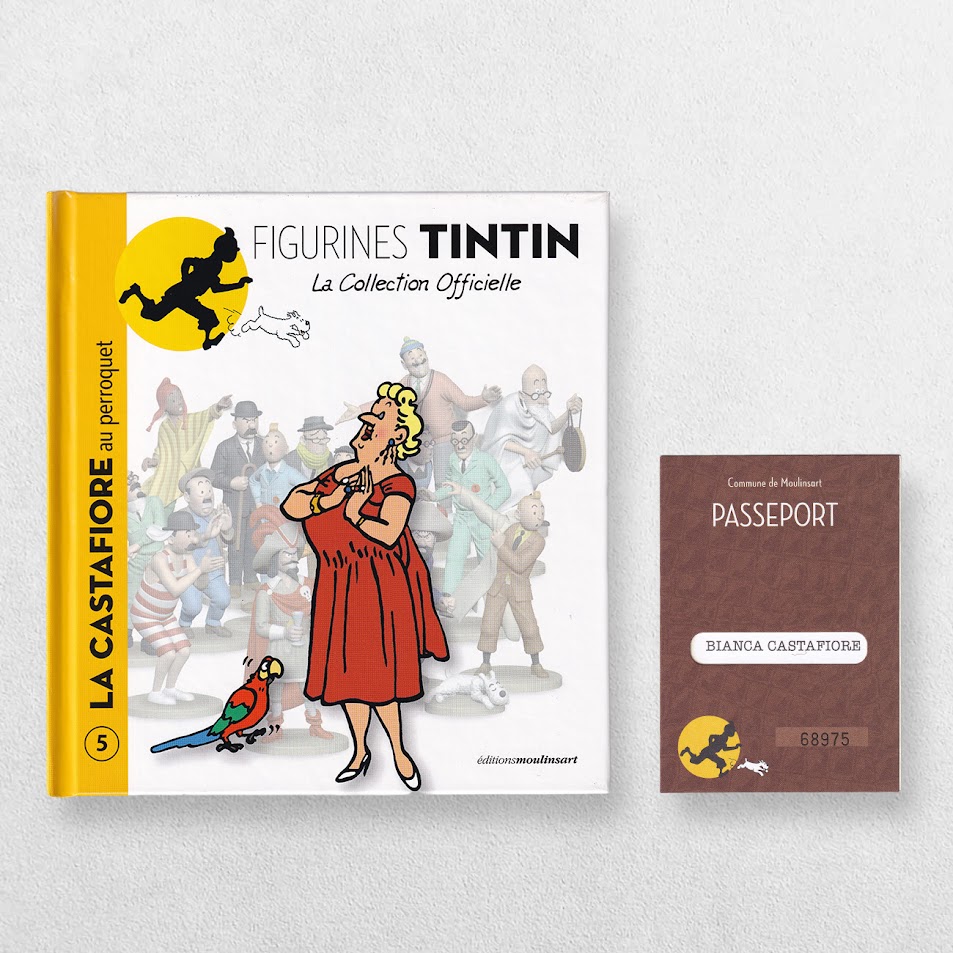
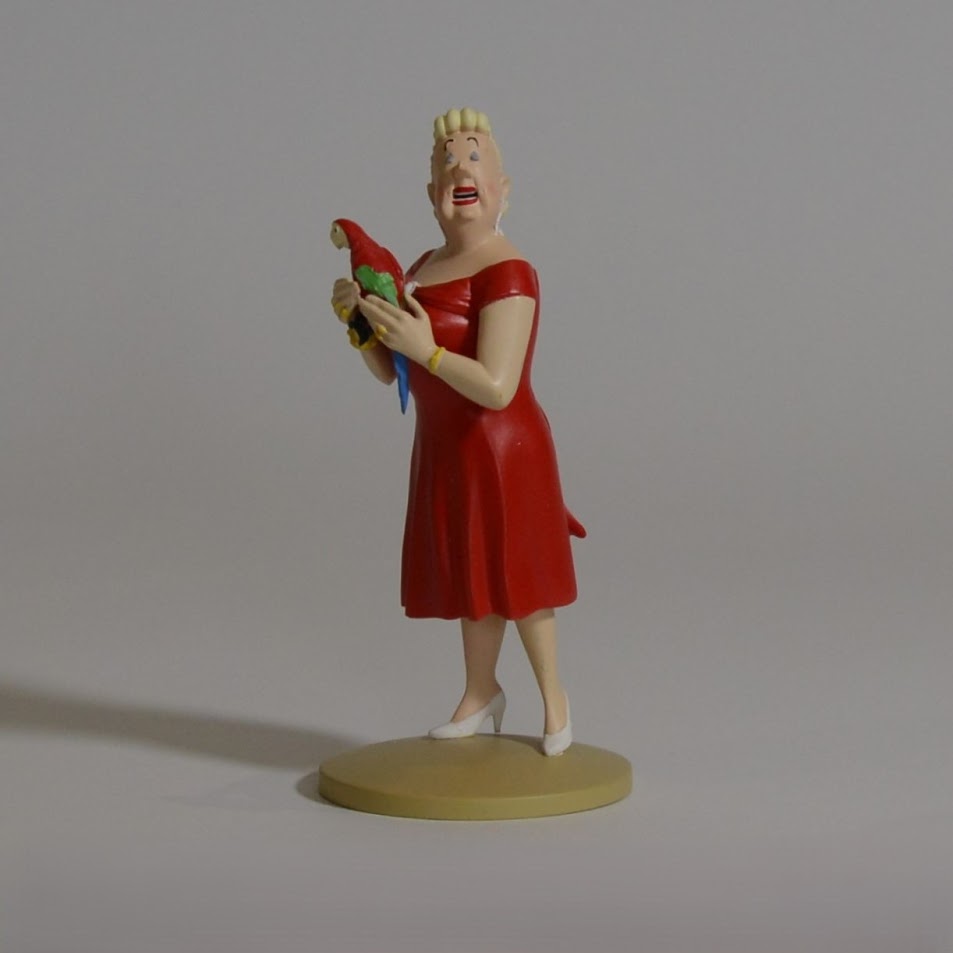
Castafiore With The Parrot – Figurines Tintin La Collection Officielle – 5 – La Castafiore Au Perroquet
Author: Hergé & Editions Moulinsart
Price: £75.00
Publisher: Editions Moulinsart
Publication date: 2011
Format: Original pictorial boards with passport and figurine
Condition: In fine condition
Illustrations: Illustrated throughout
Description:
Original pictorial boards. Includes passport loosely inserted. Text in French. Includes the accompanying figurine. One from the collection of 111 books and figurines. In fine, clean condition overall.
Castafiore With The Parrot: A Brief Account
Bianca Castafiore, the celebrated Milanese soprano of Hergé’s Adventures of Tintin, is an exuberant character defined by her voice, flamboyance, and flair for drama. While she is most famously associated with jewels and her rendition of the Jewel Song from Gounod’s Faust, there are moments when she is shown in the company of animals, notably a parrot. The image of Castafiore with the parrot is more than a comic aside: it is a layered motif that enriches her personality and role within the series.
The Parrot as a Mirror
The parrot functions as a mirror of Castafiore’s own qualities. Like her, it is noisy, flamboyant, and insistent upon being heard. Its mimicry and bright plumage parallel her theatrical presence, creating a playful doubling effect. By placing a parrot beside her, Hergé heightens the humour of her character, suggesting that her voice and mannerisms can be echoed—even parodied—by an animal.
Comic Effect
In scenes where Castafiore interacts with a parrot, comedy arises naturally. The bird may squawk over her singing, interrupt her conversation, or repeat phrases in a way that undermines her dignity. Such moments of levity prevent the diva from appearing too formidable and instead render her accessible to the reader. The parrot’s irreverence punctures the self-importance she projects, much as Captain Haddock’s grumbling does.
Symbol of Exoticism
The parrot also carries connotations of exoticism, travel, and luxury. For a character like Castafiore, who thrives on glamour and spectacle, the presence of a parrot fits seamlessly into her environment. It reinforces the sense that she inhabits a world of opulence, one populated by jewels, gowns, admirers, and ornate possessions. In this way, the parrot becomes part of the theatrical stage upon which she always performs.
A Foil to Her Voice
One of the cleverest aspects of the parrot motif is the contrast it establishes with Castafiore’s singing. Her voice, trained and soaring, is the subject of admiration within the fictional world, yet is often a source of comic torment to characters such as Haddock. The parrot, by imitating sounds without artistry, serves as a foil: a reminder that beauty and noise can coexist uncomfortably. This juxtaposition accentuates the absurdity of her exaggerated self-belief.
Humanising the Diva
Castafiore can at times appear aloof or overwhelming. By showing her with a parrot, Hergé softens her image. The relationship between human and pet suggests companionship, a quieter side to her otherwise dazzling persona. She is not only a prima donna commanding the stage but also a woman capable of affection for a feathered companion. This dimension enriches her character, making her more rounded and relatable.
Cultural Resonance
In European art and literature, parrots have long been associated with mimicry, vanity, and flamboyance. By aligning Castafiore with such a symbol, Hergé situates her within a recognisable cultural tradition. The parrot does not simply exist for visual amusement; it carries associations that reinforce the themes of performance, display, and the tension between sincerity and superficiality.
Legacy of the Image
The sight of Castafiore with the parrot remains a striking visual vignette within the Tintin canon. It encapsulates her essence: colourful, dramatic, and faintly absurd. At the same time, it reflects Hergé’s artistry in using small details to illuminate character. For readers, the parrot is not merely an accessory but a witty counterpart to the diva herself—a bird that, in its way, sings as loudly as she does.
Why Buy from Us?
At Hornseys, we are committed to offering items that meet the highest standards of quality and authenticity. Our collection of objects and rare books are carefully curated to ensure each edition is a valuable piece of bibliographical history. Here’s what sets us apart:
- Authenticity and Provenance: Each item is meticulously researched and verified for authenticity and collation.
- Expert Curation: Our selection process focuses on significance, condition, and rarity, resulting in a collection that is both diverse and distinguished.
- Customer Satisfaction: We aim to provide an exceptional customer experience, from detailed descriptions to secure and prompt delivery of your purchase.
- Returns Policy: We offer an unconditional guarantee on every item. If you wish to return an item, it may be sent back to us within fourteen days of receipt. Please notify us in advance if you wish to do so. The item must be returned in the same condition as it was sent for a full refund.