Hergé: A Short Biography
Introduction
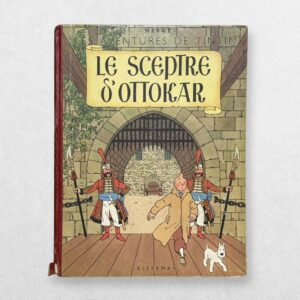
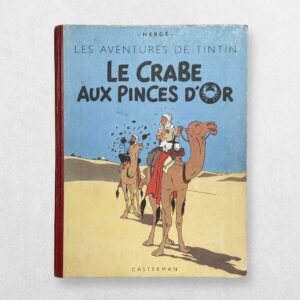
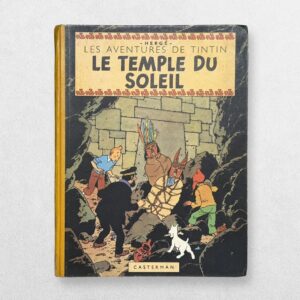
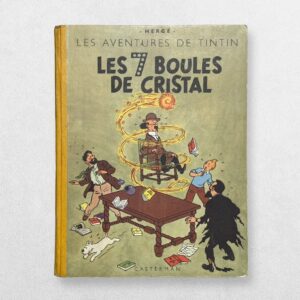
Hergé, the pen name of Georges Prosper Remi, was one of the most influential comic artists of the twentieth century. Best known as the creator of The Adventures of Tintin, he pioneered the ligne claire style of drawing and raised the comic strip form to the level of serious art and literature. His career spanned turbulent decades of European history, during which his work evolved from light adventure to narratives with political depth and psychological insight.
Early Life and Education
Georges Remi was born on 22 May 1907 in Etterbeek, a suburb of Brussels, Belgium. Raised in a modest, Catholic household, he showed an early aptitude for drawing. His initials “R.G.”, reversed into “Hergé”, became his famous pen name.
As a child, he enjoyed sketching scenes from his surroundings and was especially captivated by stories of adventure and exploration. His schooling at a Catholic institution further shaped his worldview, instilling in him both discipline and a taste for storytelling.
Early Career and Scouting Influence
Hergé’s formative years were deeply marked by his involvement in the Boy Scouts. He produced illustrations for scout magazines, where his clean, precise style began to emerge. His first recurring character, Totor, was created for a scout publication, foreshadowing the qualities later embodied by Tintin: courage, loyalty, and a spirit of adventure.
By the late 1920s, Hergé was working as an illustrator at the newspaper Le Vingtième Siècle. It was there, in the children’s supplement Le Petit Vingtième, that Tintin made his debut in 1929.
The Creation of Tintin
Tintin’s first adventure, Tintin in the Land of the Soviets, was a satirical and somewhat crude tale compared to Hergé’s later works, yet it established the format of a boy reporter travelling the world, uncovering conspiracies, and fighting injustice. The strip quickly became a sensation among young readers.
As the series progressed through the 1930s, Hergé refined both his artistic style and his storytelling. Works such as Cigars of the Pharaoh and The Blue Lotus revealed a growing commitment to research and authenticity. The Blue Lotus, in particular, marked a turning point, as Hergé collaborated with the Chinese artist Zhang Chongren, who helped him avoid stereotypical depictions and portray China with dignity and accuracy.
War Years and Controversy
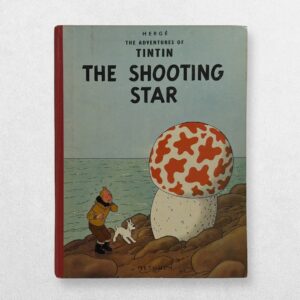
During the Second World War, Belgium was occupied by Nazi Germany. Hergé continued publishing Tintin in Le Soir, a newspaper controlled by the occupiers. While his stories from this period, such as The Shooting Star, were largely apolitical adventures, his decision to continue working in a collaborationist paper later drew criticism.
After the liberation of Belgium, Hergé was briefly accused of collaboration, though he was never formally charged. Nevertheless, the experience left him shaken and influenced the more reflective tone of his post-war work.
Post-War Renewal and International Success
In the late 1940s, Hergé began a new phase of his career. He joined Le Journal Tintin, a publication designed to showcase his work and that of other artists. With a team of assistants at Studio Hergé, he was able to refine the artwork to a standard of remarkable polish and detail.
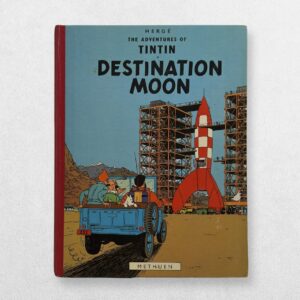
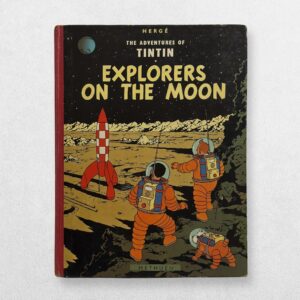
It was during this period that many of the most celebrated Tintin albums were created, including Destination Moon, Explorers on the Moon, and Tintin in Tibet. These works demonstrated not only Hergé’s artistic mastery but also his ability to adapt to contemporary themes such as space exploration and inner emotional struggles.
Personal Struggles
Behind his professional success, Hergé’s personal life was often troubled. His first marriage, to Germaine Kieckens, eventually broke down, and he endured periods of creative block and depression. His second marriage, to Fanny Vlamynck in 1977, provided greater stability, and she later played an important role in managing his artistic legacy.
Hergé was known to suffer recurring dreams of whiteness and emptiness, which some biographers have linked to his anxieties and to the creation of Tintin in Tibet, one of his most personal works.
Later Years and Legacy
Hergé continued to work on Tintin into the 1980s, though his health declined. He died on 3 March 1983 in Brussels, leaving the final Tintin story, Tintin and Alph-Art, unfinished. His death marked the end of the series, as he had stipulated that no new Tintin adventures should be created by others.
Today, Hergé is remembered not only as the creator of Tintin but as a pioneer who elevated the comic strip into a sophisticated medium of art and storytelling. His ligne claire style influenced countless artists, and his meticulous research and narrative depth set standards that remain benchmarks in the world of comics.
Conclusion
Hergé’s life and work reflect the complexities of the twentieth century: creativity and controversy, optimism and anxiety, humour and seriousness. Through Tintin, he created a character who continues to inspire generations with his courage, curiosity, and sense of justice. Hergé’s legacy endures in the global popularity of Tintin, in museums and adaptations, and in the recognition of comics as a legitimate art form shaped in no small part by his vision.
Why buy from us?
At Hornseys, we are committed to offering items that meet the highest standards of quality and authenticity. Our book collection is meticulously curated to ensure that each edition is a valuable and authentic piece of bibliographical history. Here’s what sets us apart:
- Authenticity and Provenance: Every book is researched, collated, and verified for authenticity.
- Expert Curation: Each book is selected with a keen eye for significance, condition, and rarity, ensuring a collection that is both diverse and distinguished.
- Customer Satisfaction: We strive to provide an exceptional customer experience, from detailed descriptions and provenance to secure and prompt delivery of your purchase.
- Returns Policy: We offer an unconditional guarantee on every item. If you wish to make a return, books may be sent back to us within fourteen days of receipt for any reason. We request advance notification of returns, and books must be returned in the same condition as sent for a full refund.
Explore Our Collection
Visit Hornseys to explore our fine collection of rare and signed books. Whether you are an avid collector or looking for a special gift, our selection offers something truly unique. Located in the picturesque Yorkshire Dales, our Ripon gallery has been a haven for book lovers, art enthusiasts, and collectors since 1976.