

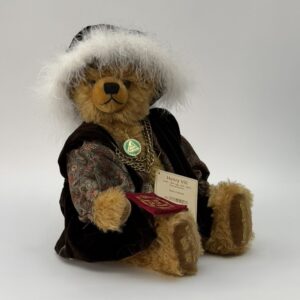
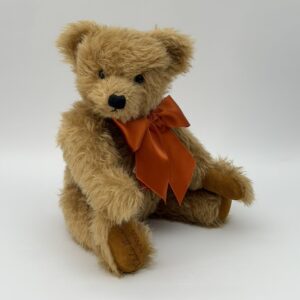
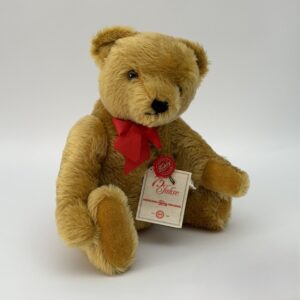


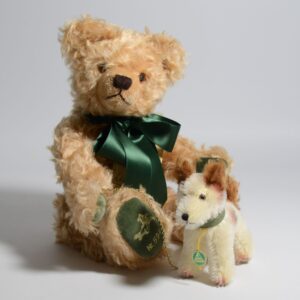
Hermann bears are among the most respected names in German teddy bear making, valued by collectors for their craftsmanship, character and long association with the traditional toy-making regions of Germany. With roots in the historic Sonneberg area, the Hermann name is closely linked with high-quality mohair bears, carefully finished faces and the classic fully jointed teddy bear form.
Collectors should note that the name Hermann may refer to two related but separate German bear-making traditions: Hermann-Coburg and Teddy-Hermann / Hermann Teddy Original. Both are associated with the wider Hermann family history, but they are distinct manufacturers with their own identities, labels and collector followings. For this reason, accurate attribution is important. A bear described as Hermann-Coburg should not automatically be assumed to be Teddy-Hermann, and vice versa, unless the surviving labels, buttons, swing tags, certificates or construction details support that identification.
Traditional Hermann bears are usually recognised for their quality materials and expressive modelling. Earlier and mid-20th-century examples may be made from mohair plush and often have jointed limbs, a swivel head, carefully stitched facial detail and shaped muzzles. Later collector’s bears may include limited edition numbering, certificates, original swing tags, maker’s labels or presentation boxes. These details can be highly relevant to both identification and value.
Hermann-Coburg bears are particularly associated with the firm’s distinctive triangular neck mark, while Teddy-Hermann / Hermann Teddy Original bears have their own branding, labels and edition details. Surviving marks are therefore important evidence when cataloguing a bear. Where original identification is missing, attribution must be made cautiously, using observable features such as materials, proportions, facial style, paw pads, jointing, stitching, stuffing, labels and overall construction.
At Hornseys, each Hermann bear is assessed individually. We look carefully at age, maker attribution, originality, condition, retained labels, edition details, repairs, mohair coverage, fading, working mechanisms and general presentation. Where a bear has a secure maker’s label or certificate, this is noted in the individual listing. Where attribution is uncertain, we avoid unsupported claims and describe the bear according to the evidence visible on the object itself.
Condition is especially important with Hermann bears. A vintage mohair bear with wear, fading or repairs may still have strong charm and collector interest, but its value will differ from a well-preserved example with original labels. Similarly, limited edition collector’s bears with certificates and original tags are generally assessed differently from earlier play-worn bears. Scarcity, size, age, edition number, subject, originality and retained documentation can all influence desirability.
Our Hermann bear listings are written for collectors, decorators and gift buyers who want clear, accurate and trustworthy descriptions. We aim to distinguish between vintage bears, modern collector’s editions, Hermann-Coburg examples and Teddy-Hermann / Hermann Teddy Original bears wherever the evidence allows. Each listing includes relevant details of maker, date, height, material, construction and condition, so buyers can make an informed decision.
Whether chosen as part of a specialist teddy bear collection or simply for its warmth and character, a Hermann bear represents a respected tradition of German soft toy making. These bears combine craftsmanship, personality and enduring decorative appeal, making them highly collectable examples within the wider field of vintage and artist teddy bears.
| Cookie | Duration | Description |
|---|---|---|
| cookielawinfo-checkbox-analytics | 11 months | This cookie is set by GDPR Cookie Consent plugin. The cookie is used to store the user consent for the cookies in the category "Analytics". |
| cookielawinfo-checkbox-functional | 11 months | The cookie is set by GDPR cookie consent to record the user consent for the cookies in the category "Functional". |
| cookielawinfo-checkbox-necessary | 11 months | This cookie is set by GDPR Cookie Consent plugin. The cookies is used to store the user consent for the cookies in the category "Necessary". |
| cookielawinfo-checkbox-others | 11 months | This cookie is set by GDPR Cookie Consent plugin. The cookie is used to store the user consent for the cookies in the category "Other. |
| cookielawinfo-checkbox-performance | 11 months | This cookie is set by GDPR Cookie Consent plugin. The cookie is used to store the user consent for the cookies in the category "Performance". |
| viewed_cookie_policy | 11 months | The cookie is set by the GDPR Cookie Consent plugin and is used to store whether or not user has consented to the use of cookies. It does not store any personal data. |