
Aesop’s Fables Illustrated By Elisabeth Frink – With The Four Original Lithographs Each Signed In Pencil By Elisabeth Frink
Frink, Elisabeth
£3,000.00
Availability: In stock
Product Description
Aesop’s Fables Illustrated By Elisabeth Frink – With The Four Original Lithographs Each Signed In Pencil By Elisabeth Frink
Illustrator: Frink, Elisabeth
Price: £3000
Publisher: R. Alistair McAlpine Publishing Ltd & Leslie Waddington Prints Limited
Edition: First edition
Publication Date: 1968
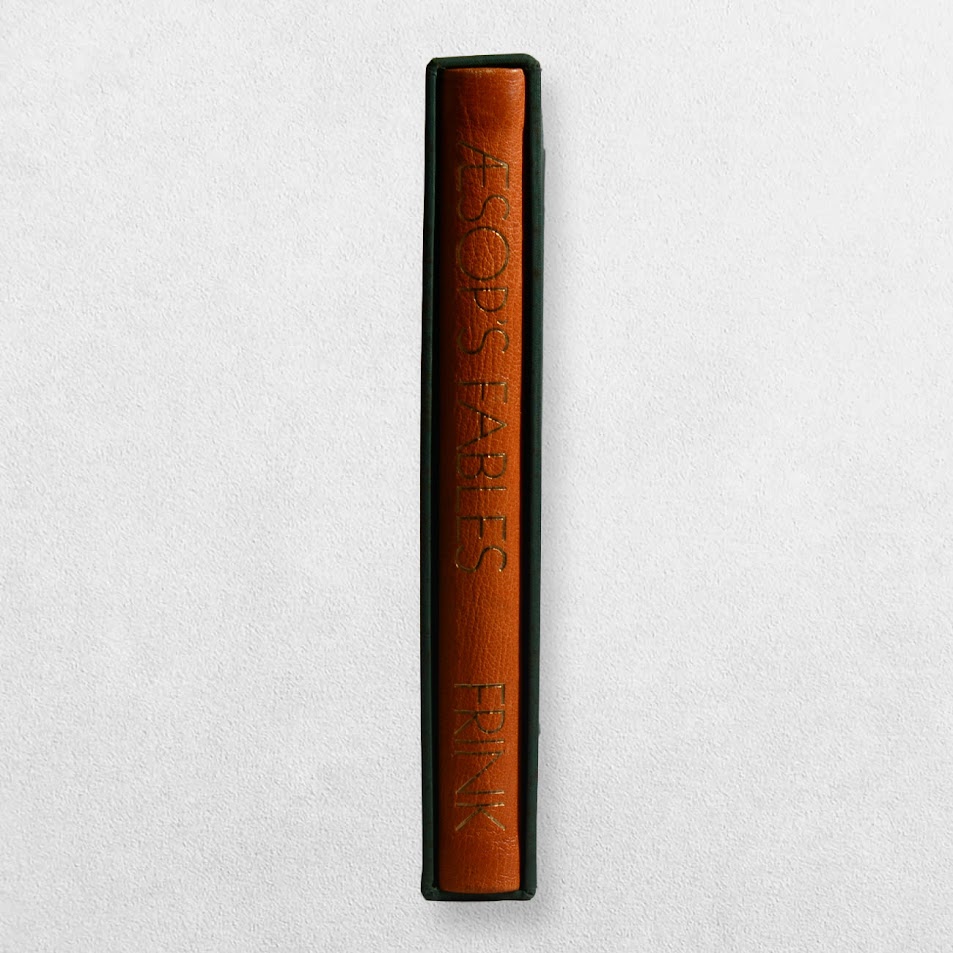
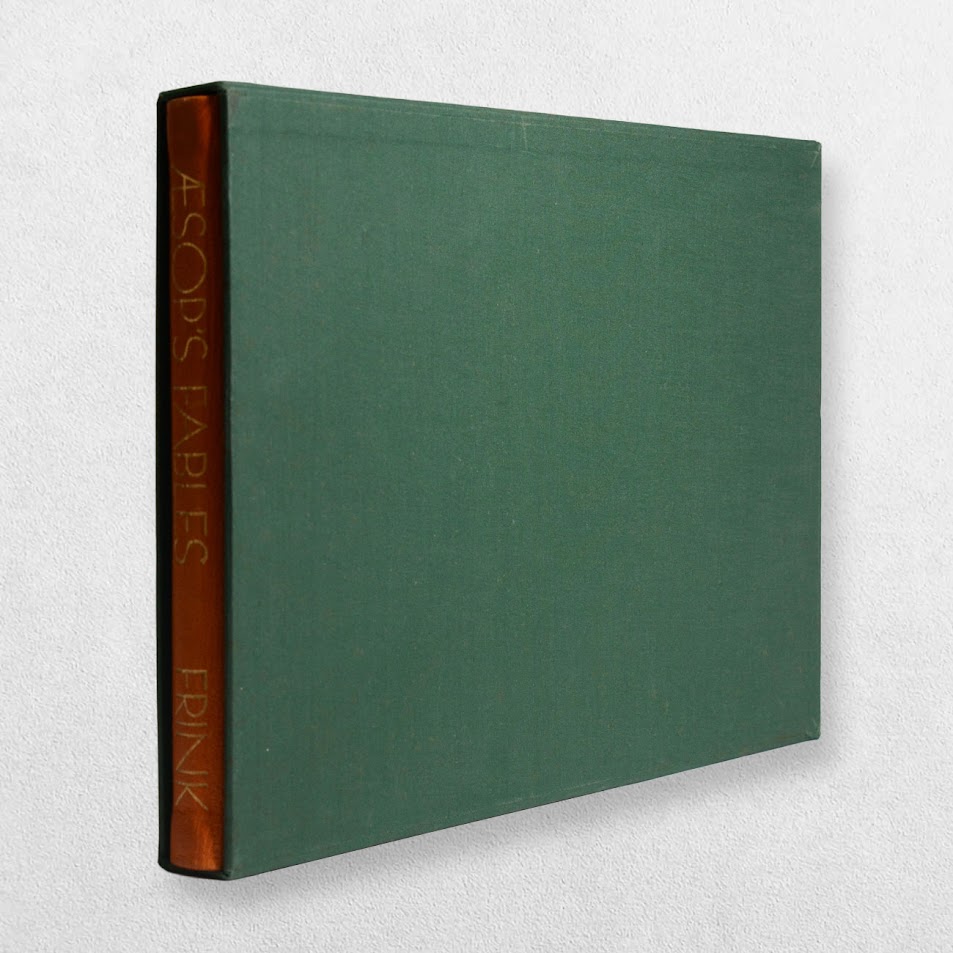
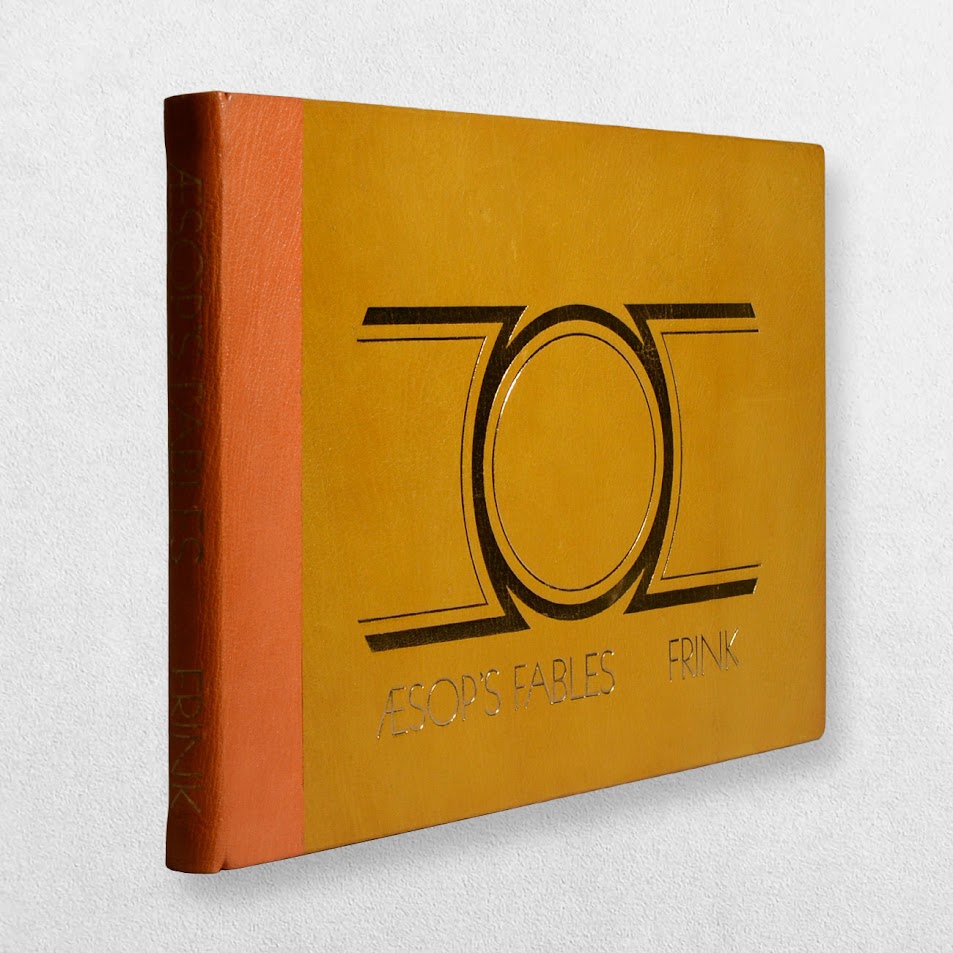
Format: Original full calf gilt. Slipcase
Condition: Fine
Description:
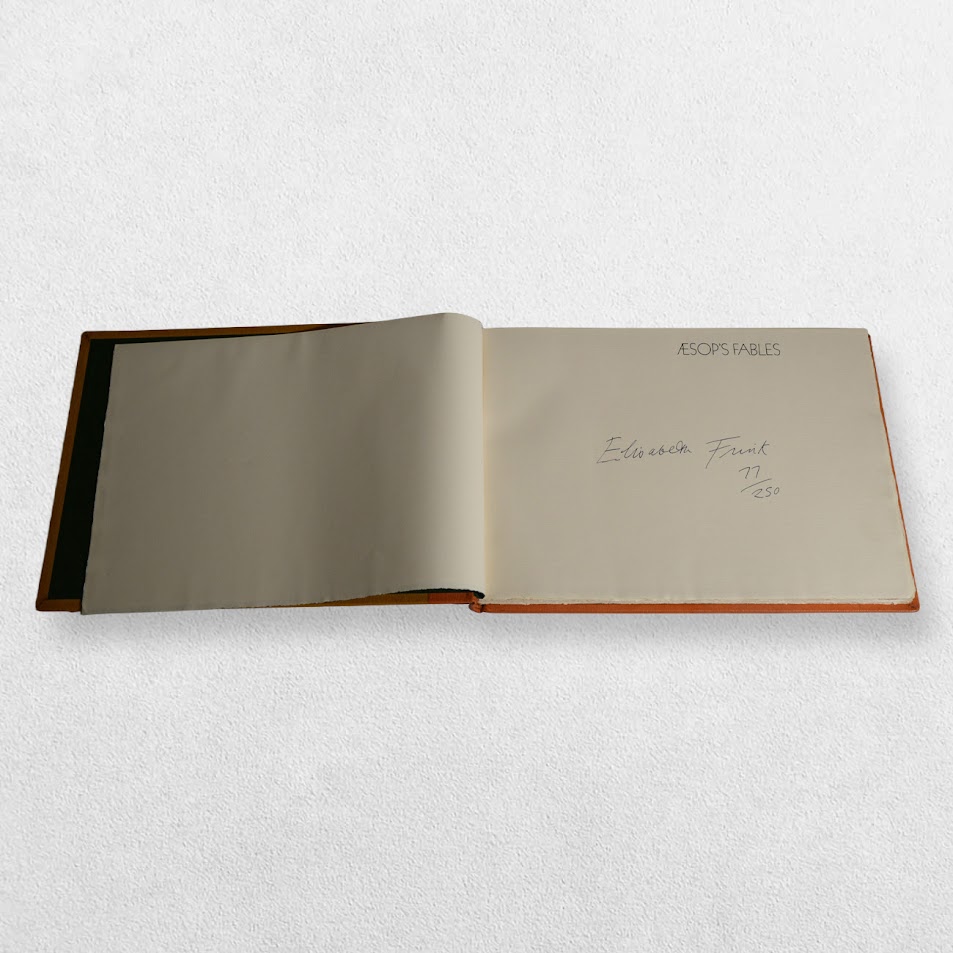
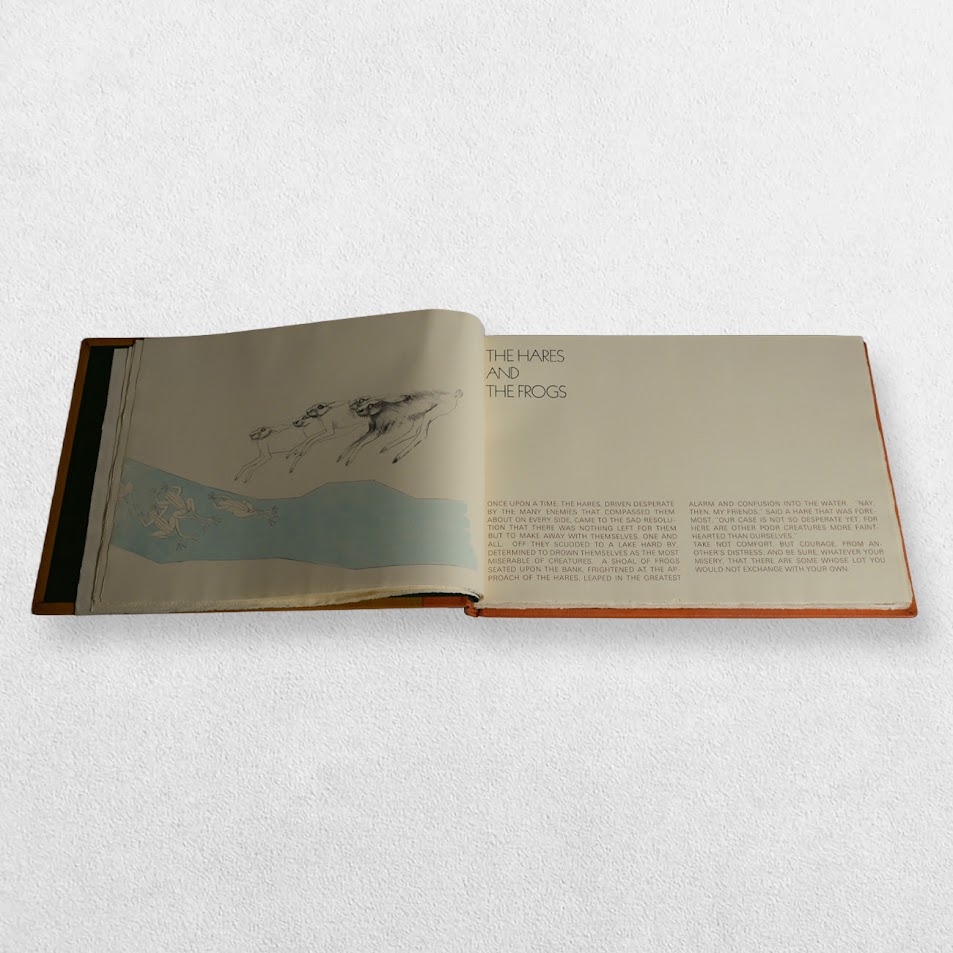
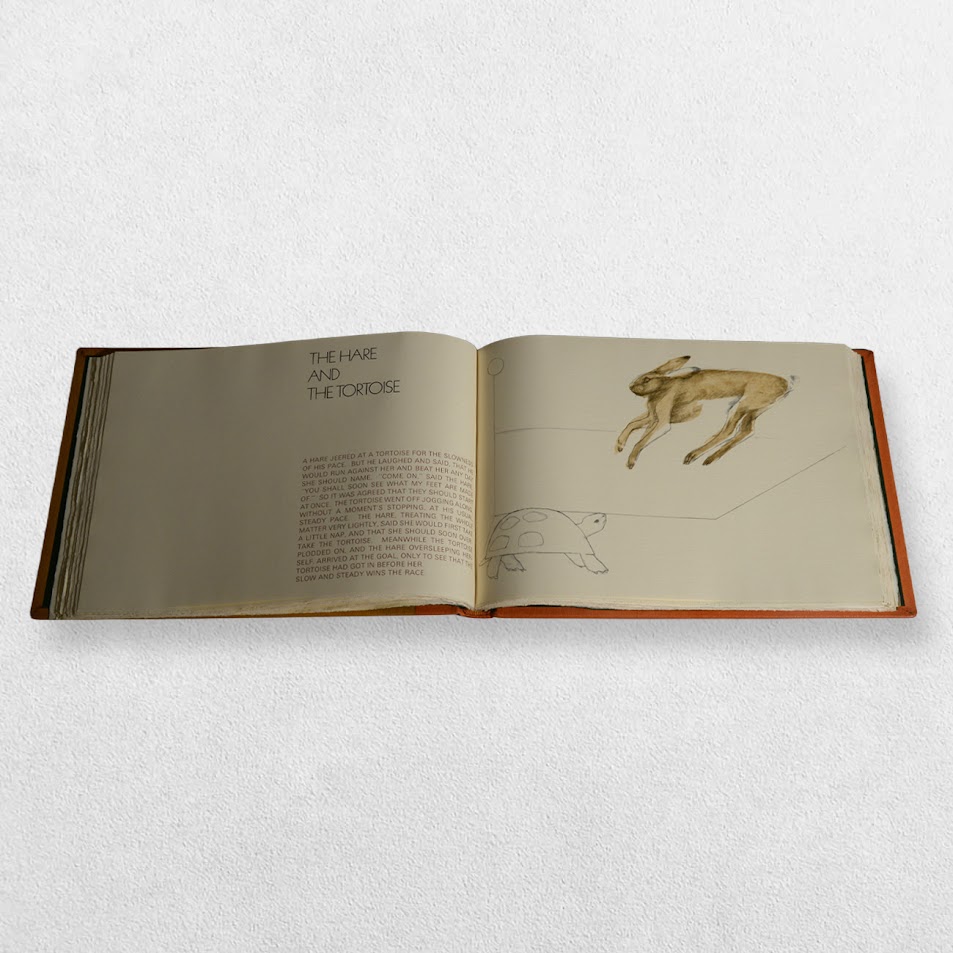
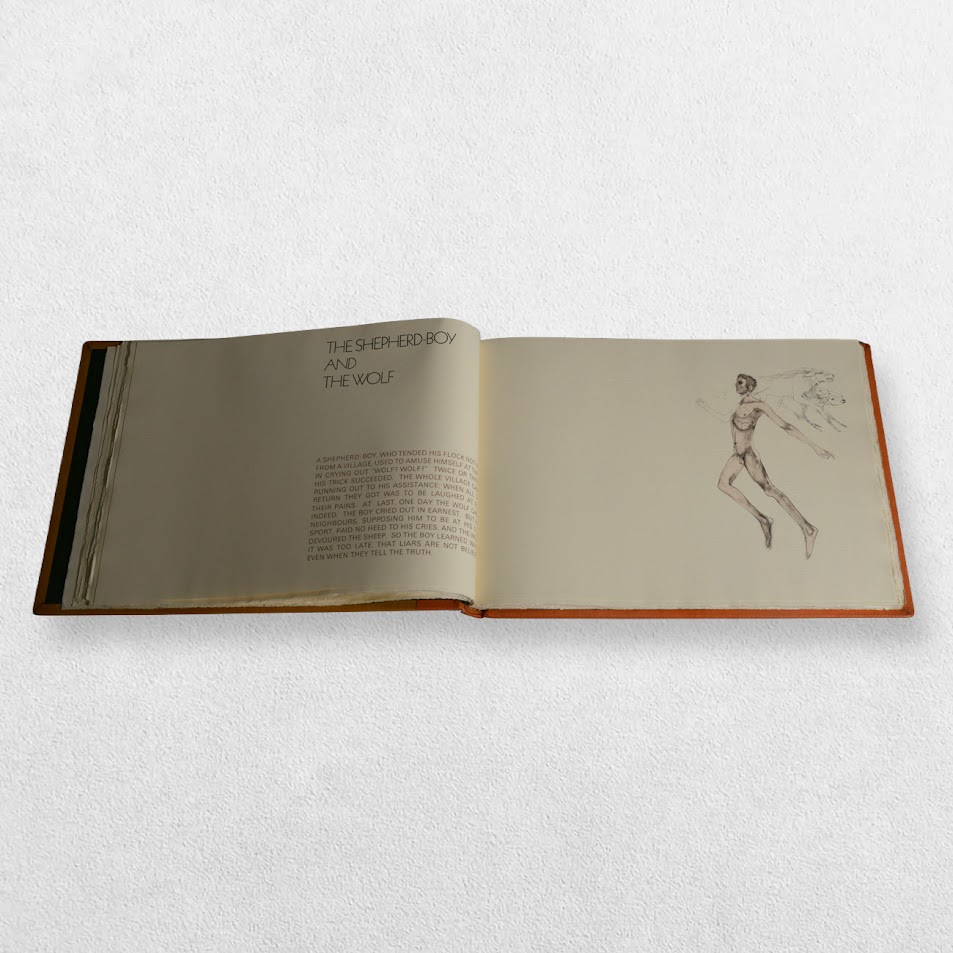
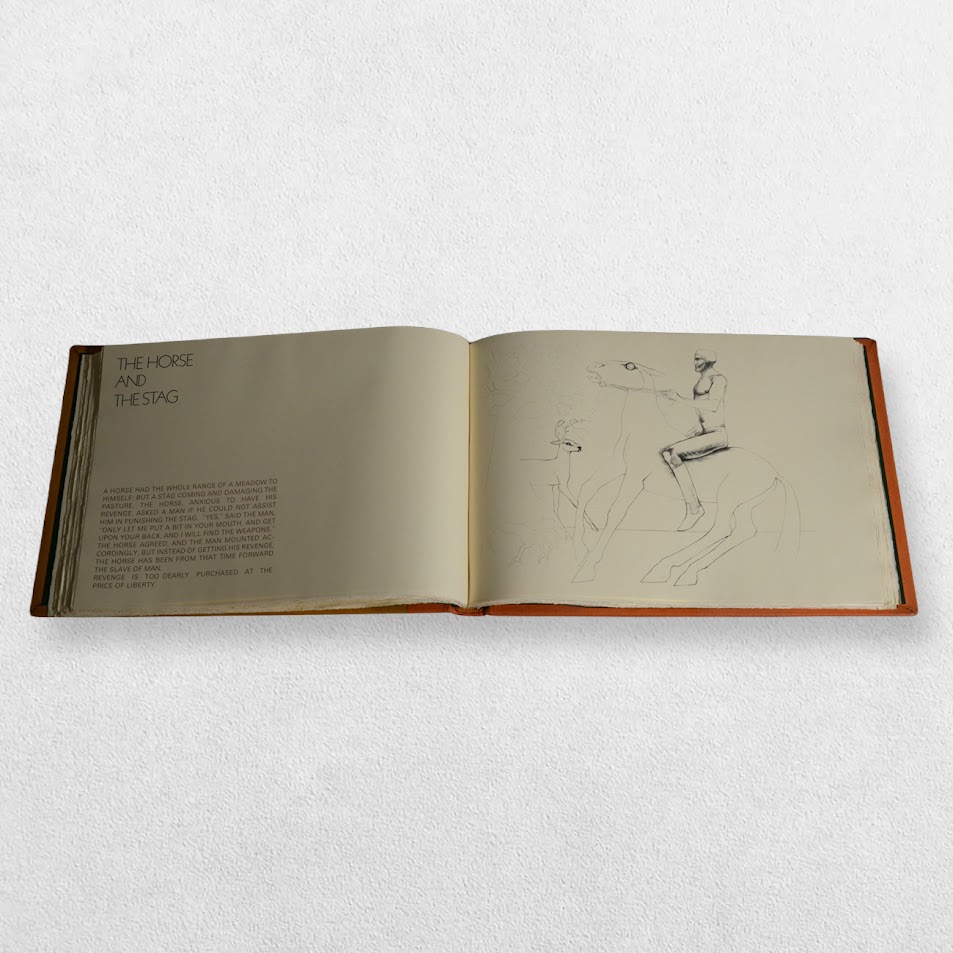
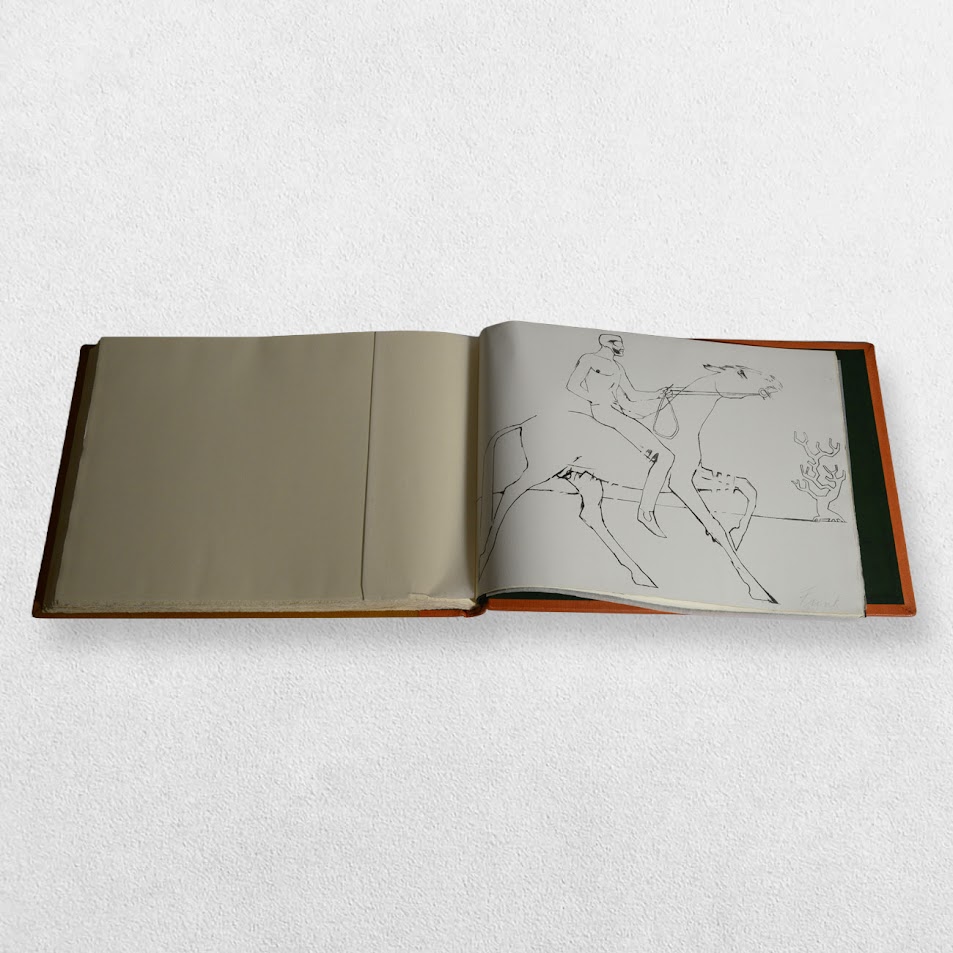
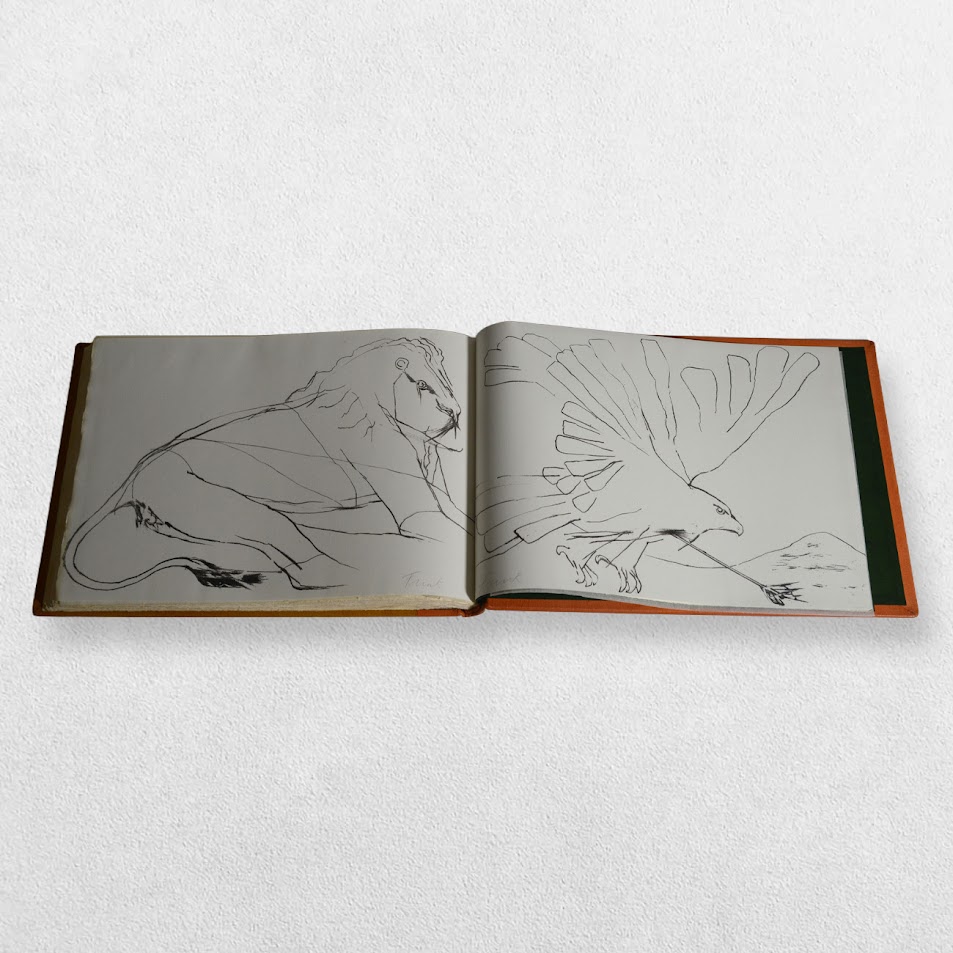
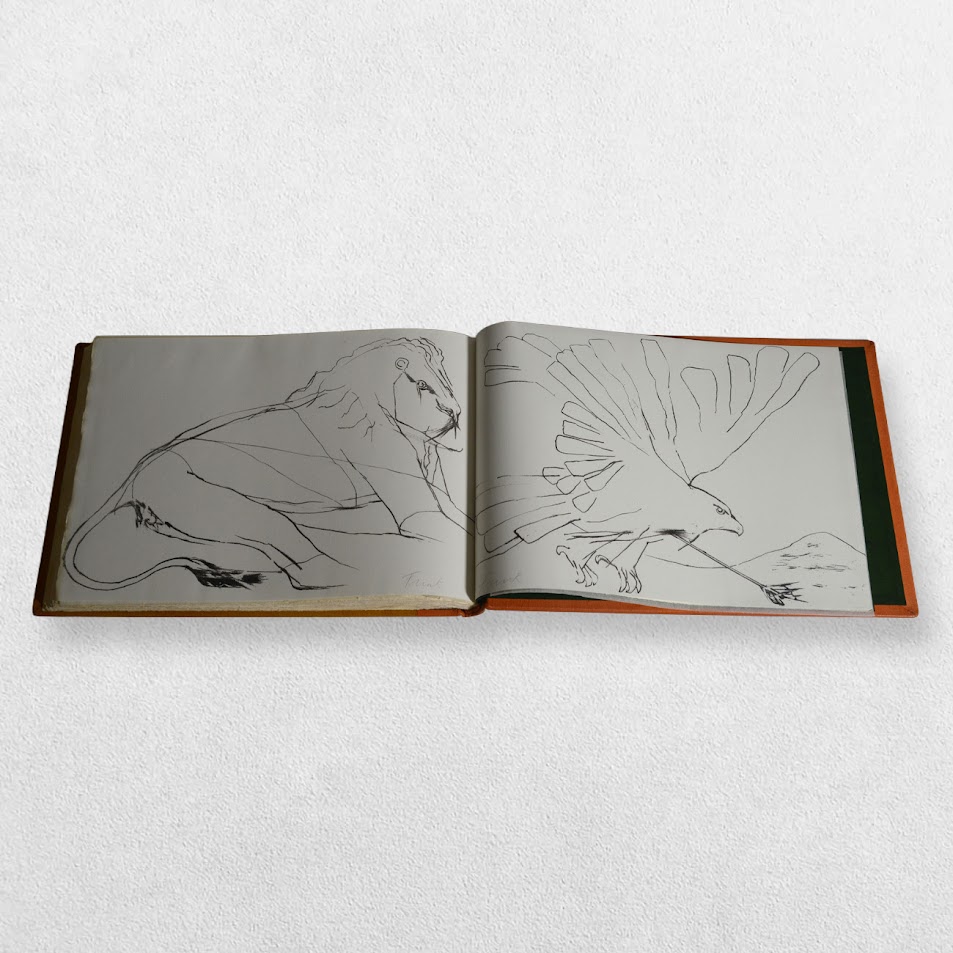
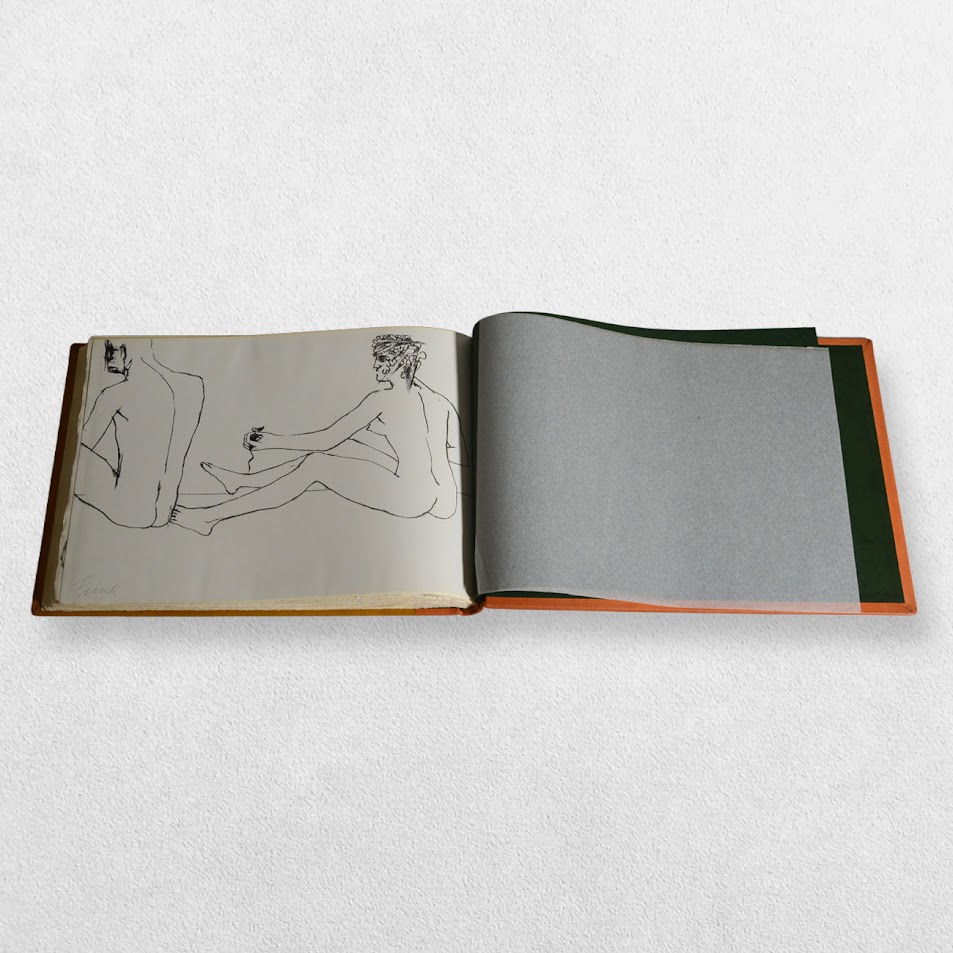
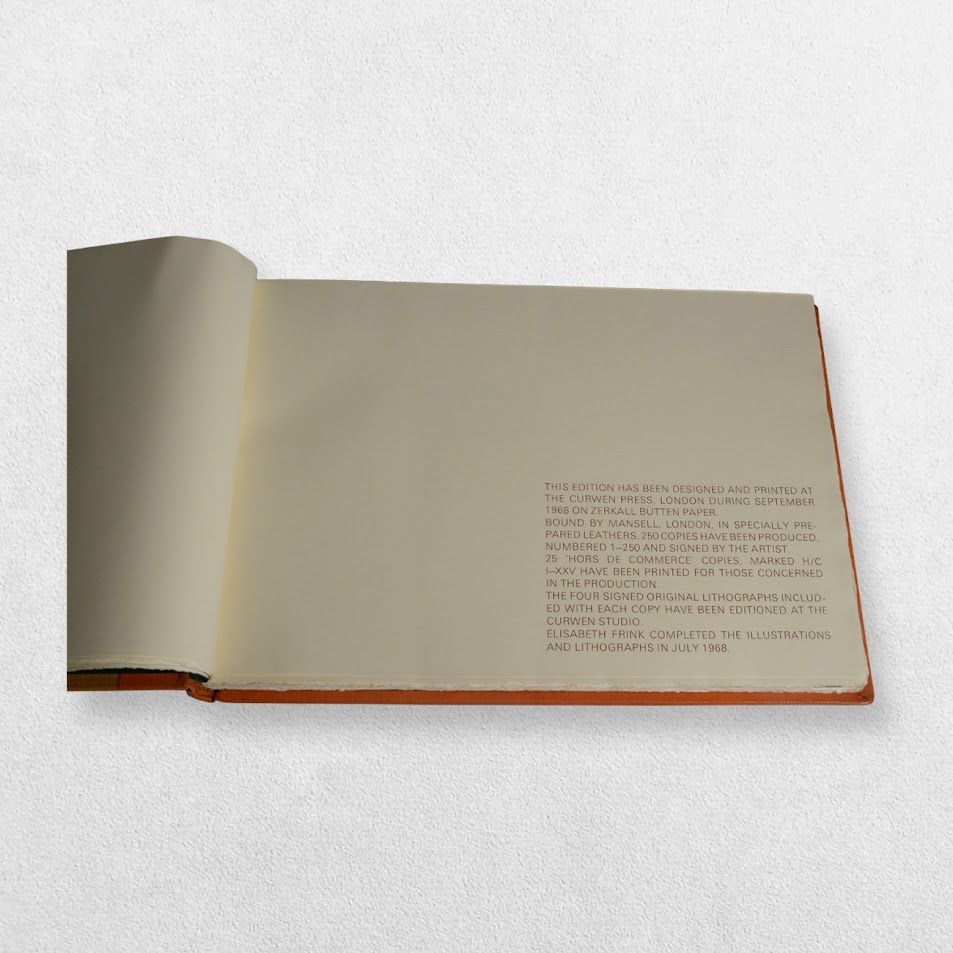
Designed and printed at The Curwen Press. Edition number 77/250 copies marked ‘A7’ in pencil to the front free endpaper. Bound by Mansell, London in specially prepared leathers in original cloth slipcase. A magnificent production featuring finely-printed renderings of the fables by Elisabeth Frink in colour and black and white and using the text from John Murray’s edition of 1897. Includes four original lithographs bound in at the rear all of which are signed in pencil by Elisabeth Frink. It is often the case with this edition that the original lithographs are left unsigned. This is a lovely fine, tight, bright, clean copy with only the tiniest amount of shelf wear in a very near fine, very slightly rubbed slipcase. Scarce thus.
Elisabeth Frink: A Brief Biography
Dame Elisabeth Frink was one of the most distinctive British sculptors of the post-war period. Best known for taut, figurative bronzes—men, horses and birds—she fused physical immediacy with psychological intensity. Across four decades she produced major public commissions in Britain and abroad, revitalised cast bronze as a modern medium, and became a touchstone for humane, expressive sculpture.
Early life and education
Elisabeth Jean Frink was born on 14 November 1930 in Thurlow, Suffolk. Wartime childhood near airfields and military activity left a permanent mark: flight, speed, predation and vulnerability recur throughout her work. She studied at Guildford School of Art before moving to Chelsea School of Art (late 1940s–early 1950s), where the emphasis on direct modelling and robust making suited her temperament. She absorbed the vitality of European modern sculpture while insisting on the centrality of the human figure.
Formation and early recognition
By her early twenties Frink was exhibiting professionally and teaching part-time. She emerged alongside the generation of British sculptors who rejected idealised classicism for raw, post-war imagery. From the start she worked directly in plaster and scrim on armatures, carving and gouging wet material to build form quickly; the resulting surfaces, full of cuts and seams, were then cast in bronze. Early series of Birds—hawks and eagles—established her language: compact mass, concentrated energy and acute alertness rather than naturalistic detail.
Themes, subjects and style
- The human figure: Frink’s men are rarely heroic. They walk, run or stand in tense pause—alert, wounded, defiant. Anatomy is simplified and muscular, with roughened skins that read as both armour and scar.
- Heads and psychology: The Goggle Heads of the late 1960s—impassive male heads with blank eyewear—condense her distrust of faceless power, technology and surveillance.
- Horses: She understood equine weight and movement from life, producing standing and striding horses and a celebrated horse-and-rider pairing that reads as a study of trust and interdependence rather than conquest.
- Birds of prey: A lifelong motif, from compact hawks to large eagles, embodying vigilance, freedom and threat.
- Religious and humane subjects: Later commissions—Walking Madonna, Risen Christ, and martyr or pilgrim figures—recast sacred imagery with grounded human presence rather than piety or sentimentality.
Technically, Frink’s preference for direct plaster modelling kept energy in the surface; she then used patination to vary mood from velvety blacks to earthy greens and browns. The work is resolutely figurative yet modern in its economical forms and refusal of prettiness.
Professional career and public commissions (selected you can still visit)
- Horse and Rider (mid-1970s), Mayfair, London: a city landmark capturing calm poise rather than pomp.
- Blind Beggar and his Dog (conceived 1950s; installed early 1960s), Bethnal Green, London: a humane re-telling of the local legend.
- Walking Madonna (early 1980s), Salisbury Cathedral Close: a striding, life-size figure taken straight from the crowd into sacred space.
- Desert Quartet (c. 1990), Worthing: four monumental heads, meditations on endurance and memory in hot, wind-scoured light.
- Risen Christ (late career), Liverpool Cathedral: a tensile, ascendant figure emphasising renewal rather than triumphalism.
Frink also produced fountains, bestiaries, memorials and portraits; many works were editioned bronzes cast at leading British foundries, while her studio retained full-size plasters and working moulds as reference.
Teaching, exhibitions and critical standing
Frink taught at Chelsea, Saint Martin’s and other art schools while building an international exhibition profile from the 1950s onward. She was frequently discussed in the context of post-war British sculpture yet kept her own course: figurative, ethical and tactile. A major retrospective in the 1980s consolidated her status for a broad public, and museum shows during her lifetime and posthumously have underlined the coherence of her themes across decades.
Honours and professional affiliations
Frink received sustained institutional recognition: she became a Royal Academician, was appointed CBE and later DBE, and accepted numerous honorary degrees. These honours acknowledged not only her output but also her leadership as a visible, successful woman sculptor in a field then dominated by men.
Working life in Britain and France
Though rooted in Britain—Suffolk, and later Dorset, where she maintained her final studio—Frink also lived and worked for stretches in France, where the clarity of Mediterranean light influenced her modelling and patination. The Dorset years proved exceptionally productive, with large commissions fabricated in close collaboration with foundry teams and studio assistants.
Process and materials
- Direct plaster: Built swiftly over an armature; additive and subtractive methods kept forms alive.
- Casting: Usually bronze by lost-wax or sand casting; she embraced the evidence of making—joins, welds, chisel marks—rather than editing them out.
- Patina: Chemical patination used descriptively (to emphasise planes and musculature) and atmospherically (to change temperature and mood).
- Prints and drawings: Frink was also an accomplished printmaker; lithographs and etchings parallel the sculpture, especially in bird and horse themes.
Ideas and ethics
Frink’s work retains moral clarity without didacticism. The male body stands for human capability and its limits; animals are fellow creatures rather than symbols to be mastered. Flight and speed suggest freedom, yet goggles, helmets and weaponry imply caution about militarism and technology. In religious commissions she prioritised empathy and presence—figures inhabiting the same air as the viewer.
Personal life
Frink married three times and had one son, Lin Jammet, who later helped safeguard her legacy. Friends, students and foundry teams remember her as disciplined, generous and physically fearless in the studio—traits visible in the work’s purposeful energy.
Death and legacy
Frink died in 1993 at her Dorset home, leaving a studio full of plasters, moulds and working models that have proved invaluable for scholarship. Her estate, catalogues raisonnés and dedicated study collections have ensured exemplary documentation and conservation standards. A generation of sculptors has drawn on her example: uncompromising commitment to the figure, belief in public art’s civic purpose, and insistence that surface carries feeling.
The Fables of Aesop: A Short History
“Aesop” names the semi-historical Greek fabulist traditionally placed in the early sixth century BCE. He is credited with a body of short tales—many featuring animals—that convey practical, often wry moral lessons. While the fables are real and extraordinarily influential, the biography is a woven mixture of brief ancient notices and later storytelling about the man behind them. Sound biography therefore must separate what the earliest sources suggest from the richly embroidered legends that followed.
Sources and historicity
Ancient writers occasionally refer to Aesop as a teller of fables and as a former slave who gained renown for sharp wit. The most important early testimony reports that he died violently at Delphi after a dispute with the townspeople. Centuries later a prose “Life of Aesop” (the Aesop Romance or Vita Aesopi) expanded these fragments into a colourful narrative of an ugly, astute slave who, through intelligence, bests the powerful, wins freedom, and travels among kings. The Vita is entertaining but composite and late; it preserves folklore and moral exempla rather than sober history. Responsible accounts treat it as literature that preserves how Aesop was imagined, not necessarily how he lived.
Bottom line: there almost certainly was a renowned storyteller called Aesop in archaic Greece; nearly everything beyond that—birthplace, appearance, detailed itinerary—remains uncertain.
Life as tradition relates it
Origins and enslavement
Later tradition assigns Aesop to the eastern Aegean world, sometimes Phrygia or Thrace, sometimes the island of Samos. He is said to have been enslaved and owned by Iadmon of Samos. Tales depict him as impeded in speech and ungainly in appearance, yet lightning-quick in thought: an underdog whose verbal agility unsettles masters and magistrates alike.
Manumission and travels
Through wit and usefulness Aesop purportedly wins his freedom. Stories then place him in the orbits of Greek tyrants and eastern kings—above all Croesus of Lydia—as a kind of informal adviser whose parables cut through courtly flattery. Whether or not these encounters occurred, the point of the tradition is clear: fable as portable wisdom for rulers and ruled.
Death at Delphi
The most sober ancient notice has Aesop visiting Delphi, where a quarrel with the townspeople ends in his judicial killing—pushed from a cliff for alleged sacrilege or insult. Later writers moralise the episode: the Delphians suffer divine retribution until they make amends. Historically, the story confirms that Aesop was famous enough, early enough, to attract aetiological legend about a scandal at one of Greece’s most prestigious sanctuaries.
The fables: form, voice, and purpose
- Form: Typically 5–20 lines in prose or simple verse, ending with a gnomic moral (sometimes explicit, sometimes left to inference).
- Voice: Economical, unsentimental, often ironic. Animals talk but behave like people in miniature city-states—calculating, fearful, boastful, hungry.
- Purpose: Not high philosophy but practical ethics—prudence, scepticism toward power, distrust of empty promises, sympathy for the weak tempered by realism.
Representative tales commonly attributed to Aesop include The Fox and the Grapes (rationalising failure), The Tortoise and the Hare (steadfastness), The Boy Who Cried Wolf (credibility), The Goose that Laid the Golden Eggs (short-term greed), The Lion and the Mouse (mutual aid), and The Town Mouse and the Country Mouse (values and contentment). Many such stories circulated orally long before or after Aesop; attribution signals type and style rather than single authorship.
Transmission and textual history
- Classical and Hellenistic periods: Individual fables circulate orally and in schoolbooks; rhetoricians recommend fable as a concise illustration in speeches.
- Early imperial era: Two major collectors fix large portions of the corpus—Phaedrus in Latin verse (1st century CE) and Babrius in Greek choliambics (probably 2nd century CE).
- Late antique and medieval Europe: Prose anthologies multiply in Greek and Latin; the Latin “Romulus” collections become classroom staples.
- Byzantine synthesis: The monk Maximus Planudes (14th century) edits a Greek collection that profoundly shapes the early printed tradition.
- Early printing and vernaculars: William Caxton prints an English Aesop in 1484; translations and moral paraphrases proliferate across Europe.
- Early modern to modern: La Fontaine reimagines Aesop in French verse; in English, Roger L’Estrange and Samuel Croxall become standard. Modern scholarship classifies tales by Perry Index numbers, facilitating comparison across languages and centuries.
Aesop’s uses in education and public life
From antiquity to the present the fables have been tools for literacy and moral reasoning. In Greek and Roman schools they provided exercises in paraphrase and invention; in medieval classrooms they trained grammar and ethics; in modern primary education they teach inference, consequence and concise storytelling. In politics and journalism, “Aesopian” continues to mean coded critique, a reminder that fables allowed truth to be spoken safely under authoritarian ears.
Aesop in art and image
Antique tradition often describes Aesop as physically unprepossessing—an inversion that heightens the moral: wisdom outruns beauty. Later European art treats him both as personification of Fable and as a sage among animals. A famous Baroque portrait presents him as a grave, book-holding thinker rather than a comic grotesque, signalling how esteem overtook mockery in the long view.
Themes and ethics across the corpus
- Power and speech: The weak survive by intelligence, alliance and timing.
- Self-knowledge: Success depends on recognising one’s limits; pretence invites humiliation.
- Economy and desire: Appetite distorts judgement; moderation preserves good fortune.
- Justice: The world is not fair; prudence and solidarity mitigate its harshness.
- Language: Words are tools that can heal or harm; credibility is capital.
Chronology (select)
- c. 6th century BCE: Probable period of Aesop’s life; death placed at Delphi by early sources.
- 1st–2nd centuries CE: Major poetic recensions (Phaedrus, Babrius).
- 14th century: Planudes’ Greek anthology shapes later tradition.
- 1484: First substantial Aesop in English print (Caxton).
- 17th–18th centuries: La Fontaine in France; L’Estrange and Croxall in England; fables become schoolroom mainstays.
- 20th century: Scholarly cataloguing and comparative folklore methods stabilise the corpus for research and teaching.
Assessing authenticity and authorship
Because fables are short, portable, and easily adapted, they resist strict authorship. The name “Aesop” functions as a brand of wise brevity. Some tales labelled Aesop’s are demonstrably Eastern in origin; others are classical inventions later folded into the set. Sound editorial practice weighs language, earliest attestations, and cross-cultural parallels rather than relying on tradition alone.
Legacy
Aesop’s afterlife is vast: dramatists, poets and cartoonists borrow his plots; economists and psychologists cite his morals; political dissidents use “Aesopian speech” to sidestep censorship. Few figures have done more to shape how children and adults alike think in stories about cause and consequence.
Why buy from us?
At Hornseys, we are committed to offering items that meet the highest standards of quality and authenticity. Our book collection is meticulously curated to ensure that each edition is a valuable and authentic piece of bibliographical history. Here’s what sets us apart:
- Authenticity and Provenance: Every book is researched, collated, and verified for authenticity.
- Expert Curation: Each book is selected with a keen eye for significance, condition, and rarity, ensuring a collection that is both diverse and distinguished.
- Customer Satisfaction: We strive to provide an exceptional customer experience, from detailed descriptions and provenance to secure and prompt delivery of your purchase.
- Returns Policy: We offer an unconditional guarantee on every item. If you wish to make a return, books may be sent back to us within fourteen days of receipt for any reason. We request advance notification of returns, and books must be returned in the same condition as sent for a full refund.
Explore Our Collection:
Visit Hornseys to explore our fine collection of rare and signed books. Whether you are an avid collector or looking for a special gift, our selection offers something truly unique. Located in the picturesque Yorkshire Dales, our Ripon gallery has been a haven for book lovers, art enthusiasts, and collectors since 1976.
Related products


You may also like…

Pop Art: Peter Blake, An Alphabet: Presentation Copy To Mel Gooding: Signed By Peter Blake, Gavin Turk And Paul Stolper
£495.00Blake, Peter, Turk, Gavin & Gooding, Mel