
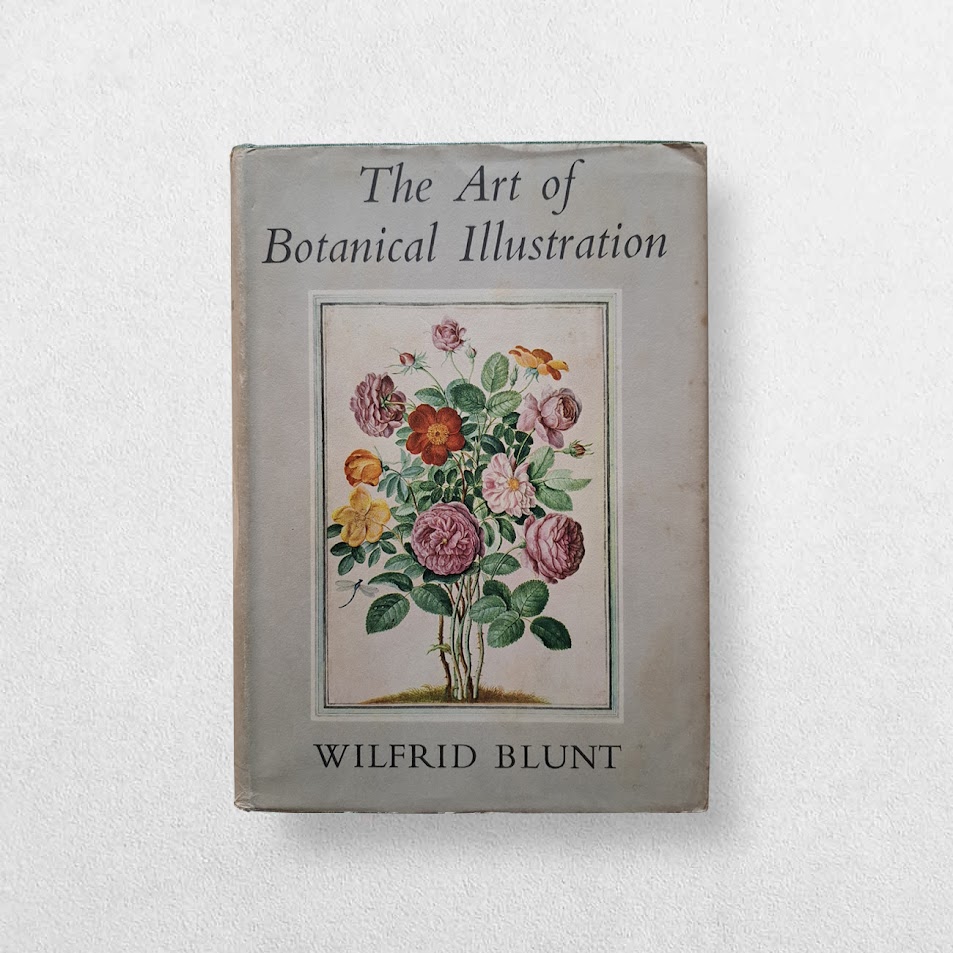
Collins New Naturalist Series – 14 – The Art Of Botanical Illustration – Second Edition
Blunt, Wilfrid
£30.00
Availability: In stock
Product Description
Collins New Naturalist Series – 14 – The Art Of Botanical Illustration – Second Edition
Author: Wilfrid Blunt
Publisher: William Collins
Price: £30
Publication Date: 1951
Edition: 2nd edition
Size: Octavo
Binding: Original green cloth gilt. Dustwrapper
Condition: Very good in very good dustwrapper
Number of Pages: 304
Condition:
Binding nice and tight. Pages nice and clean. Very slight foxing and dustiness to the text block. Spine cloth a little faded. Slight offsetting to the front free endpaper. A very good indeed, tight, clean copy in very good, slightly creased, nicked and rubbed dustwrapper. The dustwrapper, designed by Clifford and Rosemary Ellis, is priced 21s. net. Please contact us for more photographs if you require them. We usually have first editions of all the Collins New Naturalist Series in stock.
Description:
The Art of Botanical Illustration is the 14th volume in the esteemed Collins New Naturalist series, authored by Wilfrid Blunt with the assistance of William T. Stearn, first published in 1950. This comprehensive work offers an in-depth exploration of the history and development of botanical illustration, tracing its evolution from ancient times to the mid-20th century.
Content Overview:
- Historical Development: Blunt meticulously chronicles the progression of botanical illustration, beginning with early representations in ancient manuscripts and advancing through the Renaissance, Enlightenment, and into modern times. He examines the influence of scientific discoveries, exploration, and artistic movements on the portrayal of plant life.
- Notable Illustrators and Works: The book highlights the contributions of prominent botanical artists and their seminal works, providing insights into their techniques, styles, and the contexts in which they worked. Figures such as Pierre-Joseph Redouté and Maria Sibylla Merian are discussed in detail.
- Techniques and Materials: An exploration of the various artistic methods and materials employed in botanical illustration is provided, including discussions on engraving, lithography, and watercolour painting. The authors delve into the challenges of accurately depicting plant morphology and the balance between artistic expression and scientific accuracy.
- Role in Science and Education: The volume underscores the significance of botanical illustration in the advancement of botanical science and education, illustrating how detailed plant depictions have been essential for plant identification, classification, and the dissemination of botanical knowledge.
Illustrations and Design:
The book is enriched with 47 colour plates, 32 black-and-white plates, and 75 figures within the text, showcasing a wide array of botanical artworks that exemplify the evolution and diversity of the genre. The dust jacket, designed by Clifford and Rosemary Ellis, features a striking depiction of botanical illustrations, contributing to the book’s visual appeal.
The Collins New Naturalist Series: A Short History
The Collins New Naturalist series is one of the longest-running and most celebrated series on natural history ever published, providing an extensive exploration of British wildlife, habitats, and ecology since its inception in 1945. Published by William Collins, the series was launched to offer a comprehensive, scientifically rigorous, yet accessible account of the natural history of the British Isles, appealing to both specialists and general nature enthusiasts alike. Renowned for its iconic cover designs, informative content, and ground-breaking illustrations, the New Naturalist series has been instrumental in fostering an appreciation for nature across generations.
Origins and Development
The series was the brainchild of Sir William Collins, who recognised a post-war desire for accessible and reliable information on the natural world. The initial aim was to create high-quality books that combined scientific accuracy with readability, crafted to be as engaging as they were informative. The first book, Butterflies by E.B. Ford, was published in 1945 and set a standard for the books that followed.
Topics and Structure
Each volume in the series is dedicated to a particular aspect of British natural history, with subjects ranging from specific groups of species, like Moths, Birds, and Warblers, to broader ecosystems and habitats, such as Woodlands, Rivers and Streams, and Mountain Flowers. Some volumes address particular ecological phenomena or geographical regions, giving readers an in-depth look at complex natural processes and interactions. Authors are typically experts in their fields, providing scientifically accurate yet highly accessible content. The volumes are filled with high-quality illustrations, photographs, and detailed diagrams, enhancing the textual information and bringing the subjects to life.
Illustrations and Cover Art
One of the most recognisable aspects of the New Naturalist series is its distinctive cover art, often created by celebrated wildlife artists. The covers feature striking depictions of British flora, fauna, and landscapes, with the illustrations becoming iconic in their own right. These visually appealing designs are as much a part of the series’ appeal as the content itself, establishing a cohesive and recognisable identity that is highly regarded by collectors.
Influence and Legacy
The Collins New Naturalist series has become a cornerstone of British natural history literature, influencing both academic study and public awareness of the natural world. For more than 75 years, the series has inspired naturalists, conservationists, and ordinary readers, encouraging a deeper understanding of British ecology and the environmental challenges facing the region. The series’ continued publication reflects its ongoing relevance, with new volumes addressing contemporary concerns such as climate change, habitat loss, and biodiversity conservation.
Each book in the series combines a passion for nature with academic insight, presenting complex ecological ideas in a way that is accessible and engaging. Its success has established Collins New Naturalist as a respected name in natural history, and the books remain highly sought after by collectors, scholars, and anyone with an interest in British wildlife and the natural world.
Location: BR: 002522
Why buy from us?
At Hornseys, we are committed to offering items that meet the highest standards of quality and authenticity. Our book collection is meticulously curated to ensure that each edition is a valuable and authentic piece of bibliographical history. Here’s what sets us apart:
- Authenticity and Provenance: Every book is researched, collated, and verified for authenticity.
- Expert Curation: Each book is selected with a keen eye for significance, condition, and rarity, ensuring a collection that is both diverse and distinguished.
- Customer Satisfaction: We strive to provide an exceptional customer experience, from detailed descriptions and provenance to secure and prompt delivery of your purchase.
- Returns Policy: We offer an unconditional guarantee on every item. If you wish to make a return, books may be sent back to us within fourteen days of receipt for any reason. We request advance notification of returns, and books must be returned in the same condition as sent for a full refund.
Explore Our Collection:
Visit Hornseys to explore our fine collection of rare and signed books. Whether you are an avid collector or looking for a special gift, our selection offers something truly unique. Located in the picturesque Yorkshire Dales, our Ripon gallery has been a haven for book lovers, art enthusiasts, and collectors since 1976.
Thank you for looking.
Related products


You may also like…

Collins New Naturalist – 83 – The Natural History Of Pollination – First Edition – 1996
£1,000.00Proctor, Michael, Yeo, Peter & Lack, Andrew


