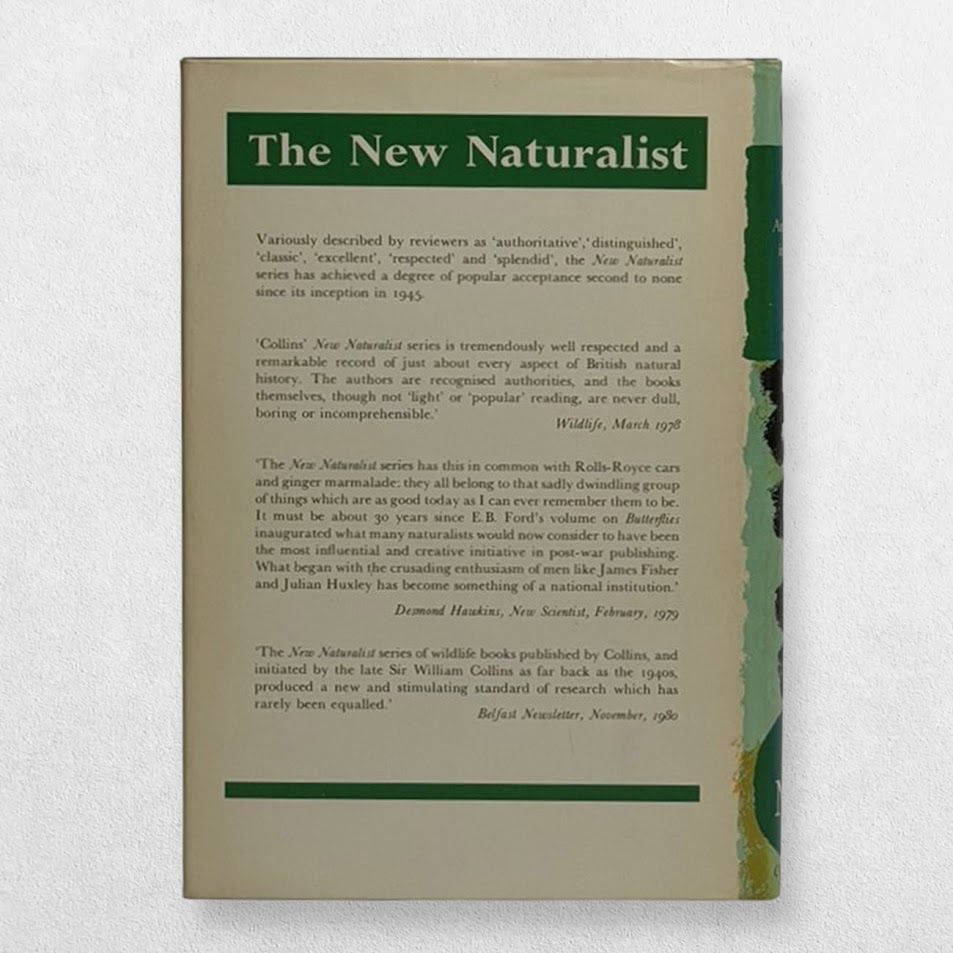
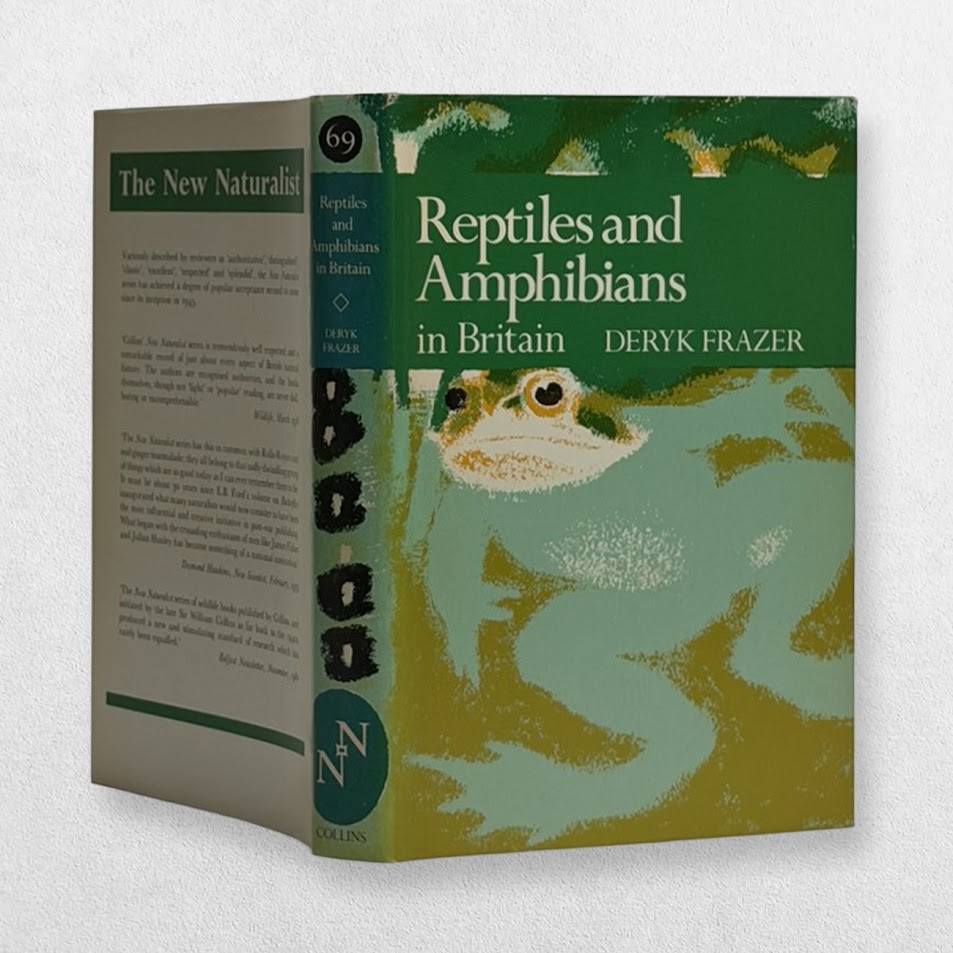

Collins New Naturalist Series – 69 – Reptiles And Amphibians – First Edition – 1983
Frazer, Deryk
£75.00
Availability: In stock
Product Description
Collins New Naturalist Series – 69 – Reptiles And Amphibians – First Edition – 1983
Author: Frazer, Deryk
Publisher: William Collins
Price: £75
Publication Date: 2002
Edition: First edition
Size: Octavo
Binding: Original green cloth gilt. Dustwrapper
Condition: Fine in fine dustwrapper
Condition:
Dustwrapper artwork by Clifford and Rosemary Ellis. Advance review copy with the scarce Collins Publishers slip with the title loosely inserted. 1st edition, Cloth bright and clean with clean text block. A fine, tight, clean copy in near fine clean dustwrapper which has slight fading to the spine and slight rubbing to the edges. We usually have first editions of all the New Naturalist Series in stock, please contact us for more details.
Reptiles And Amphibians: A Brief Overview
Reptiles and Amphibians, volume 69 in the Collins New Naturalist series (published 1983), is a comprehensive account of Britain and Ireland’s herpetofauna as understood in the early 1980s. It integrates taxonomy, identification, life history, ecology, distribution, and conservation, reflecting a period when systematic field recording and habitat-based conservation were becoming central to British herpetology.
Although later superseded in part by volume 87 (Amphibians and Reptiles, 2000), volume 69 remains an important synthesis of late twentieth-century knowledge and conservation concerns.
Taxonomic Coverage
The volume addresses all native and established species known at the time.
Amphibians
- Common Frog (Rana temporaria)
- Common Toad (Bufo bufo)
- Natterjack Toad (Epidalea calamita)
- Smooth Newt (Triturus vulgaris as then classified)
- Palmate Newt (Triturus helveticus)
- Great Crested Newt (Triturus cristatus)
Reptiles
- Adder (Vipera berus)
- Grass Snake (Natrix natrix)
- Smooth Snake (Coronella austriaca)
- Common Lizard (Lacerta vivipara, now Zootoca vivipara)
- Slow Worm (Anguis fragilis)
Taxonomy reflects the nomenclature current in the early 1980s.
Identification and Field Characters
The book provides careful descriptions of:
- Morphological variation
- Sexual dimorphism
- Seasonal colour changes
- Juvenile characteristics
Given the limited number of species, emphasis is placed on distinguishing similar forms (e.g. Smooth Snake versus juvenile Grass Snake).
Ecology and Habitat
Amphibians
Amphibian ecology is examined in relation to:
- Pond permanence
- Water chemistry
- Terrestrial refuge sites
- Breeding site fidelity
The Natterjack Toad receives particular attention due to its restricted dune and heathland habitats.
Reptiles
Reptile distribution is closely linked to:
- Open heathland
- Grassland mosaics
- Woodland edge habitats
Thermoregulatory behaviour — basking, refuge use, seasonal inactivity — is analysed in ecological terms.
Life Cycles and Behaviour
Breeding
Amphibian breeding migrations, egg-laying strategies, and larval development are described in detail. The vulnerability of breeding sites to drainage and infilling is highlighted.
Reptile reproduction, including viviparity in the Common Lizard and oviparity in others, is discussed in relation to Britain’s cool climate.
Hibernation
Overwintering strategies are treated comparatively, with emphasis on:
- Frost avoidance
- Site fidelity
- Aggregation behaviour (notably in Adders)
Population Status and Conservation (1983 Context)
By the early 1980s, key concerns included:
- Loss of heathland
- Agricultural intensification
- Pond destruction
- Direct persecution of snakes
The book reflects the early development of structured amphibian and reptile conservation, including:
- Habitat protection
- Public education
- Recording schemes
The Great Crested Newt and Smooth Snake were already recognised as species of high conservation priority.
Biogeographical Perspective
Britain’s limited herpetofauna is attributed to:
- Post-glacial colonisation constraints
- Climatic marginality
- Early isolation from continental Europe
Ireland’s absence of native reptiles (aside from debated introductions) is discussed within this framework.
Style and Scientific Context
Volume 69 reflects the New Naturalist style of the early 1980s:
- Authoritative but field-orientated
- Emphasis on direct observation
- Growing integration of ecological research
Compared with later volumes, it is somewhat less influenced by molecular taxonomy and emerging disease ecology, reflecting its period.
Place within the Series
As volume 69, this book represents an important zoological contribution to the series before the expansion into more specialised ecological monographs of the 1990s.
It was later complemented and updated by:
- Amphibians and Reptiles (NN 87, 2000), which incorporated new taxonomic revisions and conservation frameworks.
Concluding Assessment
Reptiles and Amphibians (New Naturalist 69, 1983) provides a detailed and historically significant account of Britain’s herpetofauna at a pivotal stage in conservation awareness. It documents species ecology and distribution before many later legislative protections and before the full emergence of global amphibian decline as a recognised crisis.
Its enduring value lies in serving as both ecological reference and historical benchmark for assessing how Britain’s amphibian and reptile populations have changed since the early 1980s.
The Collins New Naturalist Series: A Short History
The Collins New Naturalist series is one of the longest-running and most celebrated series on natural history ever published, providing an extensive exploration of British wildlife, habitats, and ecology since its inception in 1945. Published by William Collins, the series was launched to offer a comprehensive, scientifically rigorous, yet accessible account of the natural history of the British Isles, appealing to both specialists and general nature enthusiasts alike. Renowned for its iconic cover designs, informative content, and ground-breaking illustrations, the New Naturalist series has been instrumental in fostering an appreciation for nature across generations.
Origins and Development
The series was the brainchild of Sir William Collins, who recognised a post-war desire for accessible and reliable information on the natural world. The initial aim was to create high-quality books that combined scientific accuracy with readability, crafted to be as engaging as they were informative. The first book, Butterflies by E.B. Ford, was published in 1945 and set a standard for the books that followed.
Topics and Structure
Each volume in the series is dedicated to a particular aspect of British natural history, with subjects ranging from specific groups of species, like Moths, Birds, and Warblers, to broader ecosystems and habitats, such as Woodlands, Rivers and Streams, and Mountain Flowers. Some volumes address particular ecological phenomena or geographical regions, giving readers an in-depth look at complex natural processes and interactions. Authors are typically experts in their fields, providing scientifically accurate yet highly accessible content. The volumes are filled with high-quality illustrations, photographs, and detailed diagrams, enhancing the textual information and bringing the subjects to life.
Illustrations and Cover Art
One of the most recognisable aspects of the New Naturalist series is its distinctive cover art, often created by celebrated wildlife artists. The covers feature striking depictions of British flora, fauna, and landscapes, with the illustrations becoming iconic in their own right. These visually appealing designs are as much a part of the series’ appeal as the content itself, establishing a cohesive and recognisable identity that is highly regarded by collectors.
Influence and Legacy
The Collins New Naturalist series has become a cornerstone of British natural history literature, influencing both academic study and public awareness of the natural world. For more than 75 years, the series has inspired naturalists, conservationists, and ordinary readers, encouraging a deeper understanding of British ecology and the environmental challenges facing the region. The series’ continued publication reflects its ongoing relevance, with new volumes addressing contemporary concerns such as climate change, habitat loss, and biodiversity conservation.
Each book in the series combines a passion for nature with academic insight, presenting complex ecological ideas in a way that is accessible and engaging. Its success has established Collins New Naturalist as a respected name in natural history, and the books remain highly sought after by collectors, scholars, and anyone with an interest in British wildlife and the natural world.
Why buy from us?
At Hornseys, we are committed to offering items that meet the highest standards of quality and authenticity. Our book collection is meticulously curated to ensure that each edition is a valuable and authentic piece of bibliographical history. Here’s what sets us apart:
- Authenticity and Provenance: Every book is researched, collated, and verified for authenticity.
- Expert Curation: Each book is selected with a keen eye for significance, condition, and rarity, ensuring a collection that is both diverse and distinguished.
- Customer Satisfaction: We strive to provide an exceptional customer experience, from detailed descriptions and provenance to secure and prompt delivery of your purchase.
- Returns Policy: We offer an unconditional guarantee on every item. If you wish to make a return, books may be sent back to us within fourteen days of receipt for any reason. We request advance notification of returns, and books must be returned in the same condition as sent for a full refund.
Explore Our Collection:
Visit Hornseys to explore our fine collection of rare and signed books. Whether you are an avid collector or looking for a special gift, our selection offers something truly unique. Located in the picturesque Yorkshire Dales, our Ripon gallery has been a haven for book lovers, art enthusiasts, and collectors since 1976.
Thank you for looking.
Related products


You may also like…

Collins New Naturalist – 77 – The Soil – First Edition – 1992
£200.00Davis, B, Walker, N, Ball, D & Fitter, A
Collins New Naturalist – 83 – The Natural History Of Pollination – First Edition – 1996
£1,000.00Proctor, Michael, Yeo, Peter & Lack, Andrew