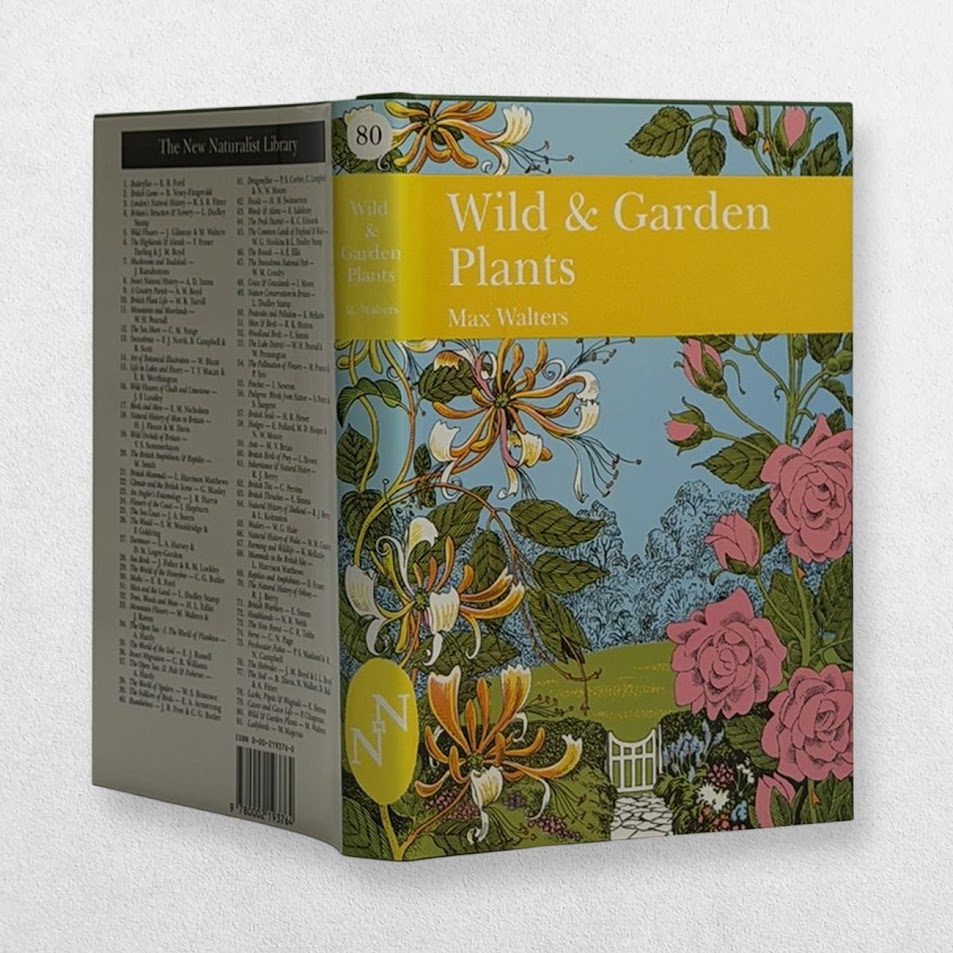
Collins New Naturalist Series – 80 – Wild And Garden Plants – First Edition – 1993
Walters, Max
£80.00
Availability: In stock
Product Description
Collins New Naturalist Series – 80 – Wild And Garden Plants – First Edition – 1993
Author: Walters, Max
Publisher: Collins
Price: £80 including postage in the UK
Publication Date: 1993
Edition: First edition
Size: Octavo
Binding: Original green cloth. Dustwrapper
Condition: Fine in near fine dustwrapper
Condition:
Dustjacket design by Robert Gillmor. Cloth bright and clean with clean text block. A fine, tight, clean copy in near fine, clean dustwrapper which is faded to the spine as usual with the text being less legible. We usually have first editions of all the New Naturalist Series in stock, please contact us for more details.
Wild And Garden Plants: New Naturalist 80: A Brief Overview
Wild and Garden Plants, volume 80 in the Collins New Naturalist series (published 1993), examines the complex and often overlooked relationship between Britain’s native flora and cultivated ornamental plants. Rather than treating wild and garden plants as separate domains, the book explores the ecological, historical, and evolutionary exchanges between horticulture and the countryside.
The central theme is permeability: the boundary between garden and wild is neither fixed nor biologically absolute.
Historical Context
Gardening as ecological force
The volume situates British gardening within:
- Monastic and medieval cultivation
- Seventeenth- and eighteenth-century plant collecting
- Victorian horticultural expansion
- Twentieth-century suburban gardening
Plant introductions from Europe, Asia, and the Americas profoundly altered the composition of British landscapes.
Naturalisation and Escape
A core focus is the process by which cultivated plants:
- Escape from gardens
- Establish in hedgerows, riverbanks, railways, and waste ground
- Become naturalised components of local flora
Examples include species once exotic that are now familiar features of the countryside.
The book analyses the stages of establishment:
- Introduction
- Casual persistence
- Naturalisation
- Potential invasiveness
Ecological Interactions
Hybridisation
Garden varieties often hybridise with native relatives, creating:
- Genetic introgression
- Altered population structure
- Taxonomic complexity
The book discusses how horticulture can blur species boundaries.
Pollination and wildlife value
Some garden plants provide:
- Nectar resources for insects
- Structural habitat for birds
- Extended flowering seasons
However, others may offer little ecological value or disrupt local plant–pollinator relationships.
Invasive Potential
The volume distinguishes between:
- Benign naturalised ornamentals
- Aggressive invasive species
It analyses factors that determine invasiveness, including:
- Reproductive strategy
- Seed dispersal
- Absence of natural predators
Although written before the most recent waves of invasive species concern, it anticipates many later debates.
Urban and Suburban Ecology
Gardens are treated as:
- Semi-natural habitats
- Ecological stepping stones
- Refuges for biodiversity in urban settings
The mosaic of lawns, borders, shrubs, ponds, and hedges creates microhabitats distinct from surrounding farmland.
Cultural Attitudes and Plant Selection
The book explores:
- Changing aesthetic preferences
- Native versus exotic planting debates
- The influence of commercial horticulture
It avoids simplistic prescriptions, instead analysing ecological consequences.
Conservation Perspective (1993 Context)
By the early 1990s, conservation discourse increasingly recognised:
- The importance of habitat connectivity
- The ecological role of urban green space
- Risks posed by invasive ornamentals
The volume contributes to this shift by framing gardening as part of national ecological processes.
Style and Intellectual Character
Volume 80 reflects the mature New Naturalist approach:
- Integrative and interdisciplinary
- Historically informed
- Ecologically analytical
It assumes a reader interested in both botany and the cultural landscape.
Place within the Series
Wild and Garden Plants occupies a distinctive position in the series because it bridges:
- Purely wild botanical volumes (e.g. Wild Flowers, NN 5)
- Human-influenced landscape studies (e.g. Farming and Wildlife, NN 67)
It expands the series’ scope to include horticulture as ecological phenomenon.
Concluding Assessment
Wild and Garden Plants (New Naturalist 80, 1993) presents Britain’s flora as a dynamic blend of native species and cultivated introductions. By examining naturalisation, hybridisation, and ecological interaction, it demonstrates that gardens are not isolated aesthetic spaces but active participants in wider ecological systems.
Its enduring importance lies in challenging rigid distinctions between wild and cultivated, revealing a landscape shaped as much by horticultural taste as by geological and climatic forces.
The Collins New Naturalist Series: A Brief Overview
Introduction
The Collins New Naturalist series is one of the most significant and enduring achievements in British natural history publishing. Launched in 1945 by William Collins, Sons & Co. (now HarperCollins), the series set out to provide authoritative yet accessible accounts of British wildlife, habitats, and ecological principles. Over the decades it has become both a scientific resource and a cultural artefact, revered by naturalists, collectors, researchers, and book lovers alike.
The longevity and influence of the series stem from its commitment to expert authorship, high editorial standards, and a consistent mission: to bring the study of nature to the general reader without compromising scientific integrity.
Origins and Founding Vision
The series emerged in post-war Britain, during a period when public interest in the natural world was expanding. Scientific knowledge had accelerated rapidly during the first half of the twentieth century, and there was a growing appetite for well-written, engaging texts that could bridge the divide between academic research and amateur natural history.
The founding editors—most notably Sir Julian Huxley, James Fisher, and Dudley Stamp—had a clear and ambitious vision:
- To promote ecological literacy among the wider public
- To document the natural history of the British Isles in a coherent, scientifically rigorous format
- To invite leading authorities in their fields to contribute specialist volumes
- To cultivate an informed readership capable of understanding conservation issues
This vision aligned with a broader national desire to reconnect with the British landscape after the dislocation of the war years.
The Early Volumes
The first title, Butterflies by E. B. Ford, set the tone for the series: scholarly yet readable, richly illustrated, and grounded in the most current scientific thinking of its time. The format was instantly recognisable: octavo hardbacks with striking dust-jacket designs by the celebrated artists Clifford and Rosemary Ellis. These covers remain iconic for their bold, stylised depictions of flora and fauna.
Early volumes covered a wide range of subjects, including:
- Birds
- Wild Flowers
- British Plant Life
- Mushrooms and Toadstools
- The Sea Shore
The series helped unify disparate strands of biological knowledge, presenting them in a systematic programme that readers could follow book by book.
Editorial Philosophy and Scientific Approach
The New Naturalist books have always been written by experts—academics, professional naturalists, ecologists, and field researchers—who bring first-hand experience and original research to their subjects.
Key editorial principles include:
- Accuracy and Depth
Each volume is grounded in contemporary scientific understanding, often incorporating cutting-edge research. Many authors have been leading authorities in their fields.
- Accessibility
Although scholarly, the books avoid jargon and are aimed at a broad readership. Field observations, historical anecdotes, and clear explanations help convey complex ecological processes.
- Ecological Perspective
The series pioneered ecosystem-based approaches, examining species and habitats within broader environmental contexts. This ecological viewpoint was ahead of its time and has contributed to the series’ enduring relevance.
- Long-term Documentation
Many volumes remain standards in their fields; some have become important historical records of environmental change across the twentieth and twenty-first centuries.
Design and Production
The visual identity of the series is a major part of its appeal. The Ellis designs, used for most of the twentieth century, are among the most recognisable dust-jackets in publishing history. They combine decorative patterning with scientifically accurate depictions, transforming each book into an artwork as well as a source of information.
Internally, the books are distinguished by:
- High-quality monochrome photographs
- Detailed diagrams and distribution maps
- Clear typography and durable binding
Collectors prize first editions for their craftsmanship and rarity, particularly those with unfaded, unpriced jackets.
Themes and Range of Subjects
The scope of the New Naturalist is unusually broad, covering:
- Individual species groups (e.g., dragonflies, bats, hedgehogs)
- Ecosystems and habitats (e.g., moorlands, woodlands, the sea shore)
- Geographic regions (e.g., the Hebrides, the New Forest, the Yorkshire Dales)
- Ecological phenomena (e.g., animal migration, climate and the landscape)
- Human–nature interactions (e.g., conservation, farming and wildlife)
This diversity ensures that the series provides a near-encyclopaedic survey of British natural history.
Evolution and Continuing Legacy
Despite changes in publishing and scientific practice, the New Naturalist series has continued into the twenty-first century with new volumes commissioned regularly. Contemporary authors maintain the tradition of expert, research-led writing, while incorporating modern ecological concerns such as:
- Biodiversity loss
- Rewilding
- Climate change
- Shifting baselines in environmental science
The series also serves as a historical archive, documenting ecological changes across nearly eighty years. Early volumes can be read alongside recent ones to trace shifts in species distribution, land use, and national conservation priorities.
Impact on British Natural History
The New Naturalist series has shaped generations of British naturalists, influencing both professional scientific development and amateur enthusiasm. Its contributions include:
- Inspiring careers in ecology, zoology, and conservation
- Providing reference texts for universities, libraries, and field groups
- Raising public awareness of environmental issues long before they became mainstream
- Preserving detailed accounts of habitats and species now threatened or transformed
For many readers, the series has been a gateway to lifelong engagement with the natural world.
Collecting and Cultural Status
Beyond its scientific importance, the New Naturalist series is a major collecting field. First editions in pristine condition can command high prices, particularly rare or limited print runs. The combination of scholarly value, artistic design, and bibliophilic appeal gives many volumes a dual identity as both scientific texts and cultural objects.
Special editions, including leather-bound or slip-cased versions, have added further layers of desirability among collectors.
Conclusion
The Collins New Naturalist series stands as a monumental achievement in British publishing and environmental education. It has succeeded, for nearly eight decades, in balancing scientific rigour with literary clarity, making complex ecological knowledge available to the general reader. Its influence on conservation, ecological awareness, and natural history writing is profound and enduring.
Through its expert authorship, iconic design, and unwavering commitment to quality, the series remains a cornerstone of British natural history and continues to inspire readers, researchers, and collectors alike.
Cataloguer: Daniel Hornsey of Hornseys, Ripon: Specialist Dealer in First Editions and Fine Copies of the Collins New Naturalist Series
Daniel Hornsey, a partner of Hornseys in Ripon, is widely regarded as a trusted specialist in the field of modern British natural history books, with a particularly strong reputation for handling first editions and fine copies of the Collins New Naturalist series. His expertise has been built over many years of professional bookselling, during which he has developed a deep understanding of the series’ publishing history, bibliographic nuances, and the specific qualities that distinguish truly exceptional copies.
As a long-standing member of the antiquarian book trade, he has advised private collectors, curated catalogues, and sourced works for leading dealers, libraries and institutions across the world.
Hornseys, an established independent bookshop and gallery, is known for its careful curation and its emphasis on quality. Under Daniel Hornsey’s guidance, the shop has become a respected destination for collectors seeking rare, well-preserved, and accurately described volumes. He is recognised for his meticulous approach to condition assessment, his knowledge of dust-jacket variants and print histories, and his ability to source scarce titles—including early post-war first impressions, fine first editions and variant editions.
Collectors value his transparency, his attention to detail, and his commitment to presenting books exactly as they are, without exaggeration. This reliability is essential in a field where subtle differences in condition or printing can dramatically influence desirability and value. Whether advising a new collector or assisting an experienced bibliophile in completing a long-standing run, Daniel Hornsey combines practical bookselling experience with a genuine enthusiasm for the New Naturalist series.
Through Hornseys, he continues to contribute to the preservation, appreciation, and responsible circulation of these landmark works of British natural history publishing.
Hornseys’ exhibit regularly at book and map fairs in London and throughout the UK and as long-established specialists in fine books, maps, prints and ephemera, Hornseys maintains full professional membership of the Provincial Booksellers Fairs Association (PBFA). The PBFA is one of the most respected trade bodies in the rare and antiquarian book world, with strict standards of expertise, authenticity and ethical trading. Our verified member listing can be viewed here: Hornseys – PBFA Member Profile.
Why buy from us?
At Hornseys, we are committed to offering items that meet the highest standards of quality and authenticity. Our book collection is meticulously curated to ensure that each edition is a valuable and authentic piece of bibliographical history. Here’s what sets us apart:
- Authenticity and Provenance: Every book is researched, collated, and verified for authenticity.
- Expert Curation: Each book is selected with a keen eye for significance, condition, and rarity, ensuring a collection that is both diverse and distinguished.
- Customer Satisfaction: We strive to provide an exceptional customer experience, from detailed descriptions and provenance to secure and prompt delivery of your purchase.
- Returns Policy: We offer an unconditional guarantee on every item. If you wish to make a return, books may be sent back to us within fourteen days of receipt for any reason. We request advance notification of returns, and books must be returned in the same condition as sent for a full refund.
Explore Our Collection:
Visit Hornseys to explore our fine collection of rare and signed books. Whether you are an avid collector or looking for a special gift, our selection offers something truly unique. Located in the picturesque Yorkshire Dales, our Ripon gallery has been a haven for book lovers, art enthusiasts, and collectors since 1976.
Thank you for looking.
Related products


You may also like…

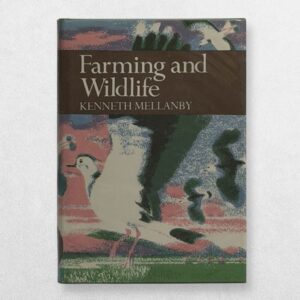
Collins New Naturalist Series – 67 – Farming And Wildlife – First Edition – 1981
£30.00Mellanby, Kenneth
Collins New Naturalist – 27 – Dartmoor – First Edition – 1953
£18.00Harvey, L.A & St Leger-Gordon, D
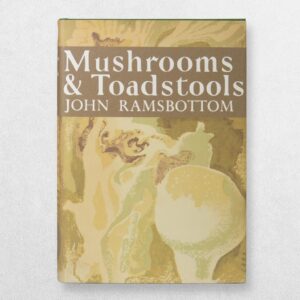
Collins New Naturalist Series – 7 – Mushrooms And Toadstools – First Facsimile Edition
£33.00Ramsbottom, John
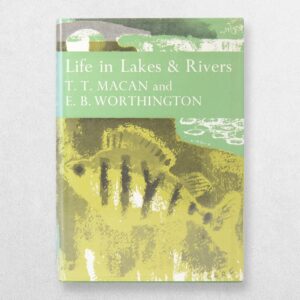
Collins New Naturalist Series – 15 – Life In Lakes And Rivers – Third Edition
£33.00Macan, T.T. & Worthington, E.B
Collins New Naturalist Series – 27 – Dartmoor – Third Edition
£23.00Harvey, L.A & St Leger-Gordon, D
Collins New Naturalist Series – 6 – The Highlands And Islands – Reprint
£23.00Fraser Darling, F & Morton Boyd, J
Collins New Naturalist Series – 5 – Wild Flowers – 5th Edition Reprinted
£25.00Gilmour, John & Walters, Max