Hugh Lofting – Doctor Dolittle’s Post Office – Reprint
Lofting, Hugh
£25.00
Product Description
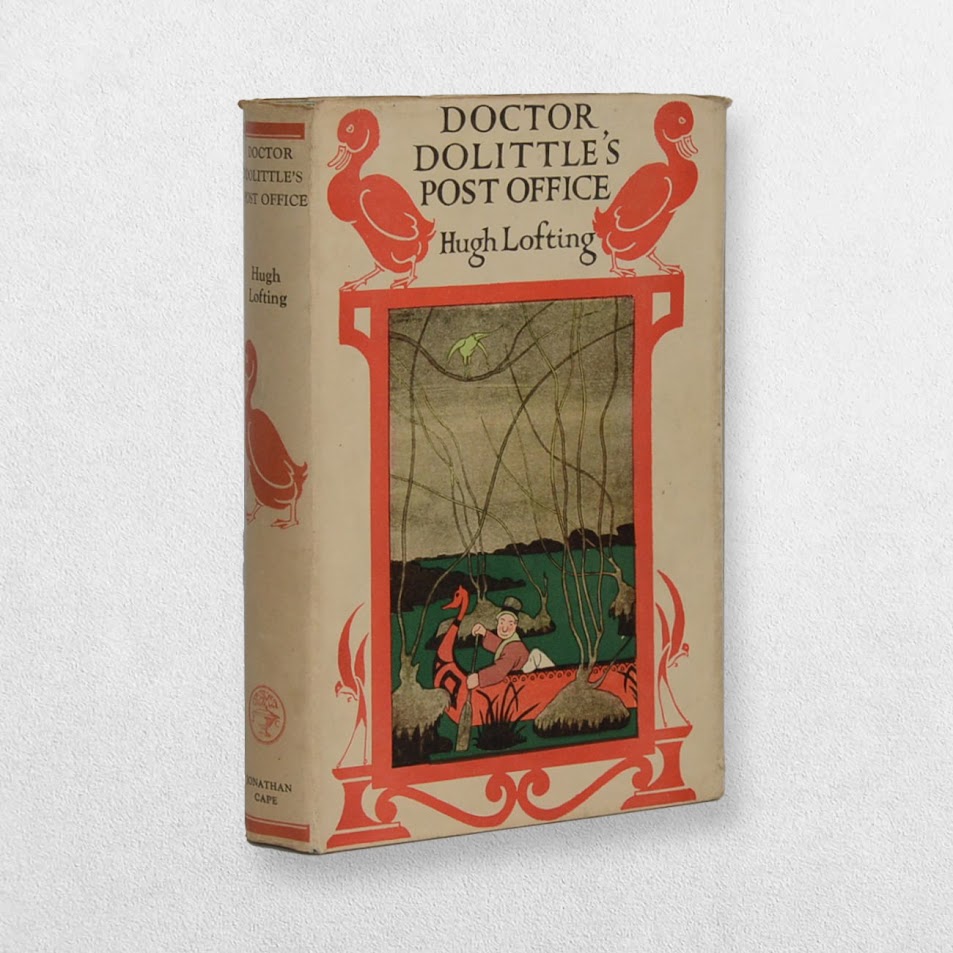
Hugh Lofting – Doctor Dolittle’s Post Office – Reprint
Author: Hugh Lofting
Price: £25
Publisher: Jonathan Cape, London, UK
Publication date: 1958
Format: Original cloth. Dustwrapper
Condition: Near fine in a very good plus dustwrapper
Edition: 1st edition, nineteenth impression
Description: Early reprint. Slight fading to the spine cloth. A near fine, tight, clean copy in very good, slightly marked, nicked, rubbed and creased dustwrapper.
Location: OSR: 002614
Doctor Dolittle’s Post Office: A Brief Review
Published in 1923, Doctor Dolittle’s Post Office is the third book in Hugh Lofting’s Doctor Dolittle series. This instalment takes the beloved doctor on a new and creative adventure that combines his love for animals with his knack for solving problems. Packed with humour, charm, and Lofting’s imaginative storytelling, the book introduces readers to a unique concept: a post office run by and for animals. It showcases Dolittle’s ingenuity while highlighting themes of communication, kindness, and cooperation.
Plot Summary
The story begins with Doctor John Dolittle settling back into life in Puddleby-on-the-Marsh after his voyages in The Voyages of Doctor Dolittle. Ever resourceful, the doctor embarks on a new project: establishing a postal system for animals. Using his unparalleled ability to communicate with animals, Dolittle creates a network that allows creatures across the globe to send messages and share news.
The animal postal service takes Dolittle on a series of adventures, including helping a parrot recover a lost treasure, resolving disputes between animals, and managing the logistics of the burgeoning mail system. Along the way, he encounters a variety of animals, each with their own personalities and quirks.
The episodic nature of the story allows Lofting to explore a range of humorous and heartfelt scenarios, blending whimsical storytelling with deeper messages about understanding and cooperation.
Themes
- Communication and Connection: The central theme of the book is the importance of communication and how it can foster understanding and cooperation across species.
- Problem-Solving and Ingenuity: Dolittle’s innovative approach to creating the animal postal service highlights the value of resourcefulness and creativity.
- Kindness and Empathy: The doctor’s unwavering compassion for animals drives the narrative, reinforcing the series’ core message of treating all living beings with respect.
- Teamwork and Cooperation: The successful operation of the animal post office depends on the efforts of many creatures working together, showcasing the power of collaboration.
Key Characters
- Doctor Dolittle: The kind-hearted protagonist is as resourceful and empathetic as ever, using his unique talents to improve the lives of animals.
- Polynesia the Parrot: The doctor’s sharp-tongued but wise companion plays a central role in managing the postal service and advising Dolittle.
- Jip the Dog: Dolittle’s loyal friend contributes to the operation of the postal system, demonstrating his usual bravery and dedication.
- Chee-Chee the Monkey: Chee-Chee’s cleverness and resourcefulness help solve logistical challenges, particularly in the jungle.
- New Animal Characters: A variety of animals—from birds to land creatures—contribute to the post office’s success, each bringing their unique abilities and personalities.
Writing Style
Hugh Lofting’s prose is engaging, playful, and accessible, making the story enjoyable for readers of all ages. His imaginative descriptions of the animal postal system, from the logistical challenges to the humorous mishaps, bring the concept to life.
The episodic structure keeps the narrative fresh and varied, with each chapter introducing new problems and solutions. Lofting’s whimsical illustrations enhance the story, adding a visual charm that complements the text.
Strengths
- Creative Premise: The idea of an animal postal system is unique and imaginative, providing a fresh angle for the series.
- Episodic Adventure: The self-contained chapters make the book engaging and accessible, with each episode offering a mix of humour, adventure, and heart.
- Moral Lessons: The book reinforces valuable lessons about kindness, teamwork, and the importance of communication.
- Endearing Characters: Lofting’s ability to imbue animals with distinct personalities makes the cast memorable and relatable.
- Humour and Whimsy: The light-hearted tone and comedic scenarios ensure the story remains entertaining.
Criticisms
- Simplistic Plot: The episodic structure, while enjoyable, lacks a strong overarching narrative, which may feel less cohesive to some readers.
- Limited Conflict: The absence of significant tension or high stakes might make the story feel less compelling compared to earlier books like The Voyages of Doctor Dolittle.
- Dated Aspects: Some cultural and linguistic elements reflect the attitudes of the time and may feel outdated to modern readers.
Impact and Legacy
Doctor Dolittle’s Post Office is a delightful and imaginative addition to the Doctor Dolittle series. While it lacks the epic scope of some of its counterparts, it showcases Lofting’s creativity and his ability to craft meaningful stories from simple, everyday concepts. The book’s focus on communication and cooperation makes it particularly relevant, even in today’s interconnected world.
The novel remains a favourite among fans of the series and serves as an excellent introduction to Dolittle’s gentler, more domestic adventures.
Conclusion
Doctor Dolittle’s Post Office is a charming and inventive instalment in Hugh Lofting’s Doctor Dolittle series. Its unique premise, endearing characters, and light-hearted humour make it a joy to read, particularly for younger audiences. While it may not have the grand adventure or dramatic tension of other books in the series, its focus on kindness, ingenuity, and the power of connection ensures its place as a timeless classic.
For readers seeking a whimsical tale that highlights the magic of communication and the importance of compassion, Doctor Dolittle’s Post Office is an enchanting and satisfying choice.
Hugh Lofting: A Short Biography
Hugh John Lofting, born 14 January 1886 in Maidenhead, Berkshire, England, is best known as the author of the beloved Doctor Dolittle series. A writer and illustrator with a vivid imagination, Lofting created a magical world where animals could speak and a kind-hearted doctor could understand them. His works remain timeless classics of children’s literature, celebrated for their humour, creativity, and underlying messages of compassion and respect for all living things.
Early Life and Education
Hugh Lofting was the sixth of six children born to John Brien Lofting and Elizabeth Agnes Gunning. His father was of Dutch ancestry, and the family lived in relative comfort in Maidenhead. Lofting’s early life was marked by a love of nature and animals, interests that would later inform his writing.
He was educated at Mount St Mary’s College, a Jesuit school in Derbyshire, known for its strict discipline and classical curriculum. After completing his schooling, Lofting studied civil engineering at the prestigious Massachusetts Institute of Technology (MIT) in the United States, graduating in 1905. This practical education seemed at odds with his later career in literature but demonstrated Lofting’s diverse talents and intellectual curiosity.
Early Career and Travels
After completing his studies, Lofting embarked on a career as a civil engineer. He worked in Canada, Cuba, and West Africa, often in challenging and remote locations. These experiences exposed him to a variety of landscapes, cultures, and wildlife, broadening his worldview and deepening his appreciation for nature.
Lofting eventually settled in New York City, where he worked as an engineer and met his first wife, Flora Small. They married in 1912 and had two children, Colin and Elizabeth.
World War I and the Birth of Doctor Dolittle
In 1914, Lofting enlisted in the British Army during World War I, serving as a lieutenant in the Irish Guards. He was stationed in Flanders, where the horrors of trench warfare deeply affected him. While in the trenches, Lofting struggled with how to explain the brutal realities of war to his children. Instead of writing letters about the grim conditions, he began crafting whimsical, illustrated stories featuring Doctor Dolittle, a physician who could speak with animals.
The character of Doctor Dolittle emerged as an antidote to the violence and cruelty Lofting witnessed, offering a vision of kindness, understanding, and harmony with nature. These stories, initially intended solely for his children, would later form the basis of his literary career.
Literary Career
After the war, Lofting returned to his family and began refining and expanding the Doctor Dolittle stories. In 1920, he published The Story of Doctor Dolittle, which introduced readers to the gentle doctor and his animal friends, including Polynesia the parrot, Jip the dog, and Chee-Chee the monkey.
The book was an immediate success, praised for its creativity, humour, and richly detailed illustrations. It was followed by several sequels, including:
- The Voyages of Doctor Dolittle (1922): Winner of the Newbery Medal in 1923.
- Doctor Dolittle’s Post Office (1923): A tale of the doctor’s adventures as a postman for animals.
- Doctor Dolittle’s Circus (1924) and Doctor Dolittle’s Caravan (1926): Exploring the doctor’s foray into the world of entertainment.
- Doctor Dolittle’s Zoo (1925): A heartwarming account of the doctor creating a zoo for animals to visit.
The Doctor Dolittle series eventually grew to include twelve books, written between 1920 and 1952, and became one of the most beloved children’s series of the 20th century.
Themes and Style
Hugh Lofting’s works are distinguished by their:
- Imagination: Lofting created a richly detailed world where animals had personalities, histories, and languages, brought to life through his vivid descriptions and illustrations.
- Humour: His writing is filled with playful dialogue, amusing situations, and endearing characters, appealing to children and adults alike.
- Compassion: Central to the series is a message of kindness and respect for animals, promoting a harmonious relationship between humans and nature.
- Social Commentary: Beneath the light-hearted adventures, Lofting subtly critiqued human folly, colonial attitudes, and the exploitation of animals, making his stories thought-provoking as well as entertaining.
Later Life
Lofting’s wife, Flora, passed away in 1927, leaving him devastated. He later married Katherine Harrower Peters, with whom he had a third child, Christopher. After Katherine’s death in 1936, Lofting married for a third time, to Josephine Fricker.
Lofting moved between the United States and England throughout his later years, continuing to write and illustrate. Although his literary output slowed, his earlier works remained popular, earning him financial stability and enduring fame.
Death and Legacy
Hugh Lofting passed away on 26 September 1947 in Topanga, California, at the age of 61. He was buried in Killingsworth, Connecticut, where he had spent much of his later life.
Lofting’s Doctor Dolittle series has remained a cornerstone of children’s literature, celebrated for its charm, humour, and moral lessons. The books have been adapted into various forms, including stage plays, animated series, and films, the most famous being the 1967 musical film starring Rex Harrison and the 2020 adaptation featuring Robert Downey Jr.
Criticism and Modern Perspectives
While Hugh Lofting’s works are beloved, some aspects of the Doctor Dolittle series have drawn criticism in modern times for their depiction of race and colonialism. Early editions included stereotypes that reflect the attitudes of the time but are considered offensive today. Modern editions of the books have been revised to address these issues, ensuring the stories remain accessible to contemporary readers while preserving their core themes of compassion and curiosity.
Influence and Enduring Appeal
Hugh Lofting’s legacy lies in his ability to combine imagination, humour, and moral insight in a way that resonates with readers of all ages. His creation of Doctor Dolittle—a figure of empathy, wisdom, and kindness—continues to inspire children to care for animals and the natural world.
Lofting’s work set a standard for children’s literature that bridges entertainment and education, ensuring his place among the most cherished authors of his generation.
Why buy from us?
At Hornseys, we are committed to offering items that meet the highest standards of quality and authenticity. Our book collection is meticulously curated to ensure that each edition is a valuable and authentic piece of bibliographical history. Here’s what sets us apart:
- Authenticity and Provenance: Every book is researched, collated, and verified for authenticity.
- Expert Curation: Each book is selected with a keen eye for significance, condition, and rarity, ensuring a collection that is both diverse and distinguished.
- Customer Satisfaction: We strive to provide an exceptional customer experience, from detailed descriptions and provenance to secure and prompt delivery of your purchase.
- Returns Policy: We offer an unconditional guarantee on every item. If you wish to make a return, books may be sent back to us within fourteen days of receipt for any reason. We request advance notification of returns, and books must be returned in the same condition as sent for a full refund.
Explore Our Collection:
Visit Hornseys to explore our fine collection of rare and signed books. Whether you are an avid collector or looking for a special gift, our selection offers something truly unique. Located in the picturesque Yorkshire Dales, our Ripon gallery has been a haven for book lovers, art enthusiasts, and collectors since 1976.
Related products

Newt Scamander: Fantastic Beasts And Where To Find Them: Signed By The Illustrator
£150.00Rowling, J K & Gill, Olivia Lomenech
The Fairies Or The Tales Of Mother Goose Corrected Typescript: Presentation Copy To John Arlott
£275.00Disher, M Willson