Product Description
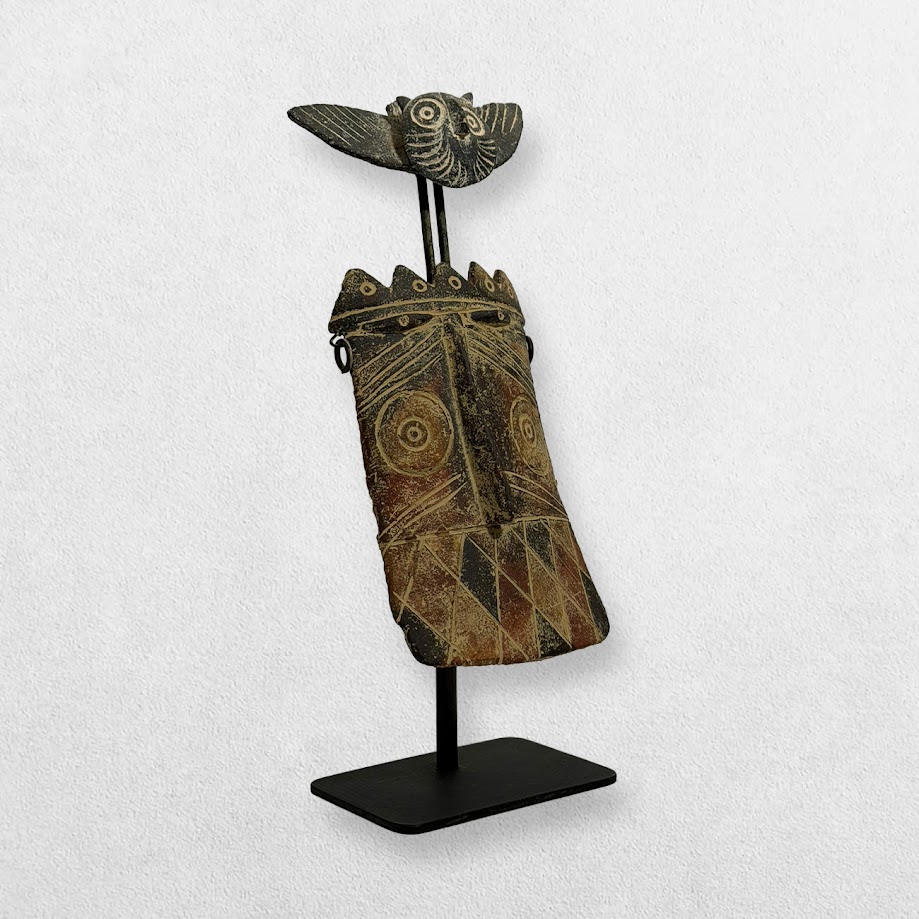
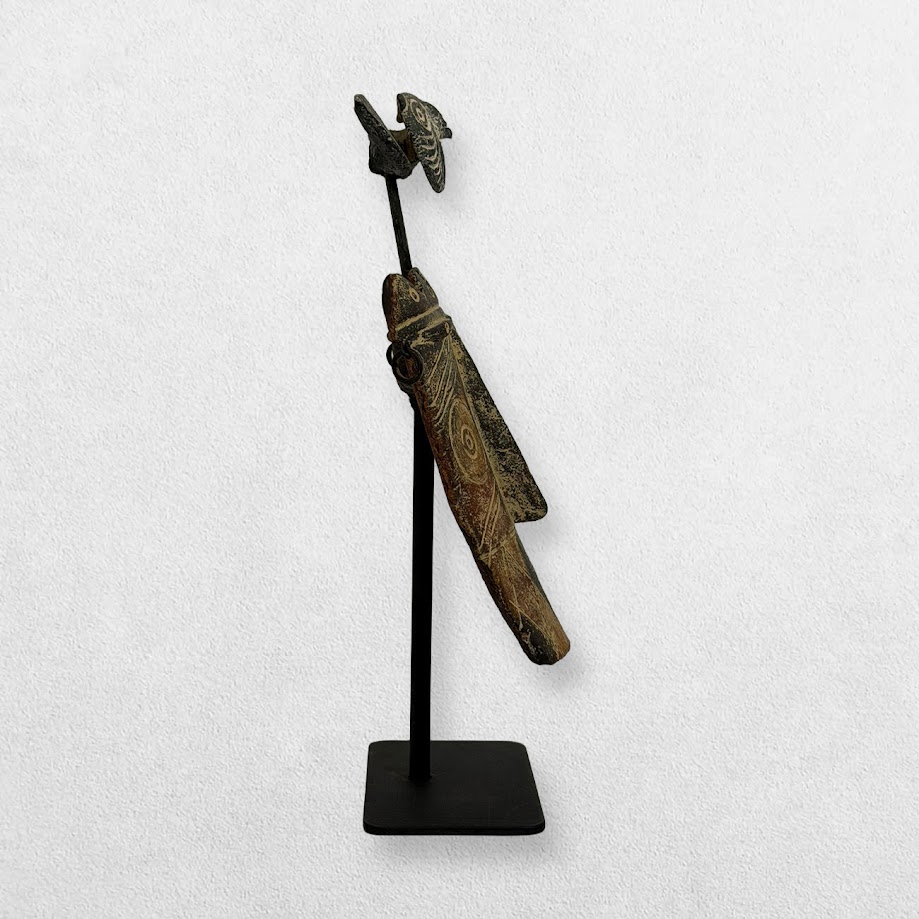
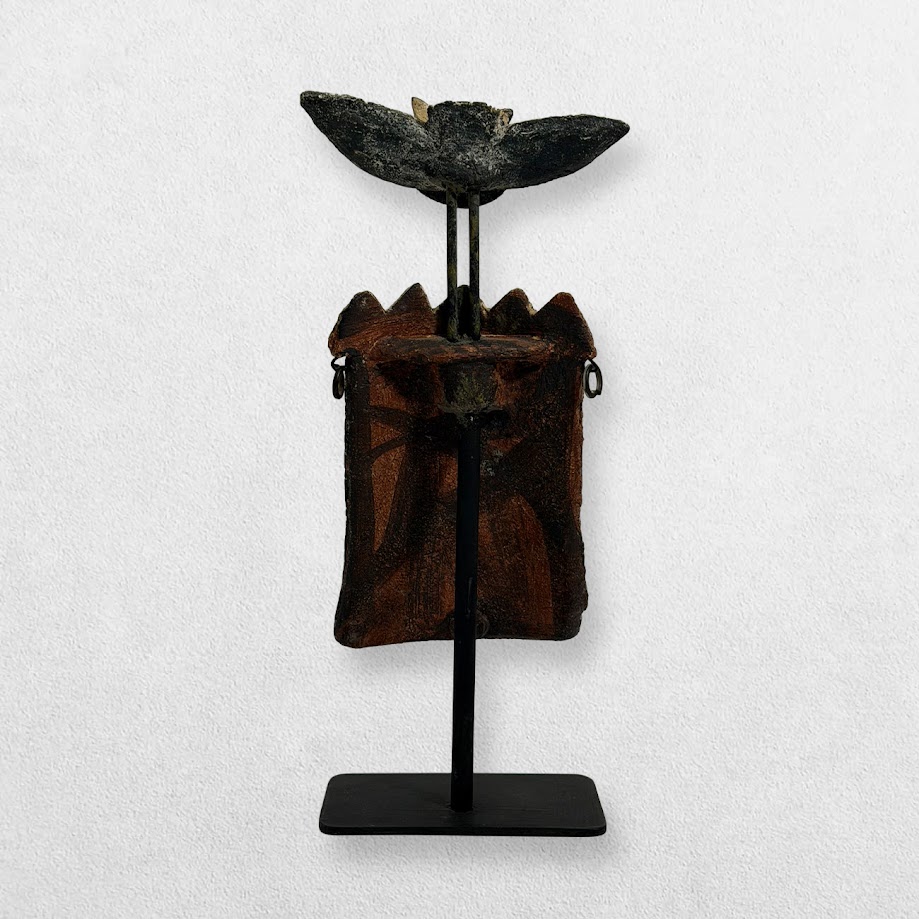
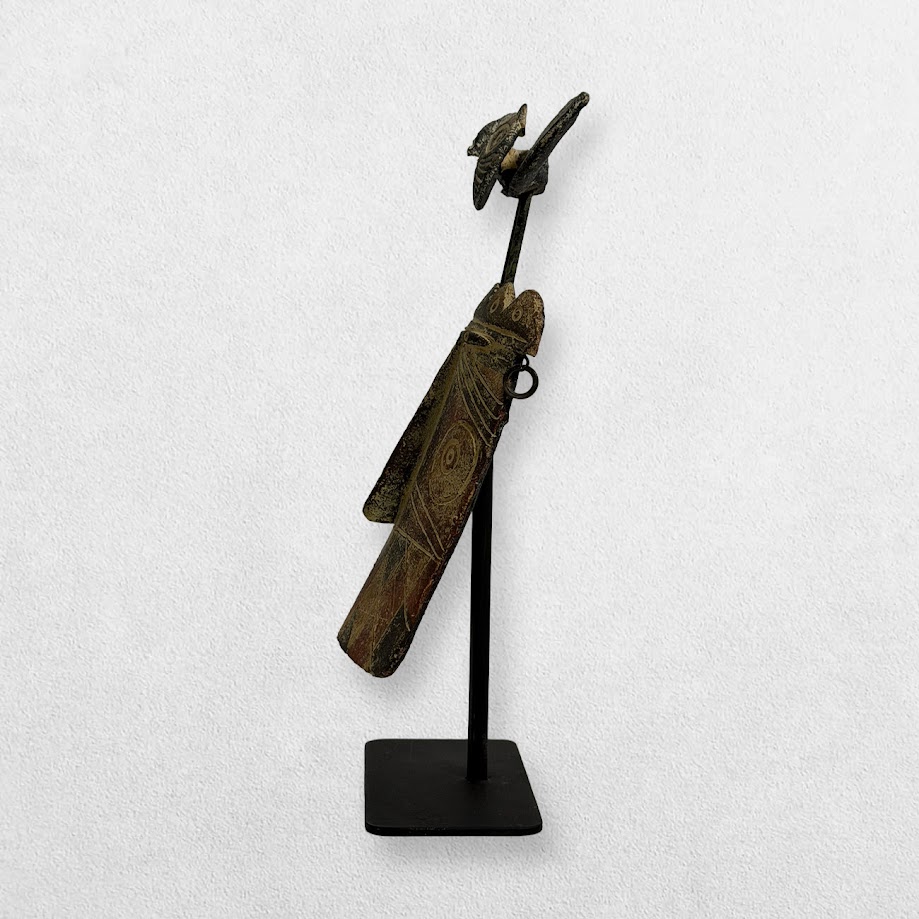
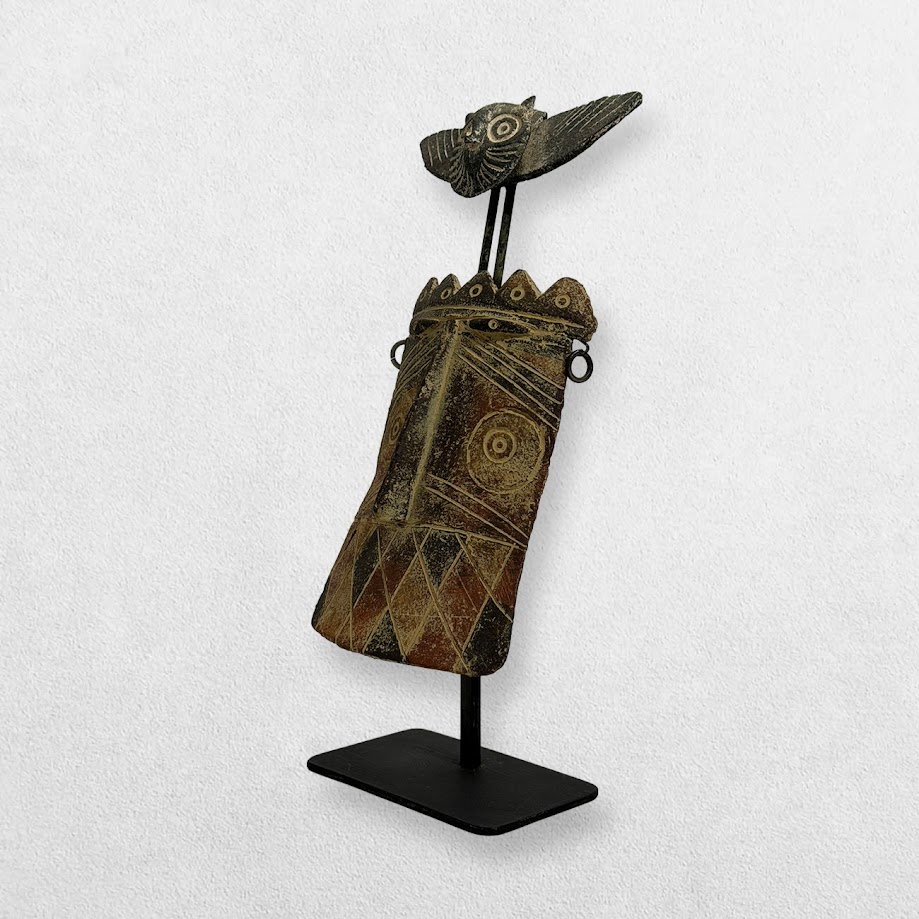
John Maltby – Noble Wise King – 2015
Artist: John Maltby
Price: £1000.00
Date: 2015
Format: Slab-built stoneware and metal
Condition: Fine
Size: 33cm tall x 12cm wide
DESCRIPTION:
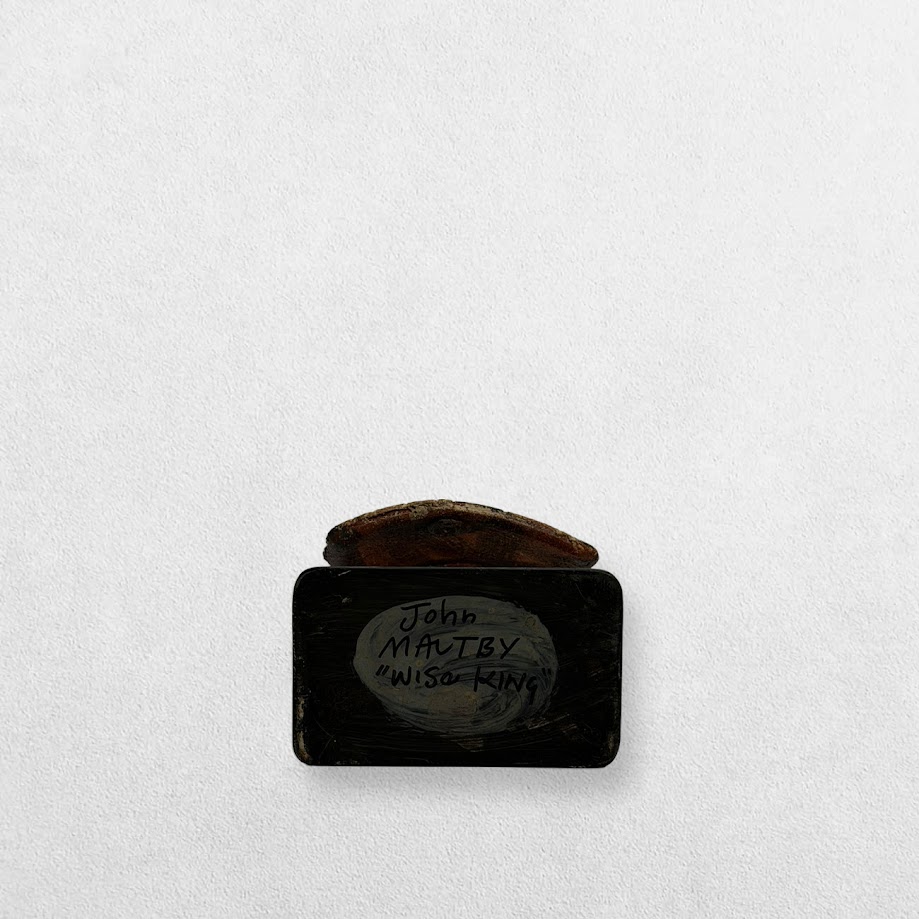
One in the series of Maltby’s totemic ‘Wise Kings’. Signed to the underside of the base: ‘Wise King’ by Maltby. Constructed using the technique of slab-built stoneware. Purchased from the Yew Tree Gallery in 2015 with original receipt stating that its full title is ‘Noble Wise King’. Provenance: From the collection of Sarah Parvin.
John Maltby: A Short Biography
John Maltby (1936–2020) was a leading figure in post-war British studio pottery, recognised for his distinctive ceramic sculptures that bridged the disciplines of pottery, drawing, and narrative art. His work is immediately identifiable for its quiet wit, anthropomorphic character, and painterly surface treatment, placing him among the most individual voices to emerge from the Anglo-Oriental pottery tradition associated with mid-twentieth-century Britain.
Early Life and Education
John Maltby was born in 1936 in Lincolnshire, England. His early education did not initially follow a strictly artistic path; however, his aptitude for drawing and visual expression became evident during his formative years. He went on to study at the Lincoln School of Art, where he developed foundational skills in both fine art and design.
A pivotal stage in his development came when he joined the workshop of David Leach at Lowerdown Pottery in Devon. This apprenticeship placed him within the influential Leach lineage, itself rooted in the philosophy of Bernard Leach, whose synthesis of Eastern and Western ceramic traditions shaped British studio pottery throughout the twentieth century.
Apprenticeship and Early Career
Working under David Leach in the late 1950s and early 1960s, Maltby acquired a rigorous grounding in:
- Functional stoneware production
- Wheel-throwing techniques
- Kiln operation and glaze chemistry
However, even at this stage, Maltby’s sensibility diverged from the strictly utilitarian ethos of Leach pottery. While he absorbed its technical discipline, he was drawn increasingly towards surface imagery, narrative, and sculptural form.
Establishing an Independent Practice
In 1964, Maltby established his own studio in Devon. This marked the beginning of a highly individual practice that would evolve steadily over several decades.
During this period, his work began to move away from purely functional ware towards:
- Sculptural vessels
- Totemic forms
- Ceramic figures and animals
These works retained the structural logic of pottery but were increasingly conceived as objects of contemplation rather than use.
Mature Style and Artistic Development
Form and Structure
Maltby’s mature work is characterised by:
- Simplified, often geometric forms
- Flattened or slab-built structures
- A balance between vessel and sculpture
Many pieces suggest functional origins—jars, bottles, or containers—but subvert them through scale, proportion, or closed forms.
Surface and Imagery
A defining feature of Maltby’s work is his use of surface as a narrative field. He employed:
- Incised line
- Painted slips
- Oxide drawing
These techniques allowed him to create imagery that resembles:
- Primitive or folk drawing
- Symbolic mark-making
- Quiet, introspective scenes
Common motifs include:
- Birds
- Animals
- Human-like figures
- Abstracted landscapes
The imagery often carries a subtle humour or contemplative stillness, inviting close, prolonged viewing.
Colour and Finish
His palette is typically restrained, favouring:
- Earth tones
- Soft whites
- Muted greens and blues
Glazes are often matte or semi-matte, reinforcing the tactile, hand-worked quality of the pieces and allowing the drawn imagery to remain central.
Influences and Context
Maltby’s work reflects a synthesis of influences, including:
- The Anglo-Oriental tradition of Bernard Leach
- European modernist painting
- Folk art and primitive mark-making
However, unlike many of his contemporaries, Maltby moved decisively beyond functionalism. His work aligns more closely with artists who treated ceramics as a fine art medium, rather than a craft defined by utility.
Themes and Interpretation
At the core of Maltby’s practice is a quiet exploration of:
- Observation of the natural world
- Human and animal relationships
- Memory and imagination
His pieces often feel like fragments of a larger, unspoken narrative. The animals he depicted are not literal representations but symbolic presences, imbued with personality and emotional resonance.
Exhibitions and Recognition
Maltby exhibited widely throughout the UK and internationally. His work has been shown in:
- Major craft and design galleries
- Public institutions
- Specialist ceramics exhibitions
He became particularly associated with leading British galleries that championed studio ceramics as fine art, contributing to the broader recognition of the field.
His works are held in both private and public collections, and he developed a strong following among collectors of British studio pottery.
Later Career and Legacy
In his later years, Maltby continued to refine his sculptural language, producing works of increasing subtlety and confidence. His output remained consistent in quality and vision, avoiding trends in favour of a deeply personal vocabulary.
Following his death in 2020, his reputation has continued to strengthen. He is now regarded as:
- A key figure in the evolution of British studio ceramics
- An artist who expanded the expressive possibilities of clay
- A bridge between functional pottery and sculptural art
Market and Collectability
Maltby’s work is highly collectable, particularly:
- Animal forms
- Early sculptural pieces
- Works with strong surface drawing
Values vary depending on size, rarity, and period, but his pieces are consistently sought after within the market for British studio ceramics.
Conclusion
John Maltby’s contribution to ceramics lies in his ability to transform the vessel into a site of narrative and imagination. Rooted in the discipline of traditional pottery yet liberated from its constraints, his work occupies a unique space between craft and fine art.
His ceramics are not merely objects but quiet, contemplative presences, defined by their balance of form, surface, and meaning—an enduring testament to a singular artistic vision within British studio pottery.
SHOP WITH CONFIDENCE AT HORNSEYS
At Hornseys, we are dedicated to offering items that uphold the highest standards of quality and authenticity. Our collection of artwork is carefully curated to ensure that each item we offer is authentic, collated, and complete.
Here’s what sets us apart:
- Authenticity and Provenance: Each piece is researched and verified for authenticity, guaranteeing that you receive a genuine product.
- Expert Curation: We wholly own all our artworks. We trust our taste and have invested heavily in it. We have confidence in all artwork that we offer for sale.
- Customer Satisfaction: We strive to provide an exceptional customer experience, from detailed descriptions and provenance to secure and prompt delivery of your purchase.
- Returns Policy: We offer an unconditional guarantee on every item. If, however, you wish to make a return, items may be sent back to us within fourteen days of receipt for whatever reason. We request that we are notified in advance if you wish to do so. They must be returned to us in the same condition as they were sent for a full refund.
OUR COMMITMENT TO QUALITY AND SERVICE
Understanding the value and rarity of these items, we ensure that every aspect of your purchase meets the highest standards of quality and service. This includes:
- Free Expedited, Tracked, and Insured Delivery within the UK: Ensuring that your artwork arrives safely and promptly.
- Fully-Insured Worldwide Delivery: Offering peace of mind for international collectors with reliable and secure shipping options.
EXPLORE OUR COLLECTION
Established in 1976, Hornseys’ is a family business based in Ripon. We buy and sell rare and signed books, artwork, maps, furnishings, bruins, ‘The Adventures of Tintin’ and many other carefully curated items. We exhibit regularly at London book-fairs. We sell to leading dealers and clients throughout the world. Authenticity is guaranteed on all our products. Postage is free in the UK and we also offer fully-insured and tracked worldwide shipping.
Related products


You may also like…

BRAMBLE AND APPLE ALLOTMENT – ORIGINAL LITHOGRAPH EDITIONED AT THE CURWEN STUDIO
£1,195.00Hearld, Mark
THE CURWEN STUDIO 50TH ANNIVERSARY PORTFOLIO – EDITIONED AT THE CURWEN STUDIO
£3,500.00The Curwen Studio