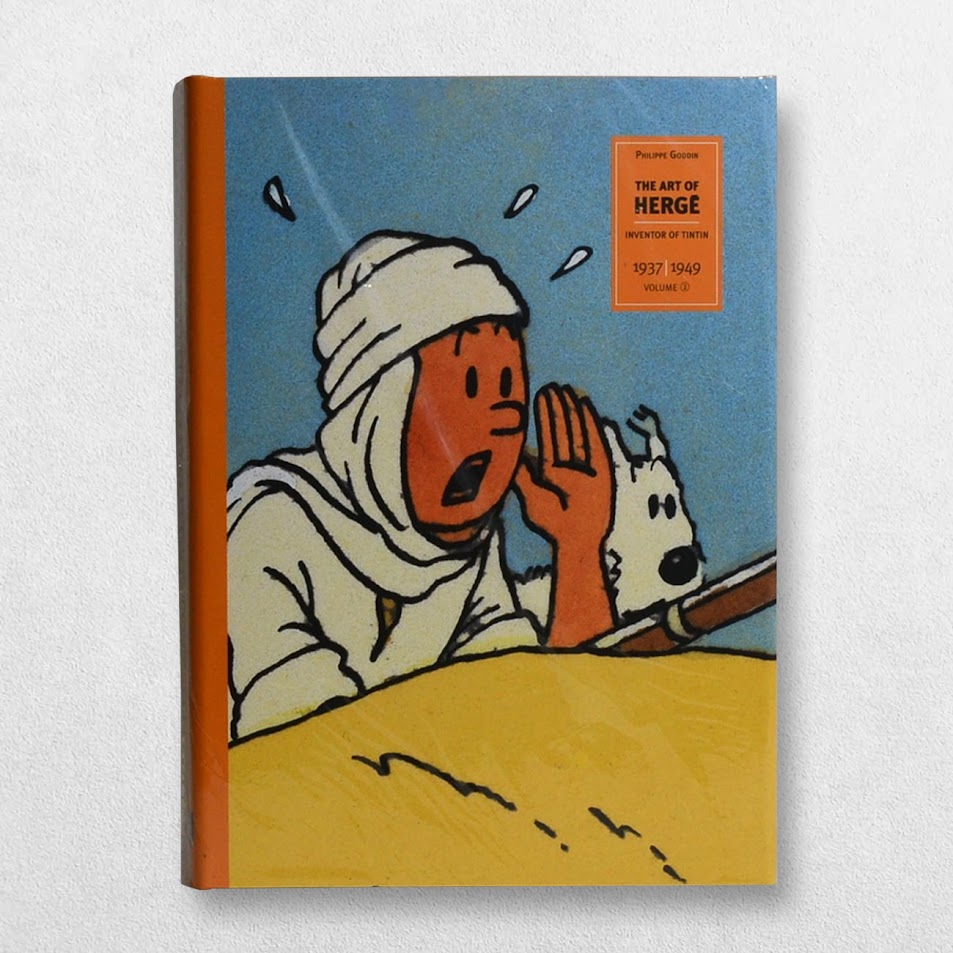
The Art Of Hergé Volume 2 – 1937-1949
Goddin, Philippe
£45.00
Availability: In stock
Product Description
The Art Of Hergé Volume 2 – 1937-1949
Author: Philippe Goddin
Price: £45
Publisher: Editions Moulinsart
Publication Date: Not stated
Format: Original cloth. Dustwrapper
Condition: New
Pages: Not stated
Edition: Not stated
Location: OSR: 002583
Short Critique of The Art of Hergé by Philippe Goddin
The Art of Hergé by Philippe Goddin is an expansive and richly detailed exploration of the creative genius behind The Adventures of Tintin. Goddin, a renowned Hergé expert, delves into the artist’s life and work, offering readers an intimate understanding of his artistic evolution and the influences that shaped his iconic creations. The book is both a tribute to Hergé’s legacy and a critical examination of his multifaceted career, making it an invaluable resource for fans and scholars alike. It was published in three volumes of which this is volume two.
Structure and Approach
The book is structured chronologically, tracing Hergé’s artistic journey from his early illustrations to the global phenomenon of Tintin. This organisation allows readers to witness the progression of Hergé’s style and the development of his storytelling techniques. Goddin meticulously highlights key moments in Hergé’s career, such as his experiments with the “ligne claire” style and his growing mastery of visual storytelling.
The narrative is interspersed with reproductions of Hergé’s artwork, including sketches, unpublished drawings, and finalised illustrations. These visuals not only enhance the book’s appeal but also provide valuable insights into Hergé’s creative process. Goddin’s commentary is detailed and thoughtful, offering a deeper appreciation of Hergé’s artistic decisions.
Artistic Analysis
One of the book’s greatest strengths is its thorough analysis of Hergé’s art. Goddin examines the technical aspects of Hergé’s work, such as his use of clean lines, meticulous composition, and vibrant colours. He also explores how Hergé’s art evolved over time, reflecting changes in his personal life, political context, and artistic ambitions.
The book delves into the research and preparation behind Tintin, showcasing Hergé’s commitment to authenticity and detail. From architectural accuracy to cultural references, Goddin reveals how Hergé blended realism with his unique artistic vision. This section is particularly compelling, as it highlights the depth and complexity of Hergé’s work, which often goes unnoticed in discussions of comics.
Biographical Context
While primarily focused on Hergé’s art, the book also provides valuable biographical context. Goddin discusses Hergé’s upbringing, his influences, and the personal and professional challenges he faced throughout his career. These insights help readers understand the man behind the art, adding depth to the analysis of his work.
The book does not shy away from addressing controversial aspects of Hergé’s life, such as his wartime collaborations and the colonial attitudes present in some of his early works. Goddin handles these topics with sensitivity and balance, acknowledging their impact while contextualising them within the broader scope of Hergé’s life and times.
Visual Presentation
The visual presentation of The Art of Hergé is outstanding. The reproductions of Hergé’s artwork are of high quality, allowing readers to appreciate the finer details of his drawings. The inclusion of rare and unpublished materials is a major highlight, offering a glimpse into Hergé’s creative process that is rarely seen elsewhere.
The book’s design complements its subject matter, with a layout that is both elegant and accessible. The combination of text and imagery creates a seamless reading experience, making it as visually engaging as it is intellectually stimulating.
Strengths and Limitations
The book’s comprehensive approach is its greatest strength, providing a detailed and nuanced portrait of Hergé as an artist. Goddin’s expertise is evident throughout, and his passion for the subject is infectious. The inclusion of rare visuals and behind-the-scenes insights makes this work an essential addition to any Hergé enthusiast’s library.
However, the book’s emphasis on Hergé’s artistic achievements may leave some readers wishing for a more in-depth exploration of his personal life or the broader cultural impact of Tintin. While these aspects are addressed, they are not the primary focus, which may disappoint those seeking a more holistic biography.
Additionally, the book’s rich detail and scholarly tone may be overwhelming for casual readers, making it better suited to those with a strong interest in Hergé or the art of comics.
Conclusion
The Art of Hergé by Philippe Goddin is a masterful and meticulously crafted tribute to one of the greatest comic artists of the 20th century. It offers a comprehensive analysis of Hergé’s artistic legacy, supported by an impressive collection of visuals and a thoughtful narrative. While its focus on art over biography may not appeal to all readers, it remains an indispensable resource for anyone looking to deepen their understanding of Hergé’s work.
Through this book, Goddin successfully captures the brilliance and enduring influence of Hergé, ensuring that his art continues to inspire and captivate audiences for generations to come.
Hergé from 1937 to 1949: Growth Amidst Turmoil
The period from 1937 to 1949 marked significant growth and challenges for Hergé, both as an artist and as a public figure. These years saw the refinement of his storytelling techniques and the expansion of The Adventures of Tintin as a beloved series. However, they also brought personal and professional challenges, particularly during World War II, when his choices would later provoke controversy.
1937–1939: Refinement of the Tintin Formula
By 1937, Hergé had established himself as a master of visual storytelling, and Tintin’s adventures were gaining widespread acclaim. During this period, he began producing some of his most iconic and enduring works, moving beyond episodic storytelling to create richer, more intricate narratives.
- L’Île Noire (The Black Island, 1938): This adventure demonstrated Hergé’s growing confidence in crafting suspenseful, fast-paced narratives. Set in Scotland, it featured detailed landscapes and a plot that incorporated espionage and mystery.
- Le Sceptre d’Ottokar (King Ottokar’s Sceptre, 1939): This story marked a turning point in Hergé’s career, introducing the fictional country of Syldavia, a meticulously crafted setting that reflected his interest in European geopolitics. The narrative, focused on themes of monarchy and resistance to authoritarianism, was widely interpreted as a commentary on the political tensions of pre-war Europe.
Hergé’s commitment to research and world-building became increasingly evident in these works. He refined the “ligne claire” style, bringing clarity and precision to his panels, and began collaborating with assistants to enhance the visual quality of his stories.
1939–1944: The Challenges of War
The outbreak of World War II in 1939 disrupted Hergé’s career, as Belgium fell under German occupation in 1940. During this tumultuous period, Hergé faced difficult choices regarding his professional life. He chose to continue publishing The Adventures of Tintin in Le Soir, a Belgian newspaper that had come under Nazi control.
This decision ensured Tintin’s continued popularity but has been a source of lasting controversy. While Hergé avoided overt political content during this time, the act of working for a collaborationist newspaper led to accusations of complicity after the war.
Despite the difficult circumstances, Hergé produced several notable works during the war years:
- Le Crabe aux Pinces d’Or (The Crab with the Golden Claws, 1941): This story introduced Captain Haddock, who would become one of the most beloved characters in the series. Haddock’s flawed yet endearing personality added depth and humour to the narrative.
- L’Étoile Mystérieuse (The Shooting Star, 1942): This adventure, set against the backdrop of a race to discover a fallen meteorite, was criticised for including elements perceived as antisemitic. While Hergé later revised the story, its original publication remains a contentious chapter in his career.
- Le Secret de La Licorne (The Secret of the Unicorn, 1943) and Le Trésor de Rackham le Rouge (Red Rackham’s Treasure, 1944): These interconnected stories solidified the series’ focus on grand, swashbuckling adventures. They also marked the beginning of Tintin’s exploration of historical mysteries, a theme that would feature prominently in later works.
1944–1946: Post-War Turmoil
Following Belgium’s liberation in 1944, Le Soir was shut down, and Hergé faced accusations of collaboration due to his wartime work. Although he was never formally charged, the controversy tarnished his reputation and led to a temporary ban on his publications.
During this period, Hergé reflected on his career and sought to rebuild his public image. In 1946, he found a new home for The Adventures of Tintin in Tintin magazine, founded by publisher Raymond Leblanc. This marked a fresh start for Hergé, allowing him to reach a wider audience and re-establish himself as a leading figure in the comics industry.
1946–1949: A New Era Begins
With the launch of Tintin magazine, Hergé entered a period of renewal and creativity. He began revising and colourising earlier works to meet the demands of a modern audience, transitioning from black-and-white serials to full-colour albums. This effort not only enhanced the visual appeal of his stories but also allowed him to refine their narratives and address criticisms.
During this time, he produced:
- Les Sept Boules de Cristal (The Seven Crystal Balls, 1948): This story showcased Hergé’s ability to weave suspense and mystery into a richly detailed narrative. It also demonstrated his continued commitment to thorough research, incorporating elements of South American culture and mythology.
- Le Temple du Soleil (Prisoners of the Sun, 1949): The sequel to The Seven Crystal Balls, this adventure combined high stakes with atmospheric storytelling. Its depiction of Incan culture reflected Hergé’s growing interest in creating immersive, authentic settings.
These works were pivotal in re-establishing Hergé’s reputation and cementing The Adventures of Tintin as a cornerstone of European comics.
Legacy of the Period
The years from 1937 to 1949 were a time of both triumph and challenge for Hergé. Artistically, he refined his craft, introduced beloved characters, and created some of the most enduring adventures in the Tintin series. However, the controversies surrounding his wartime activities cast a shadow over this period, complicating his legacy.
By 1949, Hergé had not only weathered these challenges but also laid the groundwork for the golden age of The Adventures of Tintin. His commitment to storytelling, artistic innovation, and cultural research ensured that his work would continue to resonate with audiences for generations to come.
Why buy from us?
At Hornseys, we are dedicated to offering items that uphold the highest standards of quality and authenticity. Our book collection is carefully curated to ensure that each edition is a valuable and authentic piece of bibliographical history. Here’s what sets us apart:
- Authenticity and Provenance: Every book is researched, collated and verified for authenticity.
- Expert Curation: Each book is selected using our keen eye for significance, condition, and rarity, ensuring a collection that is both diverse and distinguished.
- Customer Satisfaction: We strive to provide an exceptional customer experience, from detailed descriptions and provenance to secure and prompt delivery of your purchase.
- Returns Policy: We offer an unconditional guarantee on every item. If, however, you wish to make a return, books may be sent back to us within fourteen days of receipt for whatever reason. We request that we are notified in advance if you wish to do so. They must be returned to us in the same condition as they were sent for a full refund.
- Explore Our Collection: Visit Hornseys to explore our fine collection of rare and signed books. Whether you are an avid collector or looking for a special gift, our selection offers something truly unique. Located in the picturesque Yorkshire Dales, our Ripon gallery has been a haven for book lovers, art enthusiasts, and collectors since 1976.
Related products

Thomson Looking Awkward – Figurines Tintin La Collection Officielle – 4 – Dupond Engoncé
£40.00Hergé & Editions Moulinsart



You may also like…
The Art Of The Adventures Of Tintin – Forewords By Steven Spielberg And Peter Jackson
£28.00Hergé, Weta Digital, Weta Workshop & Paramount Pictures