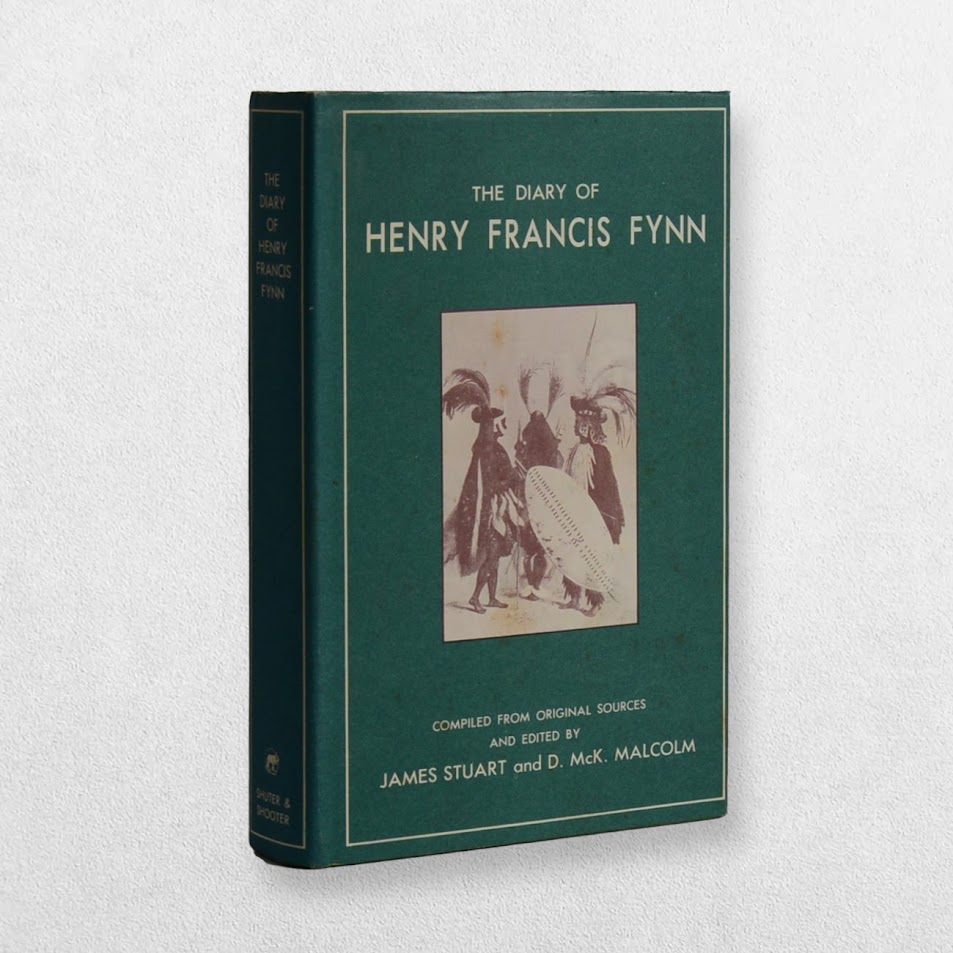
The Diary Of Henry Francis Fynn
Stuart, James & D McK Malcolm
£40.00
Out of stock
Product Description
The Diary Of Henry Francis Fynn
Author: James Stuart & D McK Malcolm
Price: £40
Publisher: Shuter & Shooter
Publication date: 1969
Format: Original cloth. Dustwrapper
Condition: Very good in very good plus dustwrapper
Edition: 1st edition
Description: Octavo. Tape marks and foxing to endpapers and prelims where acetate cover had been in place. Minor foxing to the text block and toning to the pages due to the paper stock. A very good, tight, clean copy in very good plus, bright, clean dustwrapper which is slightly foxed.
Location: OSR: 002627
The Diary Of Henry Francis Fynn: A Brief Critical Review
The Diary of Henry Francis Fynn, edited by James Stuart and D. McK. Malcolm, is a significant historical account that provides a first-hand narrative of early 19th-century life in the Zulu kingdom during the reigns of Shaka Zulu and his successors. Originally penned by Henry Francis Fynn, an English adventurer, trader, and settler, the diary was later compiled and contextualised by the editors, adding depth and perspective to the original material.
The work is particularly valuable for its depiction of Shaka Zulu and the socio-political dynamics of the Zulu kingdom. However, it is not without its controversies, as Fynn’s accounts have been criticised for potential biases, exaggerations, and the subjective nature of his observations.
Structure and Content
The diary is organised into various entries, reflecting Fynn’s observations, interactions, and experiences during his time in Zululand. Key elements include:
- Early Encounters with the Zulu Kingdom
Fynn recounts his arrival in the region and his initial interactions with the Zulu people. His descriptions capture the cultural and political landscape of the time, offering insights into the complexities of Zulu society. - Relationship with Shaka Zulu
A major focus of the diary is Fynn’s relationship with Shaka, the iconic Zulu leader. Fynn portrays Shaka as a brilliant but ruthless ruler, detailing his military strategies, political manoeuvres, and personal characteristics. These accounts have been instrumental in shaping the historical image of Shaka, though their accuracy is debated. - Cultural Observations
Fynn provides extensive descriptions of Zulu customs, including rituals, ceremonies, and daily life. His writings offer a glimpse into the traditions and beliefs of the Zulu people, though they are often filtered through a colonial lens. - Adventures and Personal Experiences
The diary includes vivid accounts of Fynn’s adventures, from hunting expeditions to his role as a mediator in conflicts. These narratives highlight the challenges and dangers of life in early 19th-century Zululand. - Historical Events
Fynn documents significant events, including internal power struggles within the Zulu kingdom and its interactions with European settlers and traders. His perspective provides a unique angle on the intersection of indigenous and colonial histories.
Strengths of the Book
- First-Hand Historical Account
The diary offers a rare primary source on the early 19th century in Southern Africa, particularly the Zulu kingdom during Shaka’s reign. It provides detailed observations that are invaluable for historians and enthusiasts of African history. - Rich Ethnographic Detail
Fynn’s descriptions of Zulu customs, language, and society are detailed and, at times, empathetic. These accounts contribute to our understanding of precolonial African cultures. - Engaging Narrative
The diary’s blend of historical events and personal adventures makes it an engaging read, combining academic value with the appeal of a well-told story. - Contextualisation by Editors
Stuart and Malcolm’s editorial work adds depth to the original diary, providing historical context and addressing some of the gaps or ambiguities in Fynn’s narrative.
Limitations and Criticisms
- Subjectivity and Bias
As a colonial settler, Fynn’s perspective is shaped by the racial and cultural biases of his time. His portrayal of the Zulu people and their leaders may be skewed by his own interests and prejudices. - Historical Accuracy
Some of Fynn’s accounts, particularly those related to Shaka Zulu, have been questioned by historians. Critics argue that he may have exaggerated certain events or included hearsay in his narrative. - Colonial Lens
The diary reflects a Eurocentric viewpoint, often framing the Zulu kingdom and its people in terms of their utility or threat to European settlers. This limits its objectivity and necessitates careful critical reading. - Editorial Interventions
While the editors’ contributions enhance the diary’s value, their interpretations may also introduce additional layers of bias. Readers should consider the influence of both Fynn and the editors on the final text.
Legacy and Impact
The Diary of Henry Francis Fynn is a foundational text in the study of early Zulu history and the interactions between European settlers and indigenous African societies. It has shaped popular and academic perceptions of Shaka Zulu and the socio-political dynamics of the Zulu kingdom.
However, modern historians emphasise the need to read the diary critically, recognising its limitations as a subjective and colonial account. It is best understood as one perspective among many, complementing other sources to provide a more balanced view of the period.
Final Thoughts
The Diary of Henry Francis Fynn is a captivating and historically significant work that offers rare insights into 19th-century Zululand. Its blend of ethnography, personal narrative, and historical commentary makes it a valuable resource for understanding the era. However, its biases and potential inaccuracies underscore the importance of contextualising Fynn’s perspective within the broader historical record.
For those interested in African history, particularly the Zulu kingdom and its interactions with European settlers, this book is a fascinating but complex read. It serves as both a window into the past and a reminder of the challenges of interpreting history through subjective accounts.
Why buy from us?
At Hornseys, we are committed to offering items that meet the highest standards of quality and authenticity. Our book collection is meticulously curated to ensure that each edition is a valuable and authentic piece of bibliographical history. Here’s what sets us apart:
- Authenticity and Provenance: Every book is researched, collated, and verified for authenticity.
- Expert Curation: Each book is selected with a keen eye for significance, condition, and rarity, ensuring a collection that is both diverse and distinguished.
- Customer Satisfaction: We strive to provide an exceptional customer experience, from detailed descriptions and provenance to secure and prompt delivery of your purchase.
- Returns Policy: We offer an unconditional guarantee on every item. If you wish to make a return, books may be sent back to us within fourteen days of receipt for any reason. We request advance notification of returns, and books must be returned in the same condition as sent for a full refund.
Explore Our Collection:
Visit Hornseys to explore our fine collection of rare and signed books. Whether you are an avid collector or looking for a special gift, our selection offers something truly unique. Located in the picturesque Yorkshire Dales, our Ripon gallery has been a haven for book lovers, art enthusiasts, and collectors since 1976.
Related products

Hausaland Or Fifteen Hundred Miles Through The Central Soudan Signed By The Author
£495.00Robinson, Charles Henry



You may also like…
Narrative Of The Kaffir War – 1850 – 1851 – 1852 – Facsimile Edition
£30.00Godlonton, R & Irving, Edward
ASIA – PLATE 4 – INCLUDING THE TURKISH DOMINIONS WITH MOST OF PERSIA REVISED AND EXAMINED BY MR BOLTON – ASIA – PLATE 5 – PART OF INDIA PERSIA TIBET AND TARTARY EXAMINED AND RECTIFIED BY MR BOLTON
£100.00D’Anville, Jean Baptiste Bourguignon, Searle, Richard William & Bolton, Solomon