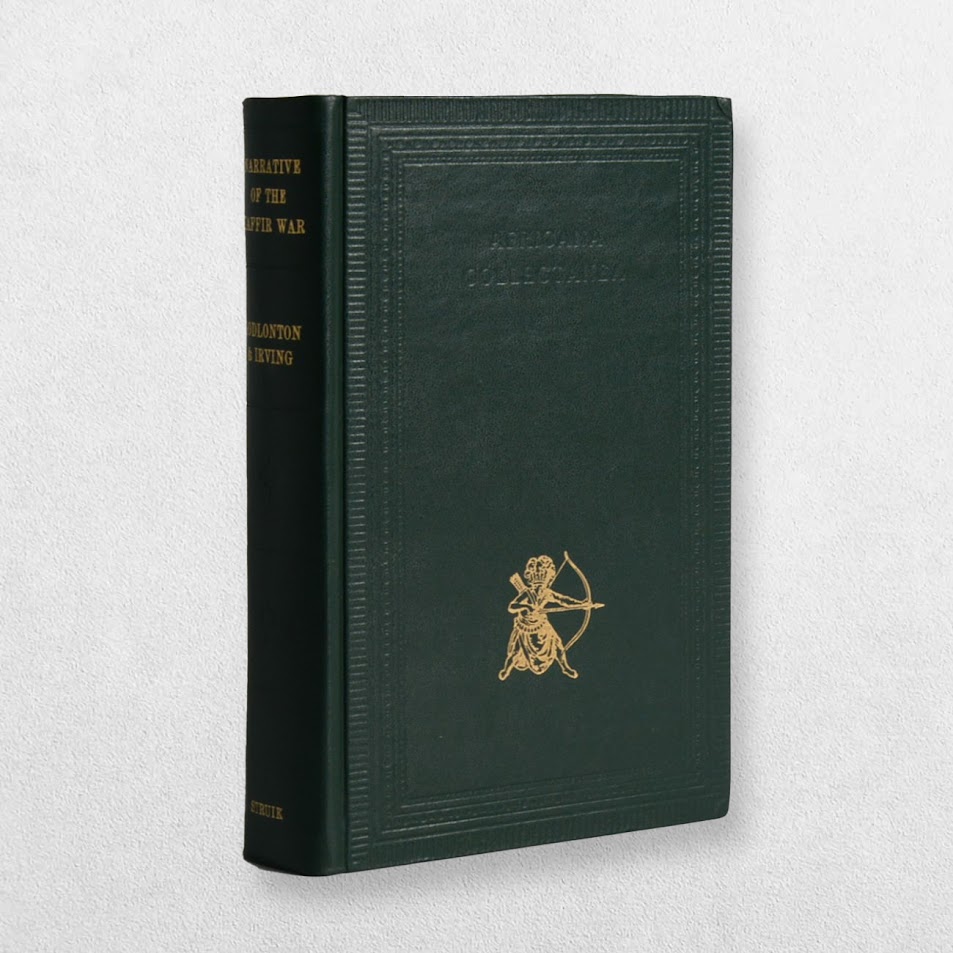
Narrative Of The Kaffir War – 1850 – 1851 – 1852 – Facsimile Edition
Author: R Godlonton & Edward Irving
Price: £30
Publisher: C. Struik
Publication date: 1962
Format: Original cloth
Condition: Very good
Edition: 1st facsimile edition
Description: Unnumbered copy from the limited edition of 750. A classic account. Toning to the pages due to the paper stock. Binding nice and tight and clean. Spotting and tape marks to the endpapers where a protective cover had been put in place. A very good, tight, copy.
Location: OSR: 002616
The Eighth Frontier War 1850-1852: A Brief History
Note that the term Kaffir is now considered offensive and outdated; it was historically used in a South African context to refer to the Xhosa people. Modern accounts refer to these conflicts as the Eighth Frontier War or War of Mlanjeni, respecting the Xhosa perspective.
The Eighth Frontier War (1850–1852)
Background
The Eighth Frontier War, also called the War of Mlanjeni, was one of a series of conflicts between the Xhosa people and British settlers in the Eastern Cape of South Africa. It was part of the broader struggle for land and resources between indigenous African groups and European colonists during the 19th century.
Tensions had been simmering for decades, fuelled by British expansionism, the displacement of the Xhosa, and competition for fertile land. The Cape Colony’s eastern frontier had become a flashpoint, with successive waves of colonial settlement pushing deeper into Xhosa territory.
Causes of the War
The immediate causes of the war included:
- Land Disputes: The British settlers’ demand for farmland continually encroached upon Xhosa territory, leading to frequent clashes.
- Cultural Misunderstandings: The imposition of British legal and administrative systems often clashed with Xhosa customs, exacerbating tensions.
- Economic Pressures: The Xhosa economy, reliant on cattle, was undermined by colonial policies and diseases introduced by European livestock.
- Religious Prophecies: Mlanjeni, a Xhosa prophet, gained influence by claiming to possess spiritual powers that could repel the colonists, encouraging resistance.
Key Events
- December 1850: The war began with a coordinated Xhosa attack on British military posts. This initial offensive caught the British forces off guard, resulting in significant early successes for the Xhosa.
- 1851: The Xhosa forces, led by chiefs such as Maqoma and Sandile, launched guerrilla-style attacks on British settlers and military convoys. British forces retaliated with scorched-earth tactics, destroying villages and crops to weaken Xhosa resistance.
- British Reinforcements: The British government sent reinforcements to the Cape, bolstering the colonial forces under Sir Harry Smith. The increased military presence shifted the balance of power.
- Battle of the Amatola Mountains: This crucial confrontation saw the British employing superior firepower and strategic manoeuvres to dislodge Xhosa fighters from their strongholds.
- Capture of Sandile: By late 1852, many Xhosa leaders were captured or forced to surrender, marking the decline of organised resistance.
Consequences
- Territorial Losses: Large areas of Xhosa land were annexed by the Cape Colony, further marginalising the Xhosa population.
- Social and Economic Impact: The destruction of crops and livestock led to widespread famine and displacement among the Xhosa.
- Expansion of British Control: The war consolidated British dominance in the Eastern Cape and set the stage for further colonial expansion.
Legacy
The Eighth Frontier War was a tragic chapter in the history of colonial South Africa, marked by significant loss of life and suffering. It epitomised the broader struggles faced by indigenous peoples resisting European imperialism. Modern perspectives have re-evaluated the conflict, emphasising the resilience and agency of the Xhosa people.
Why buy from us?
At Hornseys, we are committed to offering items that meet the highest standards of quality and authenticity. Our book collection is meticulously curated to ensure that each edition is a valuable and authentic piece of bibliographical history. Here’s what sets us apart:
- Authenticity and Provenance: Every book is researched, collated, and verified for authenticity.
- Expert Curation: Each book is selected with a keen eye for significance, condition, and rarity, ensuring a collection that is both diverse and distinguished.
- Customer Satisfaction: We strive to provide an exceptional customer experience, from detailed descriptions and provenance to secure and prompt delivery of your purchase.
- Returns Policy: We offer an unconditional guarantee on every item. If you wish to make a return, books may be sent back to us within fourteen days of receipt for any reason. We request advance notification of returns, and books must be returned in the same condition as sent for a full refund.
Explore Our Collection:
Visit Hornseys to explore our fine collection of rare and signed books. Whether you are an avid collector or looking for a special gift, our selection offers something truly unique. Located in the picturesque Yorkshire Dales, our Ripon gallery has been a haven for book lovers, art enthusiasts, and collectors since 1976.