

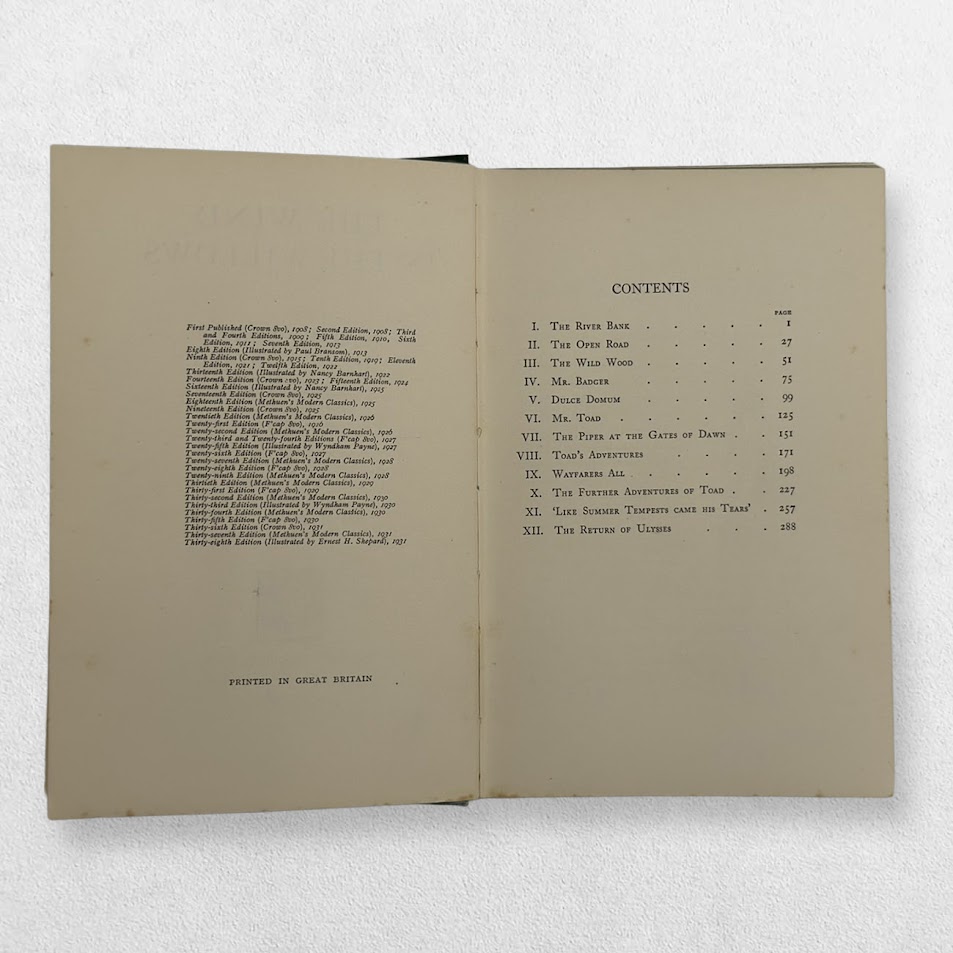
The Wind In The Willows Illustrated By Ernest Shepard – First Edition Thus – 1931
Grahame, Kenneth & Shepard E. H.
£650.00
Availability: In stock
Product Description
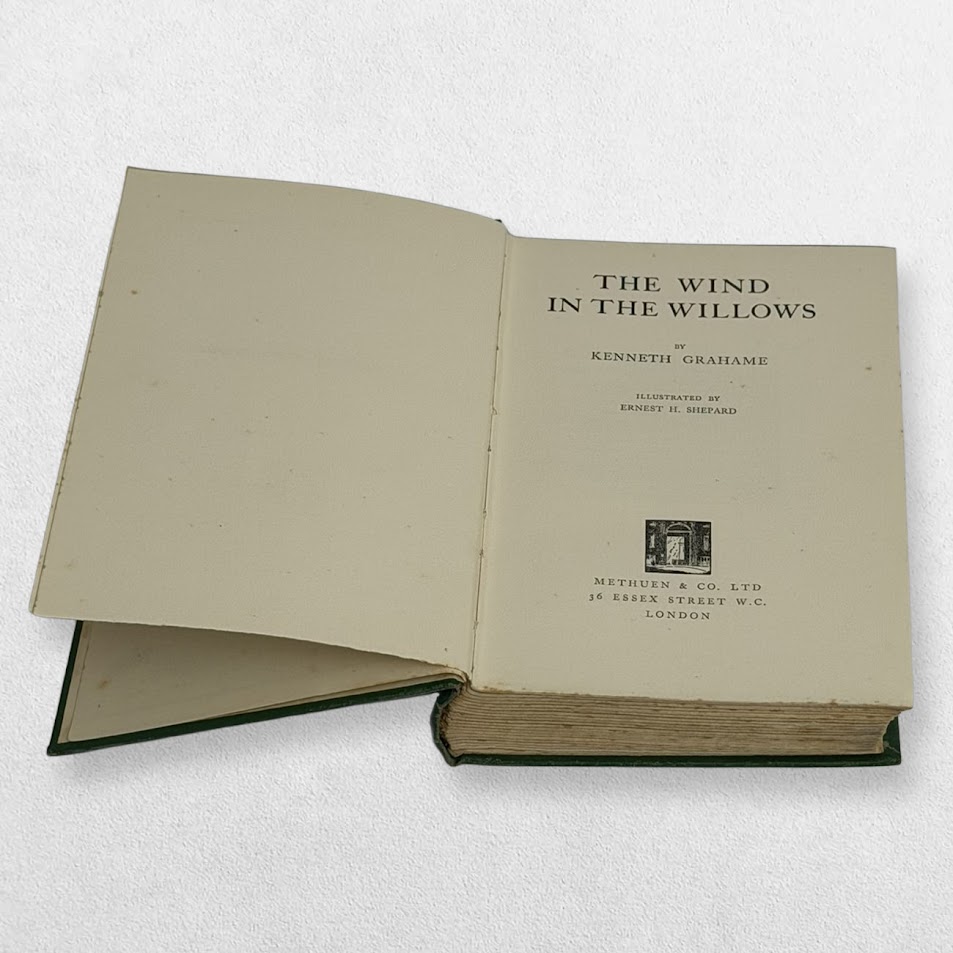
The Wind In The Willows Illustrated By Ernest Shepard – First Edition Thus – 1931
Author: A. A. Milne
Illustrated By: Ernest Shepard
Price: £650.00
Publisher: Methuen, London, UK
Publication Date: 1931
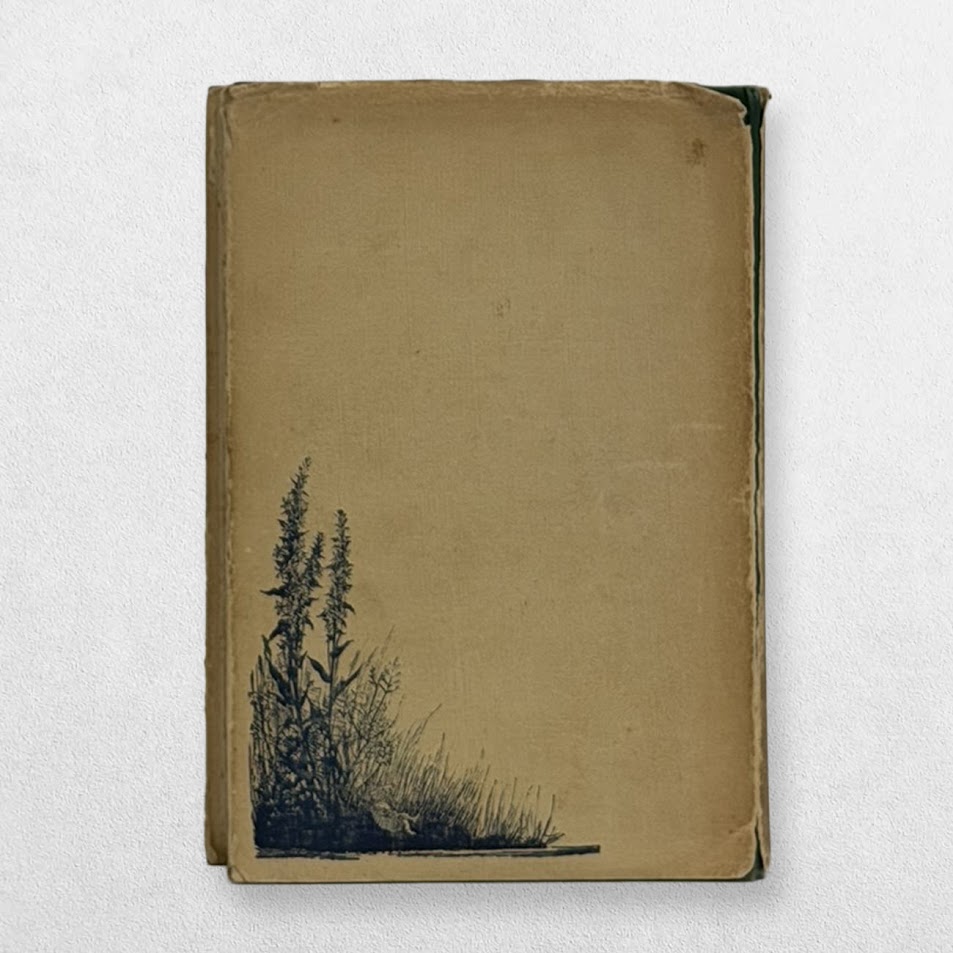
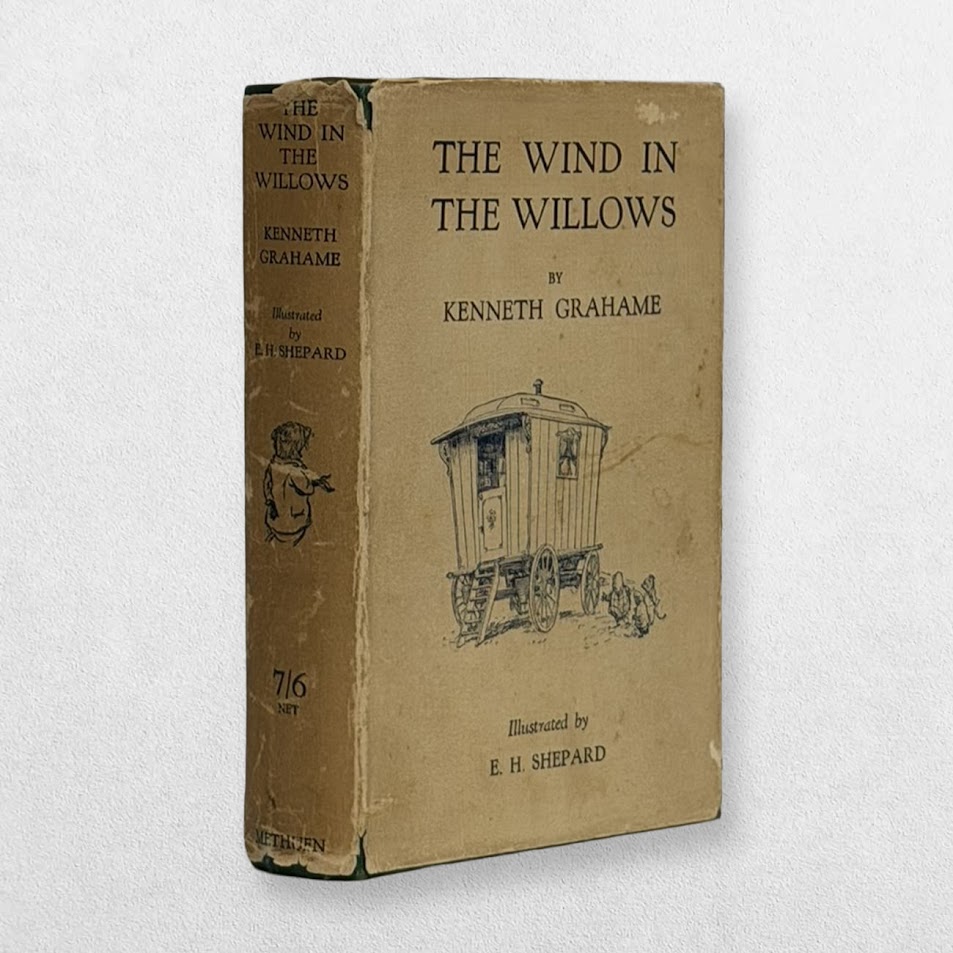
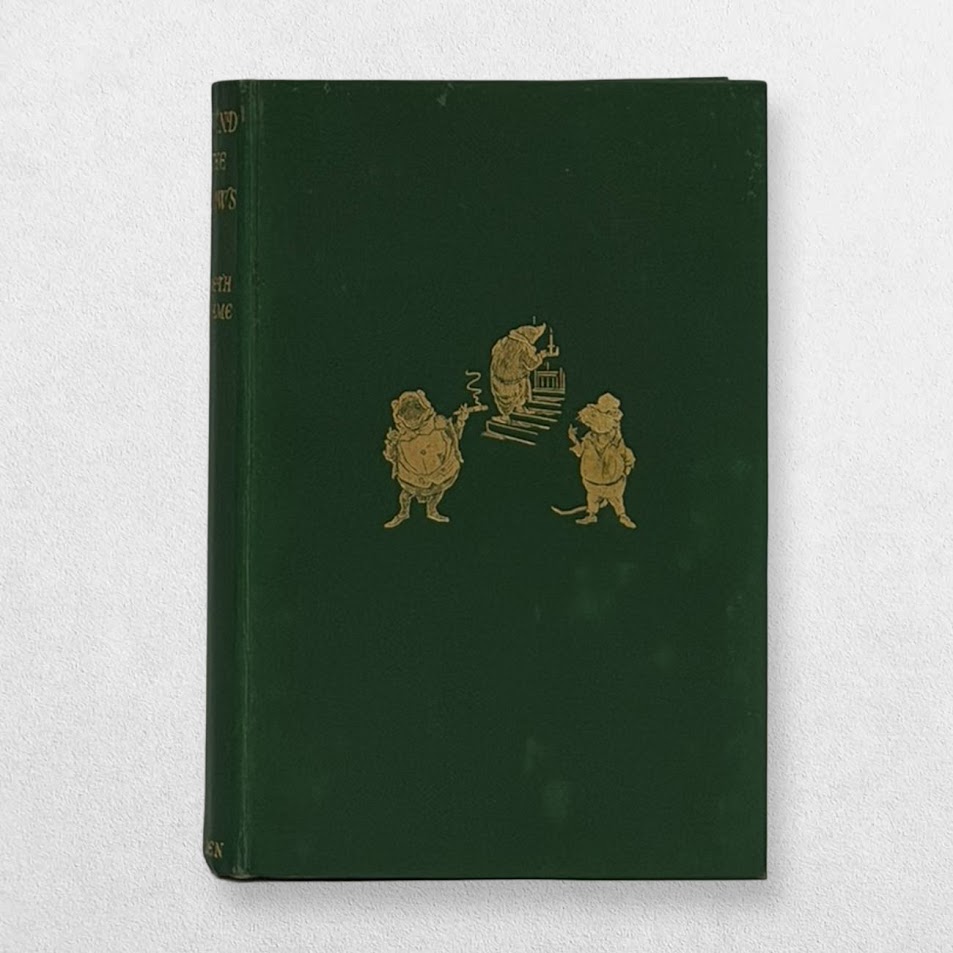
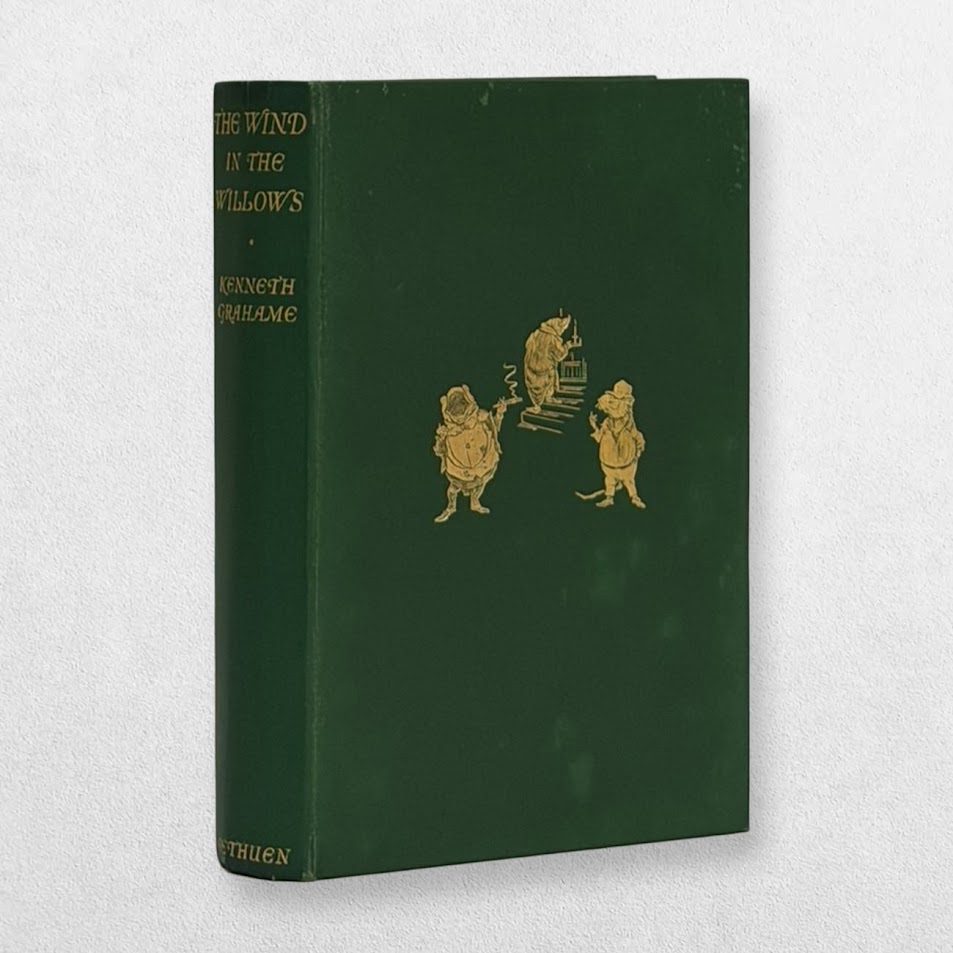
Format: Original green cloth lettered and blocked in gilt. Dustwrapper
Condition: Very good, tight, clean copy in a good dustwrapper
Pages: Prelims + 312 + ads
Description:
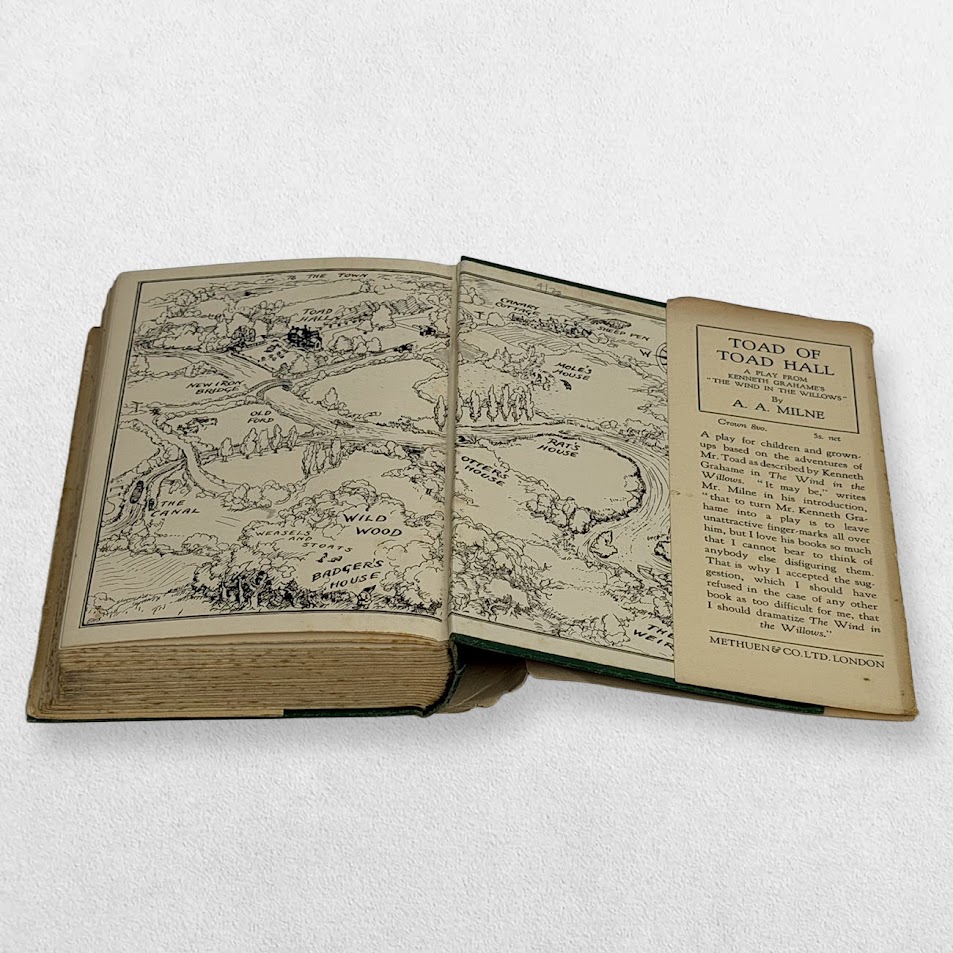
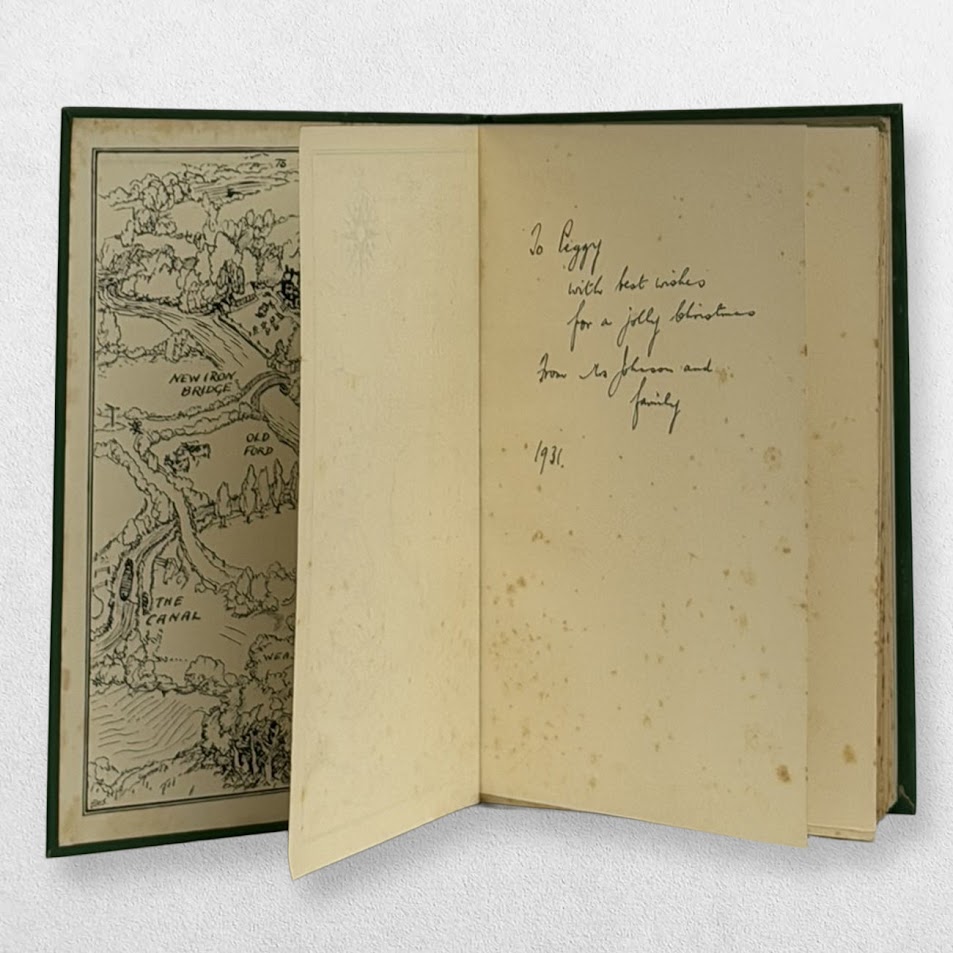
First edition with Shepard’s illustrations. Octavo. Original cloth lettered and blocked in gilt. Dustwrapper. Decorative endpapers. Illustrated throughout in black and white by Shepard. Slight marking to the cloth with slight creasing and rubbing to the head and tail of the spine but retaining its rich green colour and bright gilt. Foxing to the prelims and text-block but generally pages nice and clean. Neat inscription dated 1931. Overall a very good, tight, clean copy in good nicked, chipped, edge-worn and marked, correct first thus dustwrapper which has a split to the spine which could be repaired. Scarce in any form and overall a very good copy.
Ernest Shepard And ‘The Wind In The Willows’: A Brief Overview
Ernest Howard Shepard (1879–1976) is inseparable from the visual identity of Kenneth Grahame’s The Wind in the Willows. Although Grahame’s text predates Shepard’s involvement, it was Shepard’s illustrations—first appearing in the 1931 edition—that fixed the novel’s imaginative world in the public mind. His work did not merely decorate the story; it interpreted, stabilised, and humanised it, shaping how generations of readers visualise Rat, Mole, Badger, and Toad.
Shepard’s contribution sits at the intersection of Edwardian nostalgia, interwar sensibility, and a deeply English tradition of book illustration rooted in observation, restraint, and character.
- Ernest Shepard: artistic background
Training and early career
Shepard trained at the Royal Academy Schools and began his professional life as a painter and illustrator. He worked extensively for Punch, where his draughtsmanship, wit, and psychological observation were refined. This background mattered: Shepard approached illustration not as caricature alone, but as character study.
By the time he illustrated The Wind in the Willows, Shepard was already widely known for his work on A. A. Milne’s Winnie-the-Pooh books. Yet his approach to Grahame’s world is notably different—quieter, more restrained, and more rooted in landscape and mood.
- The decision to illustrate The Wind in the Willows
A book without images
When The Wind in the Willows was first published in 1908, it appeared without illustrations. Readers constructed their own mental images, often drawing on pastoral English archetypes. By the late 1920s, however, illustrated gift editions had become commercially and culturally important.
Shepard was chosen because he could balance:
- Naturalistic animal observation
- Emotional subtlety
- A sense of timeless English place
Crucially, he avoided overt anthropomorphism. His animals walk upright, wear clothes, and use boats and motorcars—but they remain animals, not disguised humans.
- Visual interpretation of the characters
Mole
Shepard’s Mole is gentle, shy, and physically small, often depicted slightly hunched, with tentative gestures. His innocence is visual rather than sentimental. Shepard uses posture and spacing—Mole often looks outward or upward—to convey vulnerability and curiosity.
Rat
Ratty is composed, sociable, and at ease with his surroundings. Shepard frequently places him in boats or beside water, relaxed and balanced. His confidence is never aggressive; it is domestic and companionable, reinforcing the novel’s emphasis on friendship.
Badger
Badger is large, grounded, and authoritative. Shepard gives him weight through solid outlines and minimal movement. He belongs to the earth—burrows, roots, and winter interiors. His authority is moral rather than physical, expressed through stillness.
Toad
Toad is Shepard’s most dynamic figure. He is often caught mid-gesture: arms raised, chest thrust forward, body leaning into excess. Shepard captures Toad’s vanity and volatility visually, without exaggerating him into grotesque farce. Toad is ridiculous, but recognisably real.
- Landscape and the English imagination
The Thames and the countryside
Shepard’s greatest achievement may be his treatment of landscape. The riverbanks, lanes, hedgerows, and interiors are drawn with affectionate economy. They evoke a specifically English pastoral world, neither idealised nor harsh.
Importantly:
- Nature is orderly but not sentimental
- Human structures feel integrated, not imposed
- Seasons matter: winter, dusk, and early morning recur
This visual environment reinforces Grahame’s themes of home, belonging, and continuity.
- Style and technique
Line, restraint, and suggestion
Shepard worked primarily in pen and ink. His lines are:
- Economical
- Light but decisive
- Rarely shaded heavily
He leaves space for the reader’s imagination. Unlike illustrators who fill every page with detail, Shepard often lets white space breathe. This restraint mirrors Grahame’s prose, which suggests mood rather than insisting upon it.
Movement and stillness
Shepard alternates between calm tableaux (Rat and Mole boating) and moments of motion (Toad in flight, pursuit, or arrest). This rhythm visually parallels the book’s structure: long passages of stillness interrupted by bursts of chaos.
- Relationship to Grahame’s text
Shepard’s illustrations are interpretative rather than literal. He rarely depicts moments of high drama directly; instead, he often illustrates quieter scenes that capture character essence.
This approach:
- Avoids competing with the prose
- Reinforces emotional tone rather than plot mechanics
- Encourages rereading and contemplation
In this sense, Shepard behaves less like a narrator and more like a visual editor, guiding attention and mood.
- Reception and legacy
Canonical status
For most readers, Shepard’s images are The Wind in the Willows. Later illustrators have struggled to displace or even significantly reinterpret his vision. His animals have become archetypal, influencing theatre, animation, and book design.
Contrast with Winnie-the-Pooh
Although Shepard illustrated both works, the distinction is telling:
- Winnie-the-Pooh is whimsical, child-centred, and playful
- The Wind in the Willows is reflective, nostalgic, and morally anchored
Shepard adjusts accordingly, proving his range and sensitivity.
Concluding assessment
Ernest Shepard did not simply illustrate The Wind in the Willows; he completed it in the cultural imagination. His drawings gave physical form to Grahame’s emotional geography: friendship without sentimentality, humour without cruelty, and nostalgia without false innocence.
Through restraint, observation, and deep sympathy with the text, Shepard ensured that Grahame’s animals would live not just on the page, but in the shared visual memory of English literature.
Why Buy from Us?
At Hornseys, we are dedicated to offering items that meet the highest standards of quality and authenticity. Our collection of rare books is meticulously curated to ensure that each edition is a valuable and authentic piece of bibliographical history. Here’s what sets us apart:
- Authenticity and Provenance: Every book is rigorously researched, collated, and verified for authenticity.
- Expert Curation: We select each book with a keen eye for literary significance, condition, and rarity.
- Customer Satisfaction: We strive to provide an exceptional customer experience, from detailed descriptions and provenance to secure and prompt delivery.
- Returns Policy: We offer an unconditional guarantee on every item. Books may be returned within fourteen days of receipt for any reason, provided they are in the same condition as sent.
Explore Our Collection:
Visit Hornseys to explore our fine collection of rare and signed books. Located in the picturesque Yorkshire Dales, our Ripon gallery has been a haven for book lovers, art enthusiasts, and collectors since 1976.
Related products

When We Were Very Young – Winnie The Pooh – Now We Are Six – The House At Pooh Corner – The Collectors’ Facsimile Edition – Four Volumes In Slipcase
£85.00Milne, A. A. & Shepard, Ernest H


You may also like…
The House At Pooh Corner Signed By Christopher Robin Milne.
£695.00Milne, A. A. With Decorations By Shepard, E. H

