Blake, George — The Path of Glory — First UK Edition, 1929 — Exceptionally Scarce in the Original Dustwrapper
Blake, George
£650.00
Availability: In stock
Product Description
Blake, George — The Path of Glory — First UK Edition, 1929 — Exceptionally Scarce in the Original Dustwrapper
Author: George Blake
Title: The Path of Glory
Publisher: Constable & Co. Ltd., London
Date: 1929
Edition: First UK Edition, First Impression
Size: Octavo
Pagination: 224 pages
Stock Code: 004181
Location: Bookroom
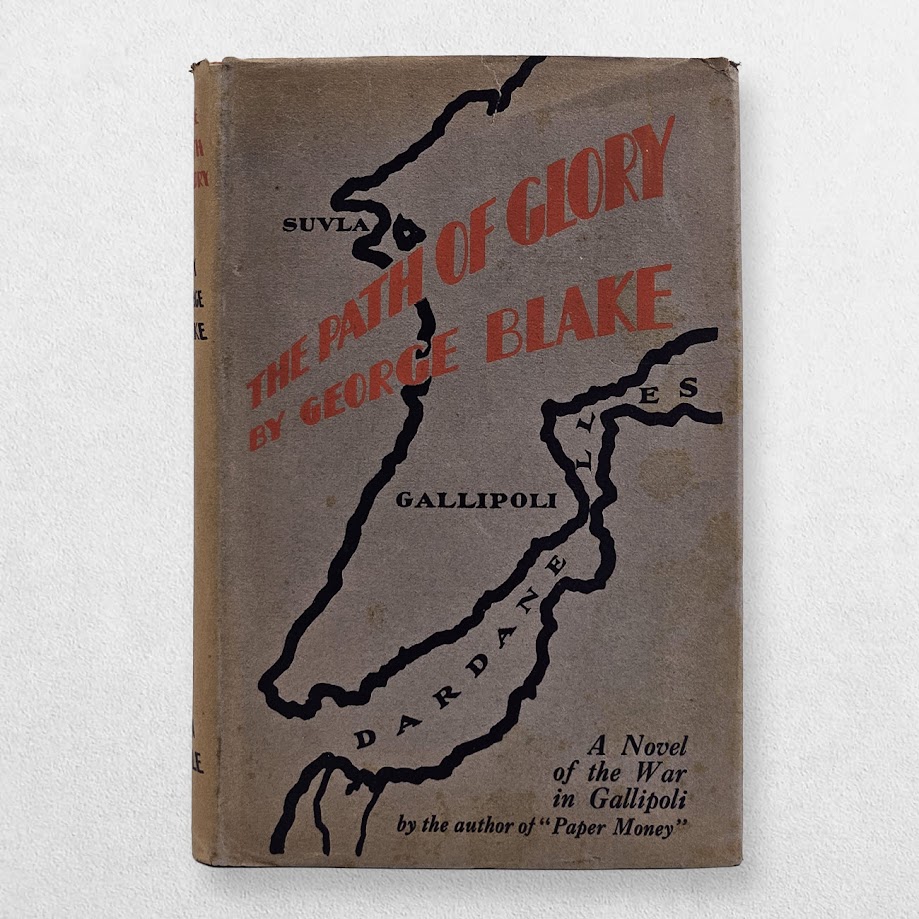
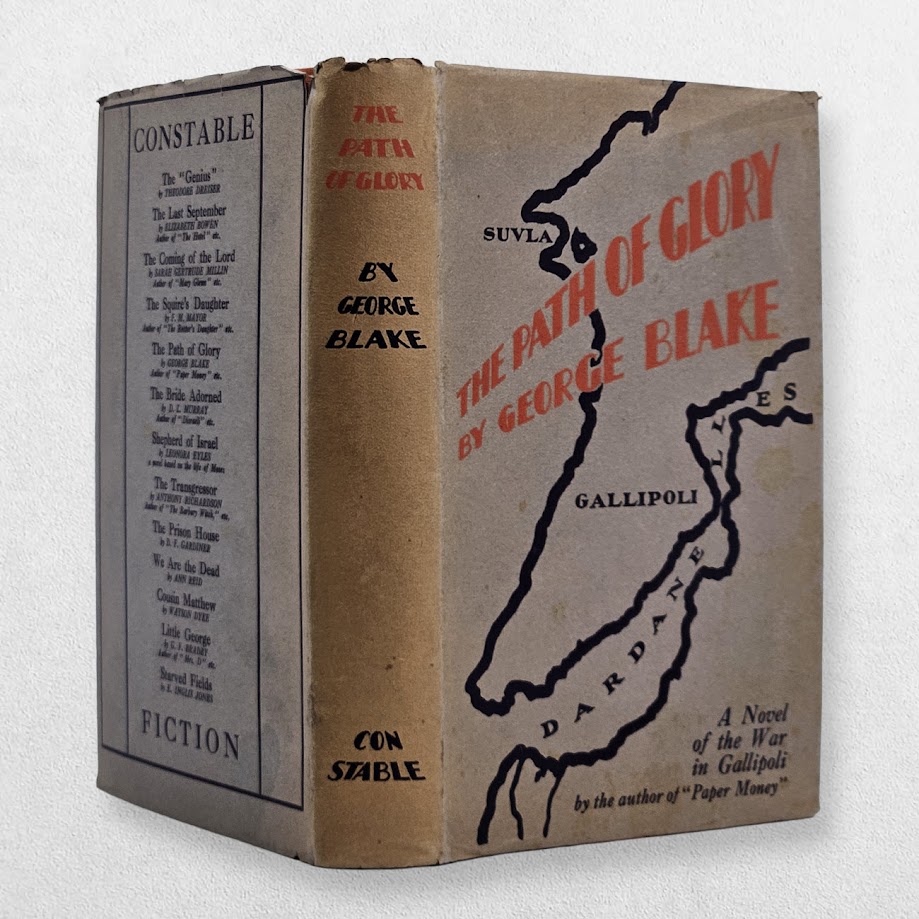
First UK edition, first impression, of George Blake’s important novel of the Gallipoli campaign, published by Constable & Co. in 1929, here in the exceptionally scarce original pictorial dustwrapper. The jacket is particularly striking, its design incorporating a schematic map of the Dardanelles, Gallipoli Peninsula and Suvla Bay beneath the wording “A Novel of the War in Gallipoli”, giving the book an immediate visual connection with the campaign which inspired it. The survival of the wrapper is itself remarkable: after extensive searches of institutional catalogues, dealer records, auction references and currently available copies, we have been unable to trace another first edition retaining its original dustwrapper. Copies of the book itself survive in institutional and private collections, but the jacket appears to have been exceptionally vulnerable to loss. We therefore regard this copy as a notably rare survival in its original published state, while making no unsupported claim of uniqueness.
George Blake (1893–1961) was born in Greenock and educated at Greenock Academy before studying law at Glasgow University. His studies were interrupted by the First World War, during which he served in the British Army and saw active service at Gallipoli, where he was wounded. Following the war he became a journalist and editor before developing a substantial literary career. Blake became closely associated with the literature of Clydeside, the Scottish industrial world and the experience of ordinary working people; his later novel The Shipbuilders is among his best-known works. His own military experience gives The Path of Glory particular authority and distinguishes it from much contemporary war fiction written at a greater remove from the events described.
Published during the remarkable flowering of First World War literature at the end of the 1920s, The Path of Glory is important for its concentration upon Gallipoli rather than the Western Front and for approaching the campaign through Scottish soldiers and working-class experience. Blake depicts the dislocation between civilian life, military organisation and the realities faced by ordinary troops, while the confused command structure and disastrous strategic circumstances of the Dardanelles campaign remain constantly present. Modern scholarship on Scottish First World War literature has drawn renewed attention to the novel as a neglected but significant work by a veteran writer, particularly for its relationship between Scottish identity, class and wartime experience.
The subject gives the novel a distinctive position within the literature of the Great War. Gallipoli generated a substantial body of memoir and historical writing but comparatively little British fiction of enduring literary interest when compared with the Western Front. Blake’s direct experience of the campaign, combined with his later importance as a Scottish novelist of industrial and social life, gives The Path of Glory relevance to several collecting fields: Gallipoli and Dardanelles history, First World War literature, Scottish literature, Clydeside social history and inter-war fiction.
Contemporary reception was notably favourable. The novel attracted serious critical attention on publication, and The Spectator described it as “beyond question one of the best War novels that have been written.” Its subsequent relative neglect has resulted in the book being increasingly recognised as one of the lesser-known but worthwhile literary responses to the Gallipoli campaign.
Rarity and Institutional Survival
The 1929 first edition itself is institutionally recorded, but survival in the original dustwrapper appears to be on an entirely different level of rarity. Searches undertaken across institutional catalogues, commercial listings and recorded dealer and auction material have located copies of the book, but we have not identified another copy explicitly recorded as retaining the original 1929 pictorial dustwrapper. Nor have we traced a previous commercial sale of a jacketed example in the records consulted.
This distinction is important bibliographically. Many inter-war novels survive in reasonable numbers as books but have become genuinely scarce in their original wrappers, which were frequently discarded, damaged or destroyed. In the present case, the highly specific Gallipoli map design of the wrapper also forms an integral part of the book’s original presentation and substantially enhances both its historical and visual appeal.
Accordingly, while we do not claim that this is the only surviving jacketed example, the original dustwrapper should be regarded as exceptionally scarce on current evidence.
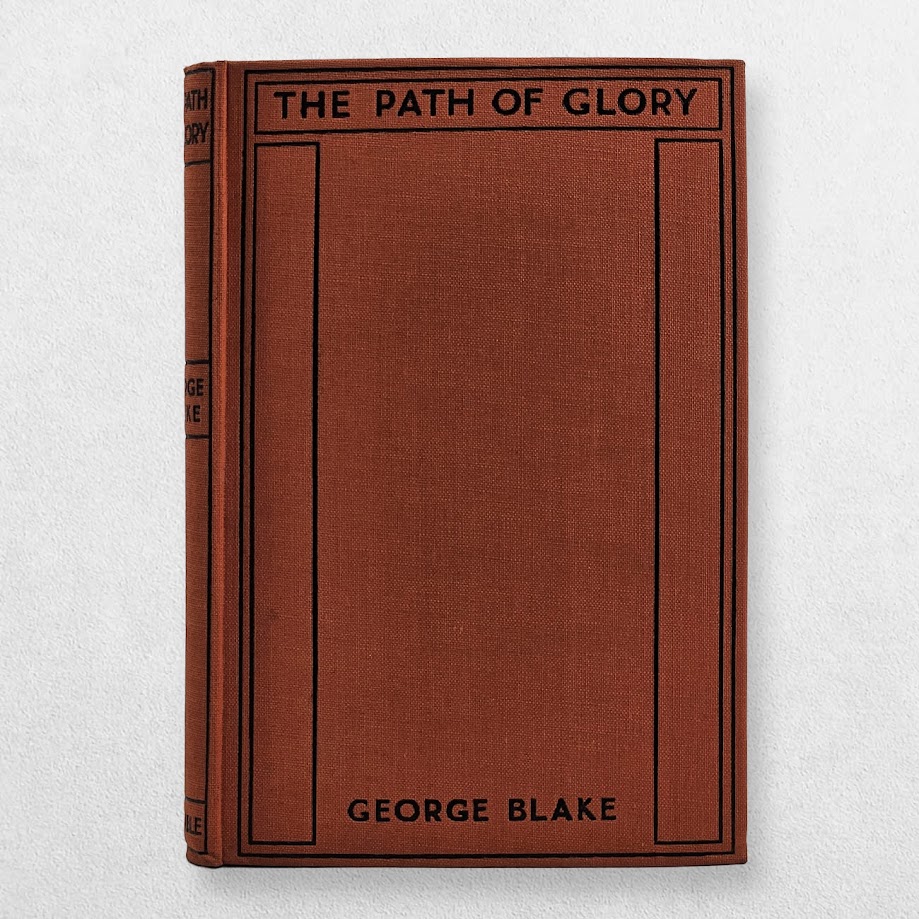
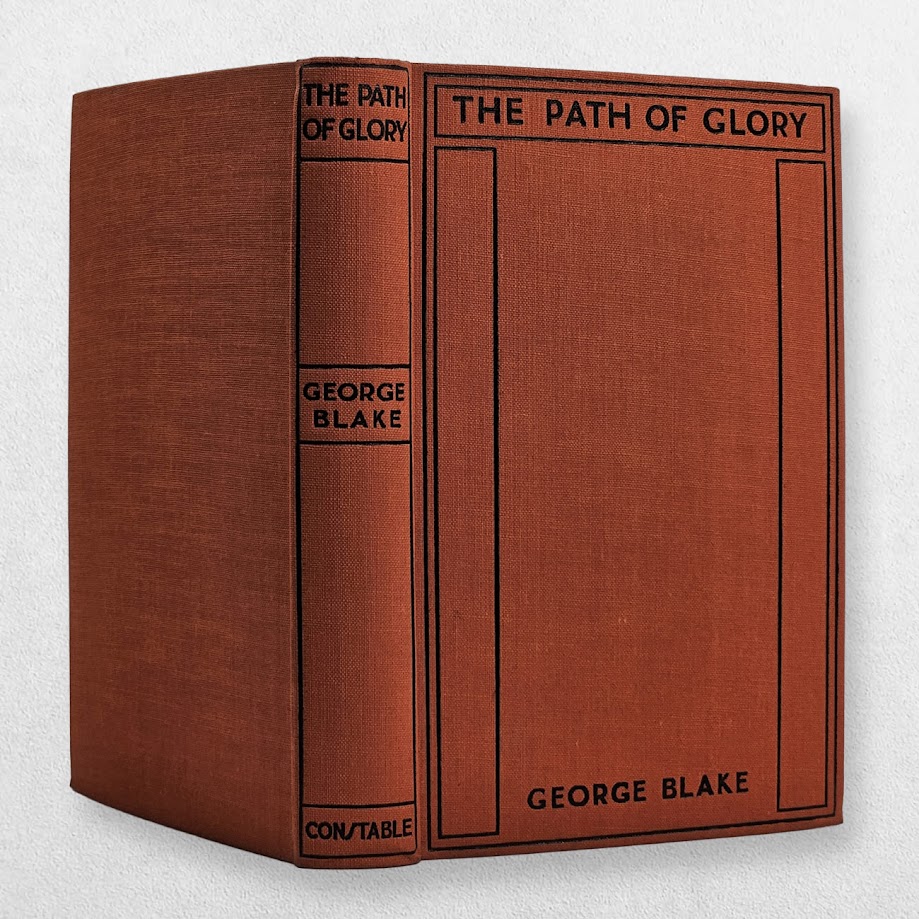
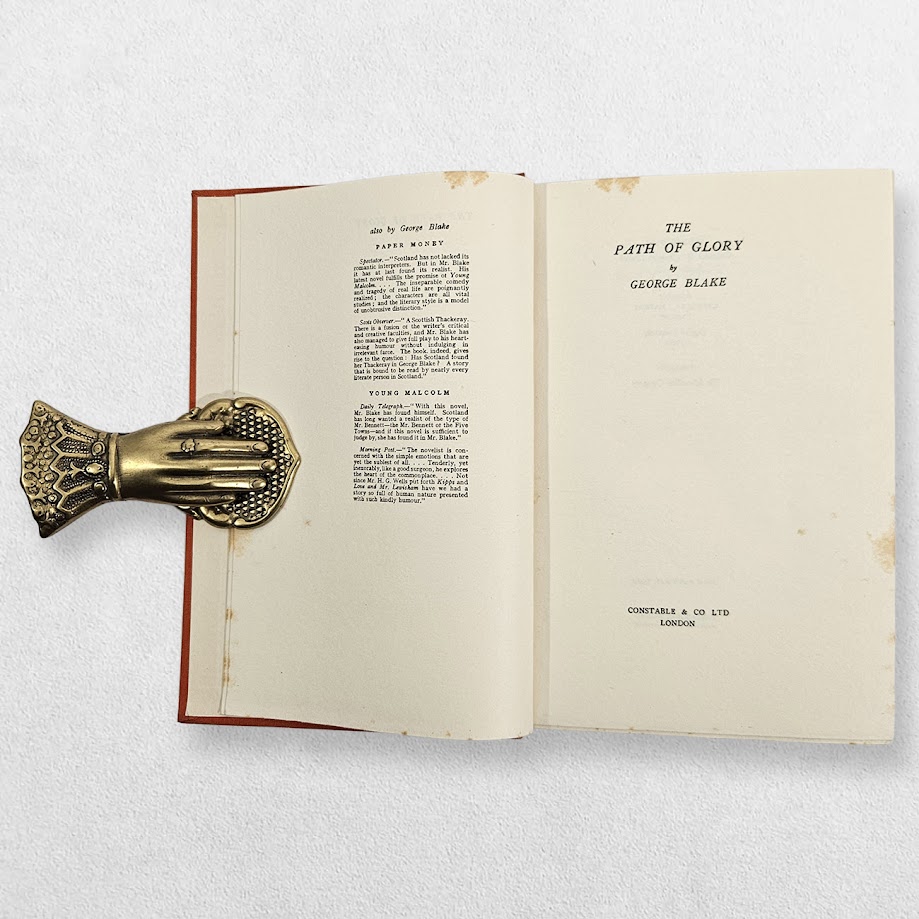
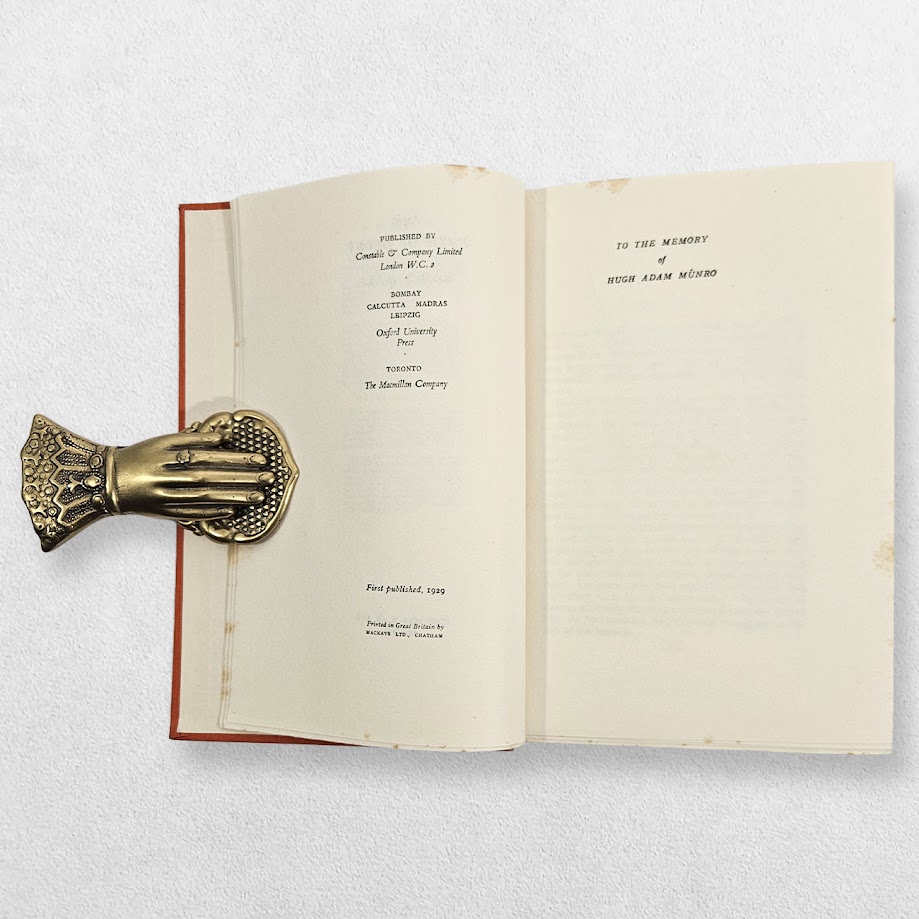
The present copy is particularly attractive. The publisher’s original orange-brown cloth is exceptionally bright and fresh, with strong colour and sharp black lettering and decoration to the upper board and spine. The binding is firm. Internally there is occasional foxing, principally to the preliminaries and scattered margins, but the contents remain otherwise clean and well preserved.
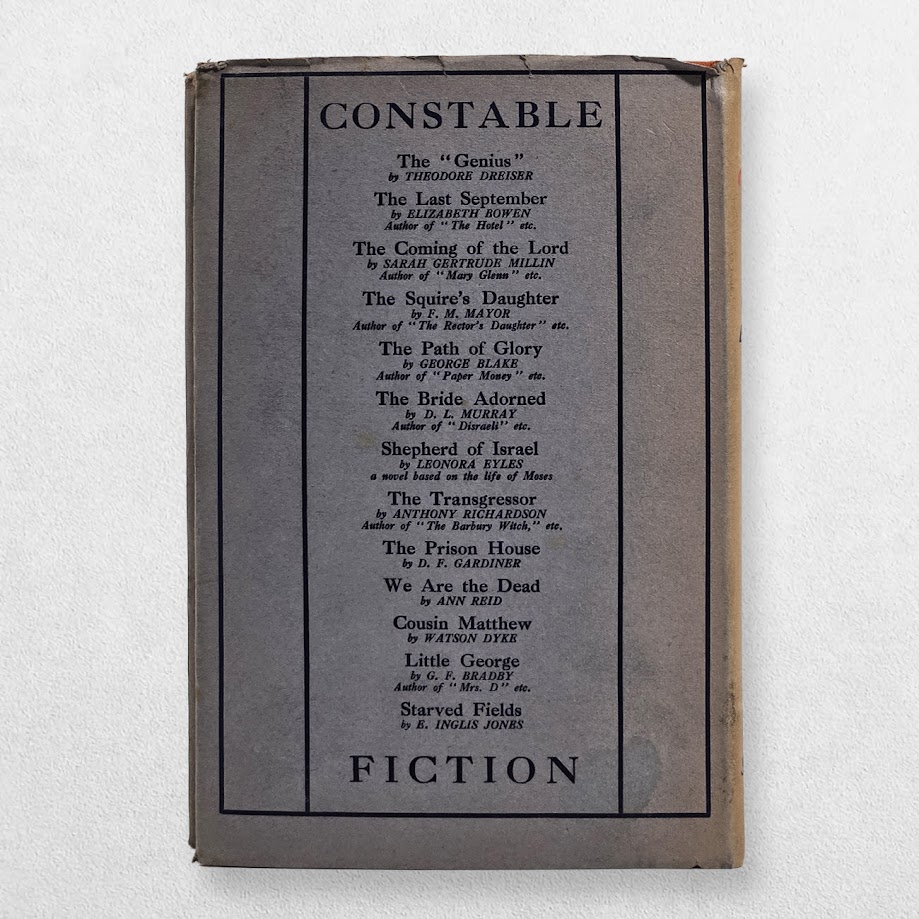
The original pictorial dustwrapper is very good indeed, slightly faded and showing the expected rubbing, nicking and chipping at the spine ends, corners and extremities, together with light creasing and general age-related wear. Nevertheless, it remains substantially complete, unrestored and visually impressive, with the Gallipoli map design and lettering clearly preserved.
Near fine in a very good indeed original dustwrapper.
An exceptional copy of a significant and under-appreciated Scottish First World War novel by a Gallipoli veteran, made particularly desirable by the survival of an original dustwrapper for which we have been unable to trace another institutional or commercial example.
Stock code: 004181. Location: Bookroom.
Why Buy From Us?
At Hornseys, we specialise in rare, signed and collectible books, maps, prints and works on paper, with an emphasis on accurate identification, careful research, condition assessment and clear cataloguing. Every item is examined individually before it is offered for sale, and we aim to describe each piece as precisely and transparently as possible.
Here’s what sets us apart:
- Research, Authenticity and Provenance: Every item is individually examined and researched. Where relevant, we verify edition points, publication details, signatures, inscriptions, provenance, institutional records, comparable examples and other bibliographical or historical evidence before cataloguing.
- Accurate and Detailed Descriptions: We provide clear information on edition, publisher, date, format, condition and distinguishing features. Significant faults, restoration, inscriptions, ownership marks and other relevant characteristics are recorded wherever identified.
- Specialist Experience: Hornseys has been dealing in books, maps, prints, art and related material since 1976. Our stock reflects decades of practical experience in assessing collectability, scarcity, historical significance and condition.
- Careful Curation: We select material for its quality, interest, provenance, rarity or historical importance rather than simply offering large quantities of undifferentiated stock. Each item must justify its place in the collection.
- Condition and Collation: Books and other multi-part items are checked as appropriate for completeness, binding integrity, plates, maps and other components. Condition is assessed carefully and described in a way intended to help buyers make an informed decision.
- Transparent Provenance: Where provenance or previous ownership is known and relevant, it is stated. Where attribution or identification remains uncertain, we distinguish clearly between established fact and informed interpretation.
- Customer Service: We aim to provide a knowledgeable, responsive and straightforward buying experience, supported by detailed photographs, careful packing and prompt dispatch.
- Returns Guarantee: Every item is covered by our unconditional returns policy. Items may be returned within fourteen days of receipt for any reason, provided we are notified in advance and the item is returned in the same condition as supplied. A full refund will then be issued.
Explore Our Collection
Hornseys offers a carefully researched selection of rare and signed books, first editions, military and historical maps, original prints, art and ephemera. Whether you are building a specialist collection, researching a particular subject or looking for an unusual historical object, our aim is to provide material that is both interesting and accurately described.
Our gallery is based in Ripon, North Yorkshire, and Hornseys has served collectors, readers, historians and art enthusiasts since 1976.
Thank you for looking.
Related products



You may also like…

Botschaft der Helden von Stalingrad – Allied German-Language Propaganda Leaflet, G.82, 1943 – Robert Hastings / Steve Forbes Provenance.
£95.00(Churchill, Winston Spencer)