
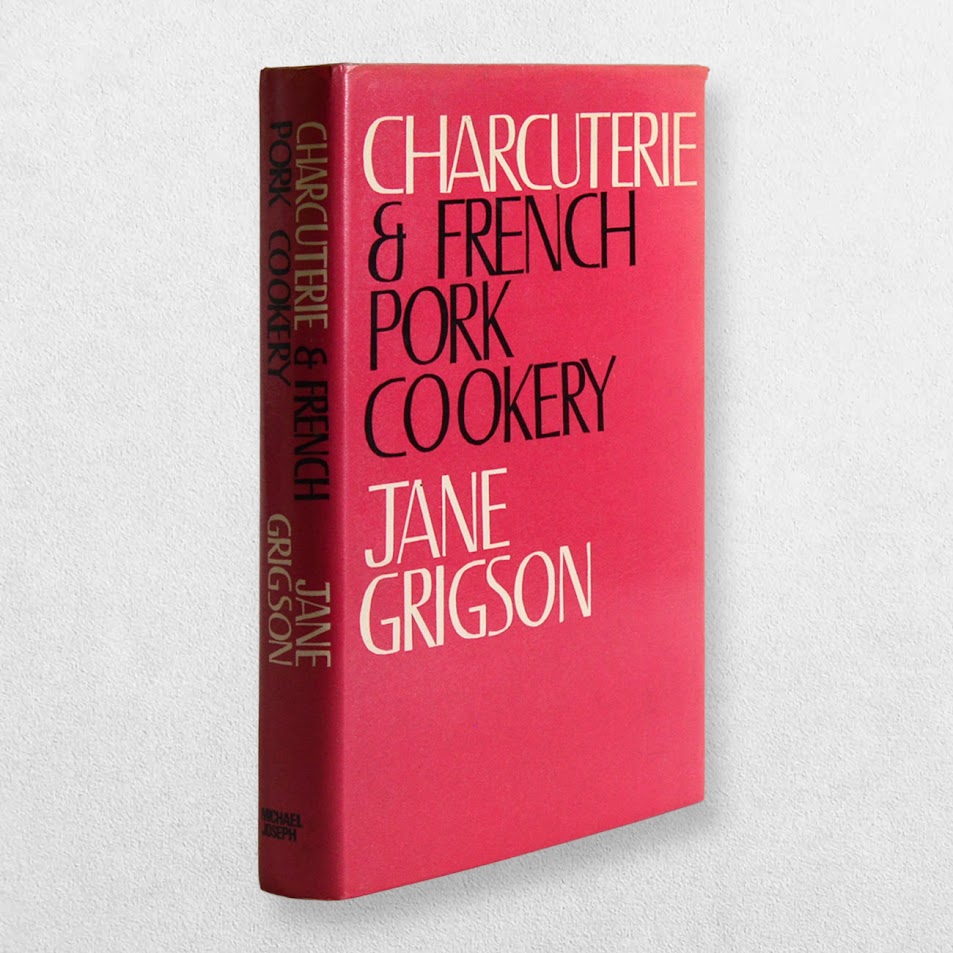
Charcuterie And French Pork Cookery – First Edition
Grigson, Jane
£45.00
Availability: In stock
Product Description
Charcuterie And French Pork Cookery – First Edition
Author: Jane Grigson
Price: £45
Publisher: Michael Joseph
Publication Date: 1967
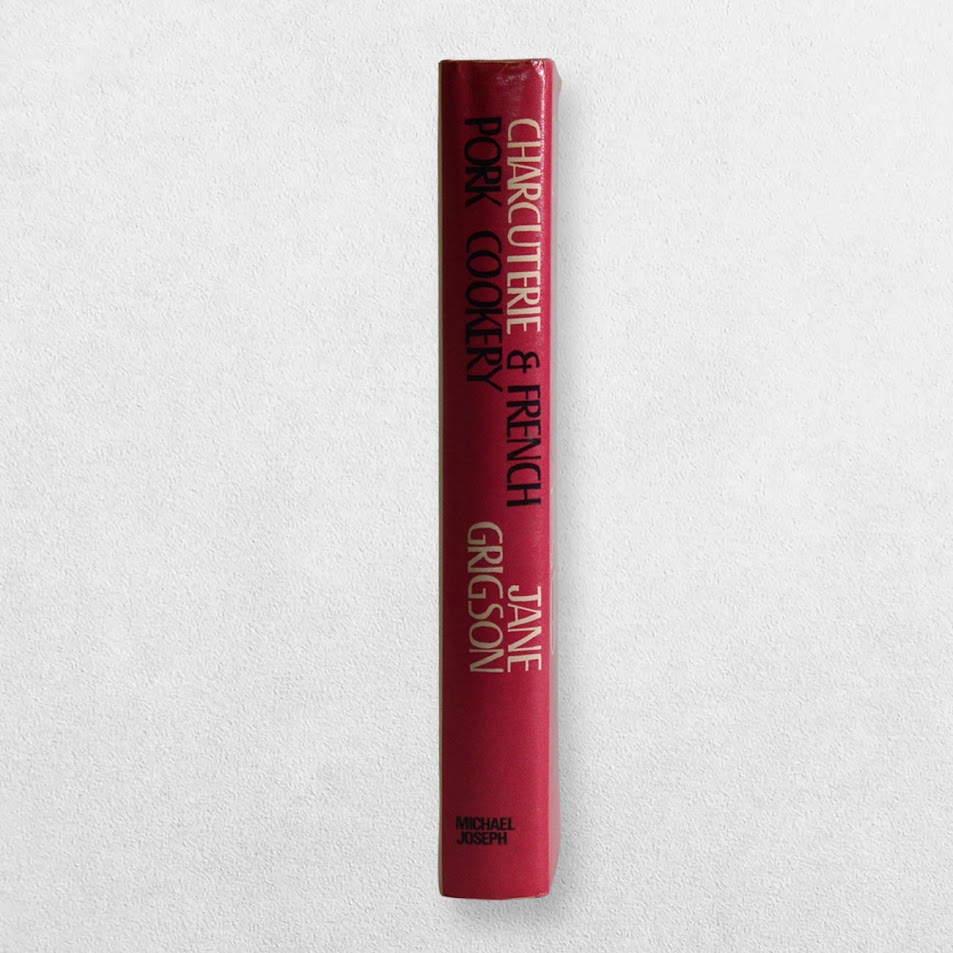
Format: Original cloth. Dustwrapper
Condition: Very good plus in very good plus dustwrapper
Pages: 308
Edition: First edition
Location: OSR: 002900
Her first cookery title. Illustrated by M. J. Mott. Neat ink name to front free endpaper else a very good plus, tight, clean copy in very good plus, slightly creased dustwrapper.
Charcuterie And French Pork Cookery: A Short Review
Jane Grigson’s Charcuterie and French Pork Cookery is a masterclass in culinary scholarship and a singular celebration of one of Europe’s most time-honoured traditions. First published in 1967, the book remains a definitive guide to French methods of preserving, preparing, and enjoying pork. Grigson brings together historical depth, technical rigour, and a deeply personal passion for food, setting a high benchmark in food writing and home cookery alike.
Expertise and Depth of Knowledge
Grigson’s expertise is palpable throughout. Her background as a food columnist and her immersion in French culinary culture lend the book a scholarly but highly approachable tone. She writes with the authority of someone who has not only researched her subject thoroughly, but lived it — from rural French charcuteries to the home kitchens of country cooks. The book balances technical instruction with literary charm, making it equally suitable for the amateur cook and the seasoned gastronome.
Each chapter is meticulously structured, covering everything from sausages and pâtés to hams, terrines, and offal. There is no flinching from the detail — indeed, Grigson relishes it. Her descriptions of salting, curing, and seasoning are grounded in centuries-old techniques, yet she makes them accessible for the domestic cook. This is no mere recipe collection; it is a cultural and culinary manual that connects modern cooks to ancient methods.
Experience and Practical Application
What distinguishes this book is its rootedness in lived experience. Grigson is never theoretical for theory’s sake. Her recipes and methods reflect real kitchens and real households. She writes with clear respect for the traditions of provincial France, but never with blind reverence — she is happy to question or adapt when it suits the British context or the limitations of the modern kitchen.
The practical guidance is exacting yet never prescriptive. She acknowledges the challenges of sourcing ingredients or replicating rural conditions, offering suggestions and alternatives that maintain the integrity of the dish. For instance, her sections on sausage-making and curing are replete with thoughtful notes for British readers without access to French butchers or climate-controlled larders.
Authoritativeness and Historical Insight
The book’s historical perspective is one of its strongest features. Grigson traces the development of pork cookery and preservation through medieval monasteries, Renaissance courts, and rural farmhouse traditions. Her prose is never dry — history and food are seamlessly woven together, with anecdotes and etymologies enriching the technical content.
Grigson is also authoritative in her sourcing. Her inclusion of regional French practices is not casual — she frequently references traditional methods from specific towns or families, demonstrating deep respect for provenance. This lends the work not only authenticity, but also a sense of intellectual rigour that is rare in culinary writing.
Trustworthiness and Ethical Tone
From an ethical standpoint, the book is notably ahead of its time. Grigson writes with a frankness about meat and its preparation that might unsettle modern sensibilities, but she does so with integrity. Her emphasis on using the whole animal — from blood to bones — is rooted in a respect for resourcefulness and sustainability, long before such values became fashionable.
Moreover, Grigson’s voice is thoughtful and humane. She never talks down to the reader; rather, she guides, suggests, and encourages. Her trustworthiness stems from her refusal to glamourise or sanitise — she tells it as it is, while still imbuing the subject with joy and respect.
Conclusion
Charcuterie and French Pork Cookery is a remarkable book that has only deepened in value with time. It is an encyclopaedic guide, a historical text, a cookery manual, and a piece of literary food writing in one. Jane Grigson’s voice remains reassuringly wise and curious throughout, and her commitment to authenticity and quality shines from every page.
This is a book that demands — and rewards — close reading. For anyone with a serious interest in charcuterie, traditional pork cookery, or the culinary history of France, it is indispensable. It teaches not only how to cook, but how to think about food with greater depth, care, and appreciation.
Jane Grigson: A Short Biography
Early Life and Education
Jane Grigson, born Heather Mabel Jane McIntire on 13 March 1928 in Gloucester, England, was one of Britain’s most beloved food writers. Raised in Sunderland, Tyne and Wear, she grew up in an intellectual household. Her father, George Shipley McIntire, was a linguist and classics scholar who encouraged a love of literature and learning. This upbringing profoundly influenced Grigson’s later work, which combined culinary expertise with cultural and historical insights.
Grigson attended Sunderland High School for Girls and later studied at Newnham College, Cambridge, where she earned a degree in English. Her passion for literature, history, and culture became a hallmark of her career as a writer.
Early Career
After university, Grigson initially pursued a career in the arts. She worked as an editor and translator for the publishing house Rainbird, McLean, before moving to the art world, where she was a researcher and writer for the International Art Market in London. This period exposed her to the finer aspects of European culture and cuisine.
Grigson’s path to food writing began in 1966 when she joined the prestigious Observer newspaper as a food columnist. At the time, her husband, Geoffrey Grigson, a poet and literary critic, had already established a reputation in the arts and literary circles. His influence and encouragement, along with their shared love of culture and gastronomy, helped steer Jane toward food writing.
Introduction to Food Writing
Jane Grigson’s food writing career was catalysed by her encounter with the legendary French food writer Édouard de Pomiane. Inspired by his book Cooking with Pomiane, Grigson recognised the potential of blending clear, practical recipes with a rich narrative that explored the history, culture, and origins of food.
Her first book, Charcuterie and French Pork Cookery (1967), focused on French charcuterie and pork dishes. The book was an immediate success, praised for its depth of research and engaging prose. It marked the beginning of her enduring association with French cuisine and established her reputation as a serious food writer.
Rise to Prominence
Over the next two decades, Grigson produced a series of cookbooks that combined her literary sensibilities with her love of food. Each book focused on a specific theme or ingredient, presenting recipes alongside cultural and historical context. Her works were celebrated for their scholarly yet accessible style.
Some of her most influential books include:
- Good Things (1971): A collection of seasonal recipes that highlights simple, high-quality ingredients.
- Jane Grigson’s Vegetable Book (1978): A seminal work that transformed how vegetables were viewed and cooked in Britain.
- Jane Grigson’s Fruit Book (1982): A companion to her vegetable book, exploring the culinary and cultural significance of fruits.
- English Food (1974): Perhaps her most celebrated book, this is both a cookbook and a cultural history, chronicling traditional English dishes and their evolution.
Grigson’s writing appeared regularly in The Observer, where her column helped introduce British readers to diverse cuisines and encouraged a respect for seasonal, local ingredients.
Writing Style and Philosophy
Grigson’s style was distinctive for its blend of literary elegance, practicality, and historical insight. She wrote with warmth and wit, making her work as enjoyable to read as it was to cook from. Unlike many food writers of her time, she avoided a prescriptive tone, instead inviting readers to experiment and adapt.
Her culinary philosophy was grounded in:
- Seasonality and Local Ingredients: She believed in cooking with what was fresh and available, emphasising the importance of quality over complexity.
- Simplicity: Grigson championed dishes that highlighted the natural flavours of ingredients, avoiding unnecessary embellishments.
- Cultural Context: Her books often explored the history and traditions behind recipes, providing a deeper understanding of the food and its place in society.
Grigson was also an advocate for reviving traditional British cuisine at a time when it was often overshadowed by French and Italian influences.
Legacy and Influence
Jane Grigson’s work helped to elevate British food writing to an art form. Her ability to weave narrative, history, and practical cooking advice influenced a generation of food writers, including Nigel Slater, Hugh Fearnley-Whittingstall, and Yotam Ottolenghi.
Her books remain staples in many kitchens and are often cited as definitive resources for their subjects. For example, English Food is considered a cornerstone of British culinary heritage, while her vegetable and fruit books remain indispensable guides to seasonal cooking.
Awards and Honours
Grigson received numerous accolades during her lifetime, including the prestigious John Florio Prize in 1967 for her translation of The French Menu Cookbook by Richard Olney. In 1984, she was honoured with the Glenfiddich Food and Drink Award for her outstanding contribution to food writing.
Personal Life
Jane Grigson married Geoffrey Grigson in 1953. The couple had one daughter, Sophie Grigson, who would go on to become a respected food writer and television chef in her own right. The Grigsons shared a passion for literature, travel, and gastronomy, frequently hosting dinners that brought together luminaries from the worlds of art and food.
Grigson was known for her generosity and modesty. Despite her acclaim, she remained approachable and down-to-earth, with a genuine desire to share her love of food.
Death and Legacy
Jane Grigson died of cancer on 12 March 1990, one day before her 62nd birthday. Her passing was widely mourned, and she was remembered as a transformative figure in British food writing.
Her legacy endures through her books, which continue to inspire cooks and food lovers. The Jane Grigson Trust, established in her memory, supports new talent in food writing, ensuring her influence extends to future generations.
Conclusion
Jane Grigson’s contributions to food writing went beyond recipes; she brought intellect, curiosity, and cultural depth to the subject, transforming how food was discussed and appreciated. By blending practical advice with a rich narrative style, she created works that resonate as much with readers as with cooks. Her books remain a testament to her talent, passion, and lasting impact on British culinary heritage.
Why buy from us?
At Hornseys, we are dedicated to offering items that uphold the highest standards of quality and authenticity. Our book collection is carefully curated to ensure that each edition is a valuable and authentic piece of bibliographical history. Here’s what sets us apart:
- Authenticity and Provenance: Every book is researched, collated and verified for authenticity.
- Expert Curation: Each book is selected using our keen eye for significance, condition, and rarity, ensuring a collection that is both diverse and distinguished.
- Customer Satisfaction: We strive to provide an exceptional customer experience, from detailed descriptions and provenance to secure and prompt delivery of your purchase.
- Returns Policy: We offer an unconditional guarantee on every item. If, however, you wish to make a return, books may be sent back to us within fourteen days of receipt for whatever reason. We request that we are notified in advance if you wish to do so. They must be returned to us in the same condition as they were sent for a full refund.
- Explore Our Collection: Visit Hornseys to explore our fine collection of rare and signed books. Whether you are an avid collector or looking for a special gift, our selection offers something truly unique. Located in the picturesque Yorkshire Dales, our Ripon gallery has been a haven for book lovers, art enthusiasts, and collectors since 1976.


