ROSARIO DELLA GLORIOSA VERGINE MARIA – MARY AND JOSEPH AT THEIR LABOURS – ORIGINAL VENETIAN WOODCUT LEAF – ALBERTO DA CASTELLO – VENICE, 1524
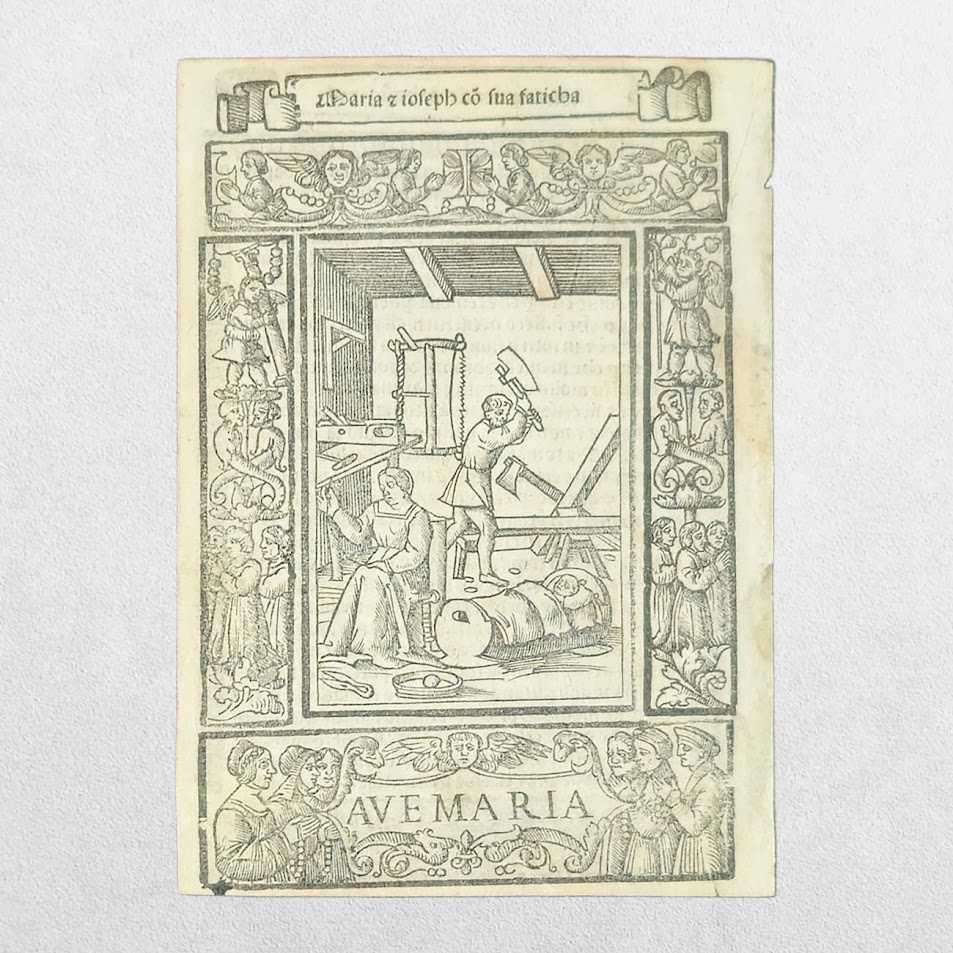
An attractive and highly evocative original illustrated leaf from Alberto da Castello’s Rosario della gloriosa Vergine Maria, printed at Venice by Melchiorre Sessa and Pietro Ravani in 1524, from one of the important early-sixteenth-century Italian devotional works devoted to meditation upon the Rosary. The principal woodcut is headed “Maria & ioseph co[n] sua fatiche” — Mary and Joseph at their labours — and presents the Holy Family in an unusually intimate domestic setting. Joseph is shown working as a carpenter, raising a woodworking tool beside a bench, timber and other implements of his trade, while the Virgin Mary sits nearby engaged in needlework. Between them, the infant Christ lies tightly swaddled in a cradle, placing the sacred narrative within the familiar material world of household work and family life. The image is surrounded by an elaborate Renaissance woodcut framework incorporating angels, ornamental grotesques, foliage and devotional figures. Along the lower border, groups of worshippers flank the prominent inscription AVE MARIA, directly connecting the image with the Marian devotional purpose of the book. The reverse contains Italian letterpress text relating to Herod and the Massacre of the Innocents, including the biblical tradition of Rachel mourning for her children, thereby continuing the narrative sequence associated with the infancy of Christ. Alberto da Castello, a Dominican friar and devotional writer, compiled the Rosario della gloriosa Vergine Maria as a structured aid to prayer and meditation, combining concise vernacular texts with woodcut illustrations intended to guide contemplation of episodes from the lives of Christ and the Virgin. First published in Venice in 1521, the work proved highly successful and was repeatedly reprinted during the sixteenth century; this 1524 Sessa and Ravani edition belongs to the early period of its publication history. The present leaf is therefore of interest not only as an original Renaissance woodcut but also as evidence of the rapidly developing culture of illustrated vernacular devotion in early-sixteenth-century Venice. Particularly appealing is its treatment of St Joseph as an active craftsman, with carpentry tools and timber clearly depicted, while Mary’s sewing and the sleeping Christ Child reinforce the sense of domestic intimacy. An original and highly decorative survival of Venetian Renaissance devotional printing.
Condition
Very good condition overall. Original early-sixteenth-century leaf retaining its margins, with light age-toning, occasional minor spotting and marking, slight handling wear and a small marginal nick. The woodcut remains strongly printed with good definition throughout the principal figures, carpenter’s workshop, cradle and elaborate surrounding border. The Italian letterpress text to the reverse remains clear and legible. Uncoloured. Please examine the photographs carefully, as they form an important part of the condition description.
Author: Alberto da Castello.
Title: Rosario della gloriosa Vergine Maria.
Subject: Mary and Joseph at their labours; St Joseph working as a carpenter; the Virgin Mary sewing; the infant Christ in a cradle; Holy Family; Marian devotion.
Publishers: Melchiorre Sessa and Pietro Ravani.
Place: Venice.
Date: 1524
Edition: Early edition. The work was first published in Venice in 1521.
Format: Original single leaf.
Sheet Size: Approximately 9.6 × 13.7 cm.
Technique: Original woodcut and letterpress on paper.
Language: Italian.
Historical Importance
An early example of Venetian illustrated vernacular devotion, combining text and image as an aid to meditation upon the Rosary. The unusually detailed representation of Joseph’s carpentry, Mary’s domestic work and the swaddled Christ Child offers a particularly engaging example of the way Renaissance devotional imagery brought sacred history into the recognisable environment of everyday life.
Authentication
Handled, inspected and catalogued in-house. An original printed leaf from the 1524 Venetian edition, not a later reproduction.
Why buy from us?
At Hornseys, we are committed to offering items that meet the highest standards of quality and authenticity. Our book collection is meticulously curated to ensure that each edition is a valuable and authentic piece of bibliographical history. Here’s what sets us apart:
- Authenticity and Provenance: Every book is researched, collated, and verified for authenticity.
- Expert Curation: Each book is selected with a keen eye for significance, condition, and rarity, ensuring a collection that is both diverse and distinguished.
- Customer Satisfaction: We strive to provide an exceptional customer experience, from detailed descriptions and provenance to secure and prompt delivery of your purchase.
- Returns Policy: We offer an unconditional guarantee on every item. If you wish to make a return, books may be sent back to us within fourteen days of receipt for any reason. We request advance notification of returns, and books must be returned in the same condition as sent for a full refund.
Explore Our Collection:
Visit Hornseys to explore our fine collection of rare and signed books. Whether you are an avid collector or looking for a special gift, our selection offers something truly unique. Located in the picturesque Yorkshire Dales, our Ripon gallery has been a haven for book lovers, art enthusiasts, and collectors since 1976.





![HORTUS SANITATIS [ORTUS SANITATIS] - DE AVIBUS - HARPY, SWALLOW, GYRFALCON AND IBIS - ORIGINAL INCUNABLE WOODCUT LEAF - STRASBOURG, JOHANN PRÜSS - NOT AFTER 21 OCTOBER 1497](https://hornseys.com/wp-content/uploads/2026/08/003988_1-300x300.jpg)

