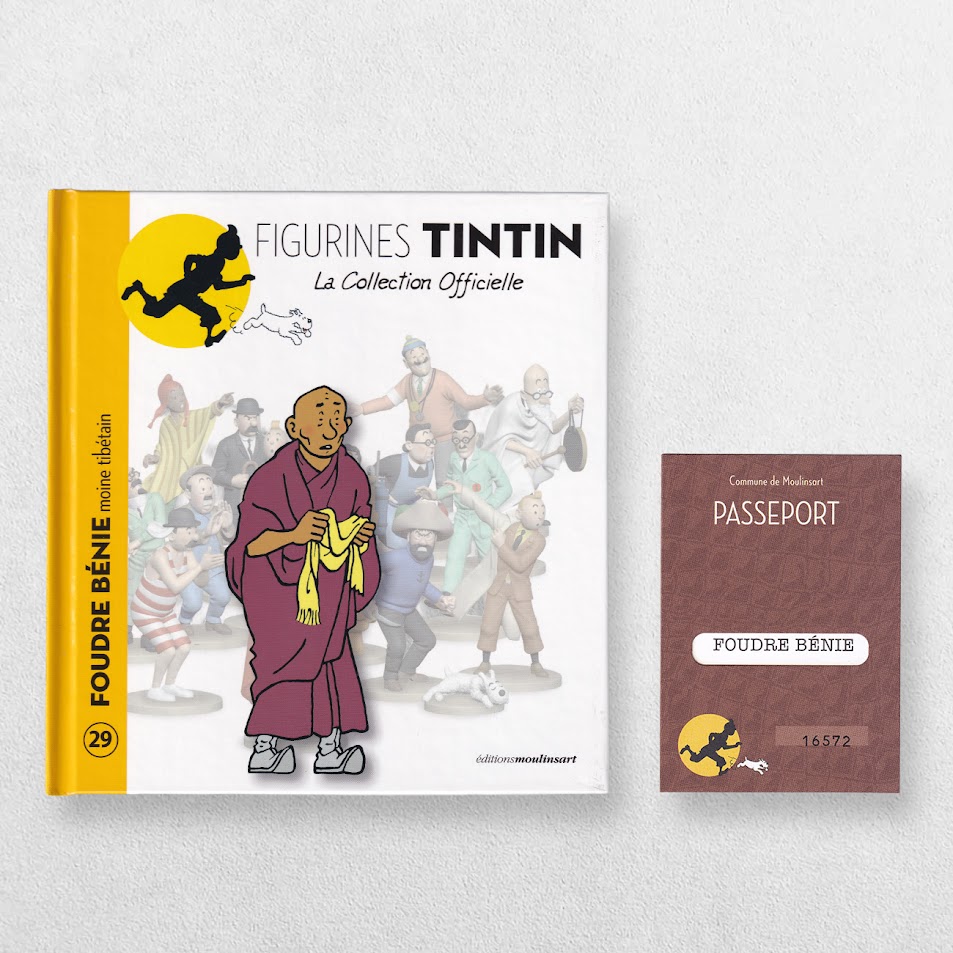
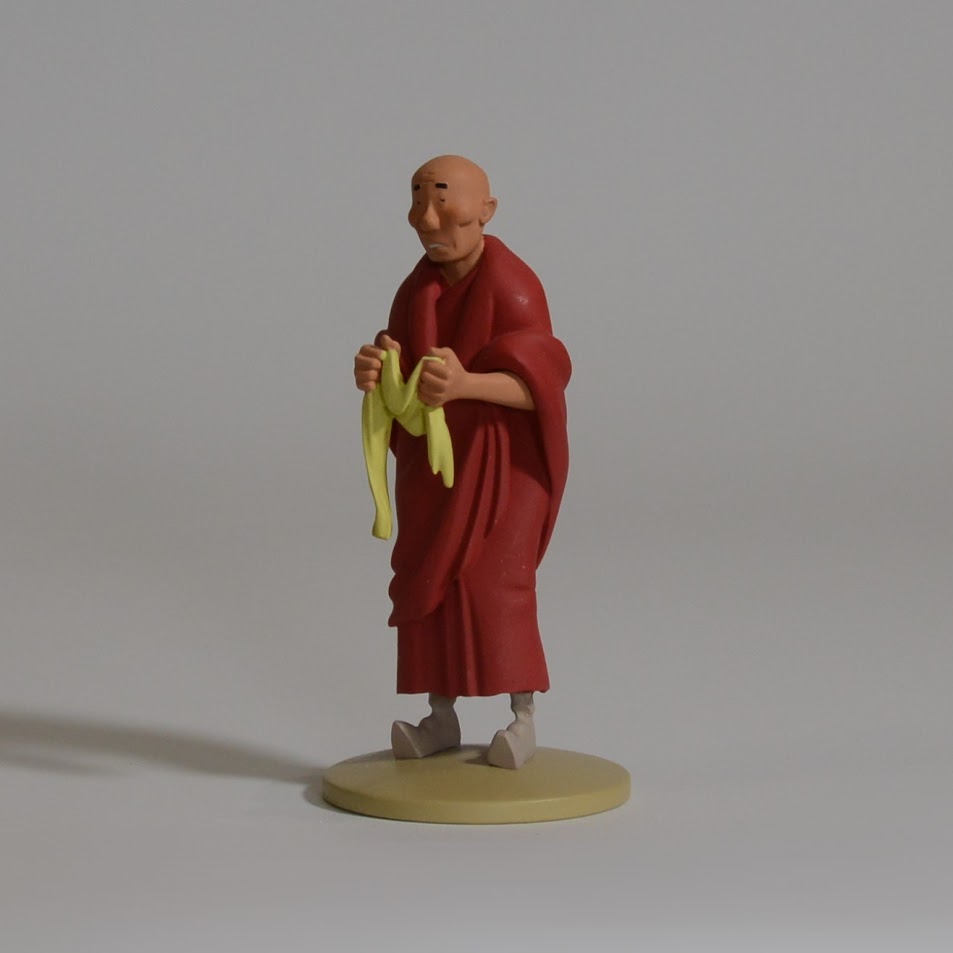
Blessed Lightning Tibetan Monk – Figurines Tintin La Collection Officielle – 29 – Foudre Bénie Moine Tibétain
Author: Hergé & Editions Moulinsart
Price: £65.00
Publisher: Editions Moulinsart
Publication date: 2012
Format: Original pictorial boards with passport and figurine
Condition: In new condition
Illustrations: Illustrated throughout
Description:
Original pictorial boards. Includes passport loosely inserted. Text in French. Includes the accompanying figurine. One from the collection of 111 books and figurines. Figurine is unopened in original packaging. In new condition.
Blessed Lightning Tibetan Monk: A Short Biography
The Tibetan Monk appears in Tintin in Tibet, one of Hergé’s most emotionally resonant and spiritually profound stories. The monk represents the moral and mystical heart of the narrative — a figure of serenity, insight, and faith in contrast to the physical peril and emotional intensity of Tintin’s journey.
Character Profile
The Tibetan Monk — most notably the Abbot of the Khor-Biyong Monastery — is portrayed as a calm, wise, and compassionate spiritual leader. Dressed in traditional maroon robes and seated in tranquil surroundings high in the Himalayas, he embodies inner peace and detachment from worldly concerns. His manner is gentle yet authoritative, conveying both humility and deep understanding.
Hergé drew him with great respect, avoiding caricature or exaggeration. The monk’s face is serene, his gestures deliberate, and his speech imbued with quiet certainty. He is a man who sees beyond appearances and understands life as a balance between suffering and enlightenment.
Role in Tintin in Tibet
Tintin’s expedition to find his friend Chang Chong-Chen leads him and Captain Haddock through Nepal into Tibet, where they encounter the monks of Khor-Biyong. The monastery offers refuge to the travellers and spiritual guidance for their quest.
The Abbot and his fellow monks play a pivotal role in Tintin’s search. Through meditation and heightened awareness, the Abbot experiences a vision of Tintin and Haddock’s predicament. Later, he has another vision revealing that Chang is alive and calling for help. This revelation confirms Tintin’s faith in his friend’s survival and propels him to continue his dangerous journey through the mountains.
The monk’s insight serves as a moral and spiritual compass within the story. His calm confidence contrasts sharply with Haddock’s bluster and scepticism, reinforcing the theme that faith and intuition can lead where logic fails.
Relationship with Tintin and Captain Haddock
The Tibetan Monk’s relationship with Tintin is marked by mutual respect. Tintin, though not portrayed as overtly religious, responds with deep gratitude and humility towards the Abbot. He recognises in the monk a kindred spirit — one guided by conviction and compassion.
Captain Haddock, ever the man of temper and disbelief, initially views the monks’ rituals with suspicion. Yet even he is touched by their kindness and composure. This gentle influence extends to Snowy as well, who senses the serenity of the monastery.
Thematic Significance
The Tibetan Monk symbolises enlightenment, spiritual perception, and selfless compassion — qualities that define Tintin in Tibet as more than an adventure tale. The monks’ ability to perceive events through meditation and intuition introduces an element of mysticism that contrasts yet harmonises with Tintin’s rational courage.
The story’s title itself signals the central role of spirituality. Tibet is portrayed not merely as a setting but as a state of mind — a place of purity, struggle, and inner revelation. The monk’s visions and blessings transform Tintin’s rescue mission into a moral pilgrimage, where the greatest victory is not over nature, but over fear and doubt.
Hergé’s Artistic and Emotional Intent
Hergé created Tintin in Tibet during a period of personal crisis marked by anxiety and introspection. The Tibetan Monk reflects the author’s own search for spiritual peace. Through this character, Hergé expresses his fascination with Buddhism, compassion, and the concept of enlightenment as a release from inner turmoil.
Unlike other religious figures in Tintin’s world, the monk is portrayed with deep sincerity. There is no satire or irony in his depiction — only respect and quiet reverence.
Legacy
The Tibetan Monk remains one of Hergé’s most dignified and symbolic creations. Though he appears briefly, his presence lingers as the embodiment of calm wisdom in the face of adversity. His visions set Tintin on the path to his ultimate act of loyalty and friendship — the rescue of Chang.
Through him, Tintin in Tibet transcends adventure and becomes a meditation on faith, compassion, and the enduring power of human connection.
Why Buy from Us?
At Hornseys, we are committed to offering items that meet the highest standards of quality and authenticity. Our collection of objects and rare books are carefully curated to ensure each edition is a valuable piece of bibliographical history. Here’s what sets us apart:
- Authenticity and Provenance: Each item is meticulously researched and verified for authenticity and collation.
- Expert Curation: Our selection process focuses on significance, condition, and rarity, resulting in a collection that is both diverse and distinguished.
- Customer Satisfaction: We aim to provide an exceptional customer experience, from detailed descriptions to secure and prompt delivery of your purchase.
- Returns Policy: We offer an unconditional guarantee on every item. If you wish to return an item, it may be sent back to us within fourteen days of receipt. Please notify us in advance if you wish to do so. The item must be returned in the same condition as it was sent for a full refund.
Cataloguer: Daniel Hornsey
Daniel Hornsey has specialised in fine and rare books, ephemera, and collectors’ editions for over thirty years. As a long-standing member of the antiquarian book trade, he has advised private collectors, curated catalogues, and sourced works for leading dealers, libraries and institutions across the world.
Hornseys’ exhibit regularly at book and map fairs in London and throughout the UK and are members of the Provincial Booksellers Fairs Association, the PBFA.
His fascination with Hergé’s work — especially ‘The Adventures of Tintin’ — began in childhood. Daniel recalls reading Tintin in original European editions and quickly recognising that these were not merely children’s books, but finely illustrated narratives crafted with artistic depth and wit.
As noted by the Musée Hergé in Louvain-la-Neuve, Hergé’s ‘ligne claire’ style has influenced generations of European comic artists and his original drawings and paintings command very high prices with his painting of ‘The Blue Lotus’ jar fetching £2.8m at auction in 2021.
By presenting these works through Hornseys’, he hopes to contribute to the continued appreciation of one of the 20th century’s most influential illustrators, helping new generations discover the artistry and legacy of Hergé.