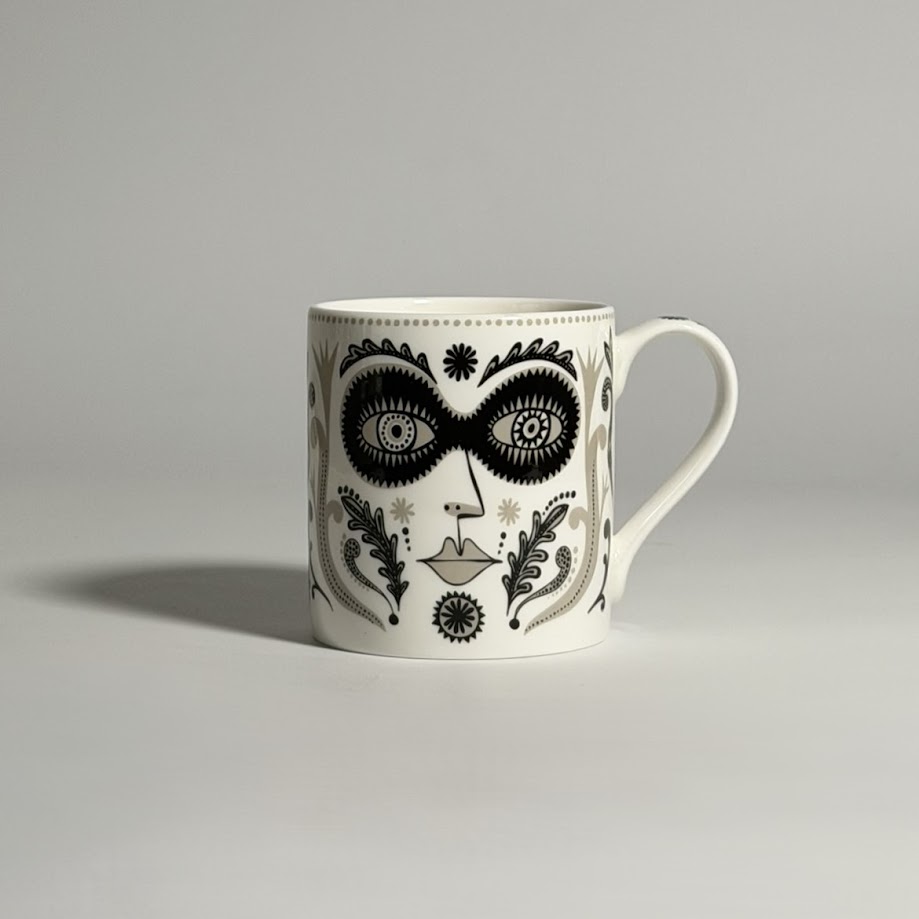
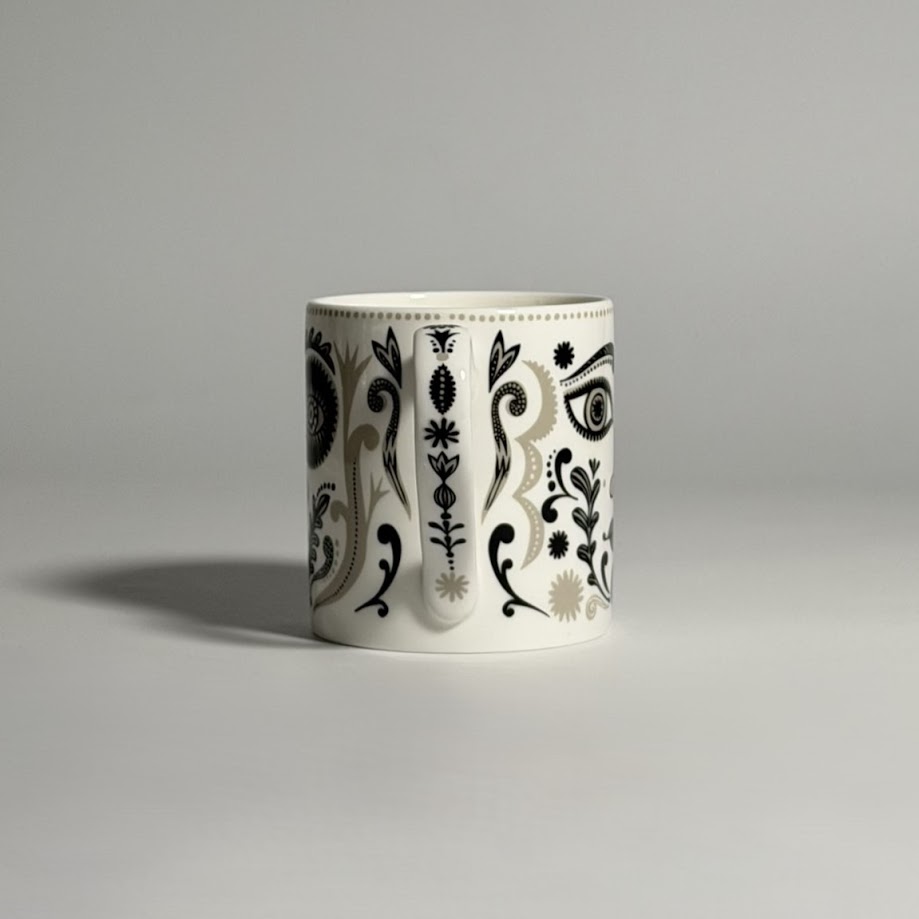
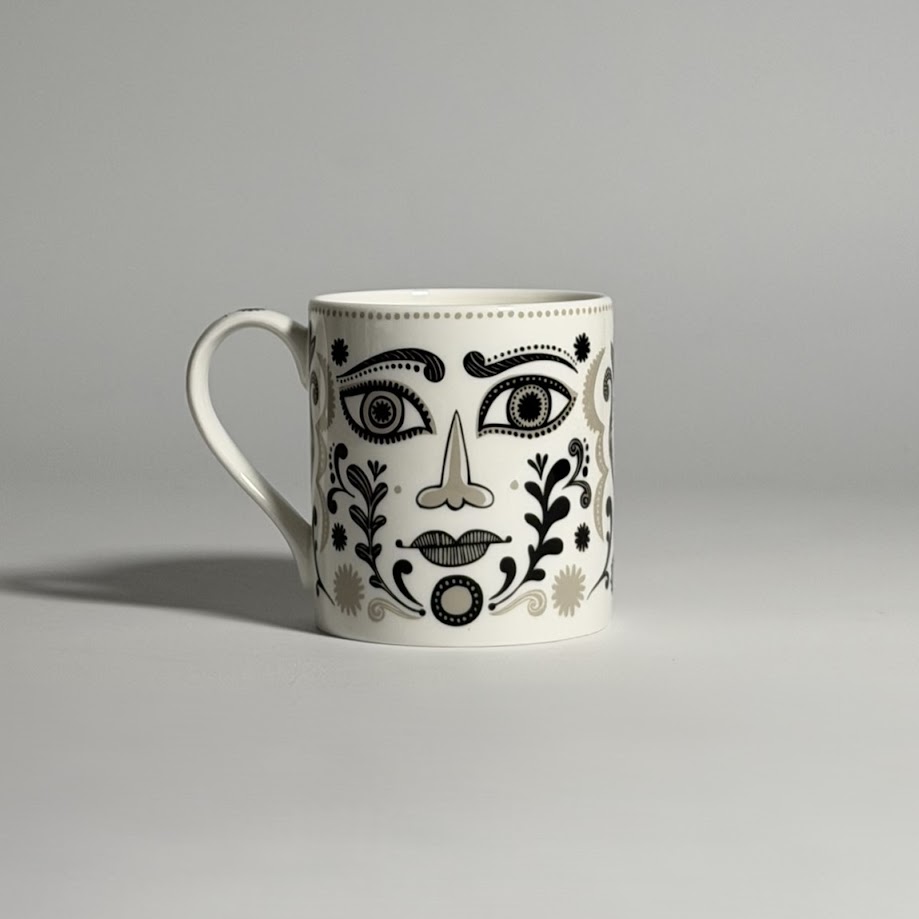
Lush Designs – Bone China Mug – Fancy Handle Masquerade Mug
Lush Designs
£23.00
Availability: In stock
Product Description
Lush Designs – Bone China Mug – Fancy Handle Masquerade Mug
Artist: Lush Designs
Price: £23.00 (Free Postage In The UK)
Material: Bone china
Condition: New
Size: 8.5cm high 8.5cm diameter
Bone china with delicate detail and embellishment.
The Masquerade: A Brief Account
The masquerade—a social event characterised by masked participants, costume, anonymity, and theatricality—has a long and complex history spanning ritual, court culture, urban festivity, and modern entertainment. Its evolution reflects changing attitudes toward identity, hierarchy, morality, and spectacle.
- Origins: Ritual, Disguise, and Transformation
The roots of the masquerade lie in ancient practices of mask-wearing and ritual transformation.
Pre-Classical and Classical Traditions
- In ancient Greece and Rome, masks were used in:
- theatre (especially tragedy and comedy)
- religious festivals
- Masks allowed:
- embodiment of gods, spirits, or archetypes
- temporary suspension of ordinary identity
Across Europe and beyond, seasonal festivals (e.g. midwinter rites) involved:
- disguise
- inversion of roles
- symbolic chaos before renewal
These elements—concealment, transformation, and liminality—form the conceptual foundation of later masquerades.
- Medieval Europe: Festivity and Social Inversion
During the Middle Ages, masked celebration became embedded in:
- Carnival traditions (especially before Lent)
- Feasts of Fools and Misrule
Participants:
- wore masks and costumes
- mocked authority
- reversed social roles (peasants as “kings”, clergy parodied, etc.)
Function:
- controlled release of social tension
- reinforcement of hierarchy through temporary inversion
Masking here was both:
- liberating
- tightly bounded within ritual frameworks
- Renaissance Italy: Birth of the Formal Masquerade
The modern concept of the masquerade emerged in Renaissance Italy, particularly in Venice.
Venetian Carnival
From the 15th century onward:
- Mask-wearing became widespread during Carnival
- Masks such as:
- the bauta (full-face mask with cloak)
- the volto (plain white mask)
enabled: - anonymity across social classes
- freer interaction between men and women
Key features:
- gambling, dancing, and theatre
- blurring of class distinctions
- state tolerance (and occasional regulation)
The Venetian model established the masquerade as:
a social event combining anonymity, spectacle, and controlled transgression
- 17th Century: Court Masques and Aristocratic Display
In parallel with popular carnival traditions, a more formalised version developed in European courts.
The Court Masque
Particularly in England under the Stuarts:
- Elaborate performances combining:
- music
- dance
- allegory
- Participants often included members of the court and royalty
The court masque:
- emphasised order rather than inversion
- celebrated monarchy and hierarchy
It was less about anonymity and more about:
- controlled theatrical display of power
- 18th Century: The Masquerade Ball
The 18th century saw the emergence of the public masquerade ball, especially in London and Paris.
London Masquerades
- Popular venues included pleasure gardens such as Vauxhall Gardens
- Events attracted:
- aristocracy
- middle classes
- sometimes more ambiguous social figures
Characteristics:
- ticketed प्रवेश (commercialised entertainment)
- elaborate costumes
- social mixing under cover of masks
Cultural Impact
Masquerades became:
- associated with libertinism and intrigue
- settings for:
- flirtation
- seduction
- scandal
They also provoked moral anxiety:
- critics argued masks encouraged:
- deception
- immorality
- erosion of class boundaries
- 19th Century: Regulation and Transformation
By the 19th century:
- The more licentious aspects of masquerades declined
- Events became:
- more respectable
- more structured
Masquerade balls persisted but were often:
- charity events
- themed entertainments
- part of elite social seasons
The emphasis shifted toward:
- costume artistry
- spectacle
- controlled sociability
- 20th Century: Revival and Reinvention
Early 20th Century
- Masquerades continued in:
- high society balls
- theatrical and artistic circles
Mid-20th Century
- Decline in traditional form
- Survival in:
- costume parties
- carnival traditions (e.g. Venice, Rio)
Late 20th Century Revival
- Renewed interest in historical masquerade aesthetics
- Influence of:
- film and literature
- fantasy and gothic subcultures
The Venice Carnival was revived in the late 20th century as a major tourist and cultural event.
- Symbolism and Social Meaning
Across its history, the masquerade has consistently engaged with:
- Identity and Anonymity
- Masks conceal identity, enabling:
- freedom of behaviour
- experimentation with roles
- Social Boundaries
- Temporary blurring of:
- class
- gender norms
- status
- Control vs Transgression
- Events balance:
- liberation
- regulation
- Performance
- Participants become both:
- actors
- audience
- The Masquerade in Literature and Culture
Masquerades frequently appear as settings in:
- gothic fiction
- romantic literature
- operatic and theatrical works
They often symbolise:
- hidden identity
- deception
- revelation
The mask becomes a metaphor for:
the tension between appearance and reality
Conclusion
The history of the masquerade is a progression from ritual disguise to social performance, shaped by shifting cultural attitudes toward identity, hierarchy, and pleasure. Whether in medieval carnival, Venetian streets, or Georgian pleasure gardens, the masquerade has consistently provided a space where:
- norms are suspended
- identities are fluid
- society observes itself in altered form
Its enduring appeal lies in this paradox:
the mask conceals the face, yet reveals deeper truths about human behaviour.
Lush Designs: A Brief Description
Lush Designs is a British company that creates a wide array of beautifully illustrated homeware, with designs that capture a sense of whimsy and charm. Their collections include lampshades, cushions, ceramics, and tea towels, all featuring hand-drawn artwork inspired by nature, wildlife, and folklore.
With vibrant colours, bold patterns, and playful motifs, Lush Designs’ products are ideal for adding character and warmth to any space. Their lampshades, in particular, are known for their striking appearance, with intricate details and rich story-telling elements. We hold a large range in our Ripon gallery but we do not sell them online.
Sustainability is an important aspect of their work, and they focus on creating long-lasting, high-quality pieces. If you’re interested in British-made home décor that brings artistry and creativity to the forefront, Lush Designs offers distinctive items with a signature British touch.
Why Buy from Us?
At Hornseys, we are committed to offering items that meet the highest standards of quality and authenticity. Our collection of objects and fine gifts is meticulously curated to ensure that it reflects refined taste and elegance.
Here’s what sets us apart:
- Authenticity and Provenance: Every range is thoroughly researched and vetted to ensure that it meets our exacting standards.
- Expert Curation: We select each range with an eye for tastefulness, refinement, condition, and visual appeal.
- Customer Satisfaction: We strive to provide an exceptional customer experience, from detailed descriptions to secure and prompt delivery.
- Returns Policy: We offer an unconditional guarantee on every item. If you wish to make a return, any item may be sent back to us within fourteen days of receipt for any reason. We request advance notification of returns, and items must be returned in the same condition as sent for a full refund.
Explore Our Collection:
Visit Hornseys to explore our exceptional collection of fine art, illustration, rare books, gifts and objects. Located in the picturesque Yorkshire Dales, our Ripon gallery has been a haven for art lovers and collectors since 1976.