

A Diary of St. Helena (1816–1817) – Lady Malcolm – Napoleon Bonaparte – First Edition, 1899
Malcolm, Lady Clementina Elphinstone & Wilson, K.C.I.E, Sir Arthur
£175.00
Availability: In stock
Product Description
A Diary of St. Helena (1816–1817) – Lady Malcolm – Napoleon Bonaparte – First Edition, 1899
Author: Lady Clementina Elphinstone Malcolm
Editor: Sir Arthur Wilson, K.C.I.E.
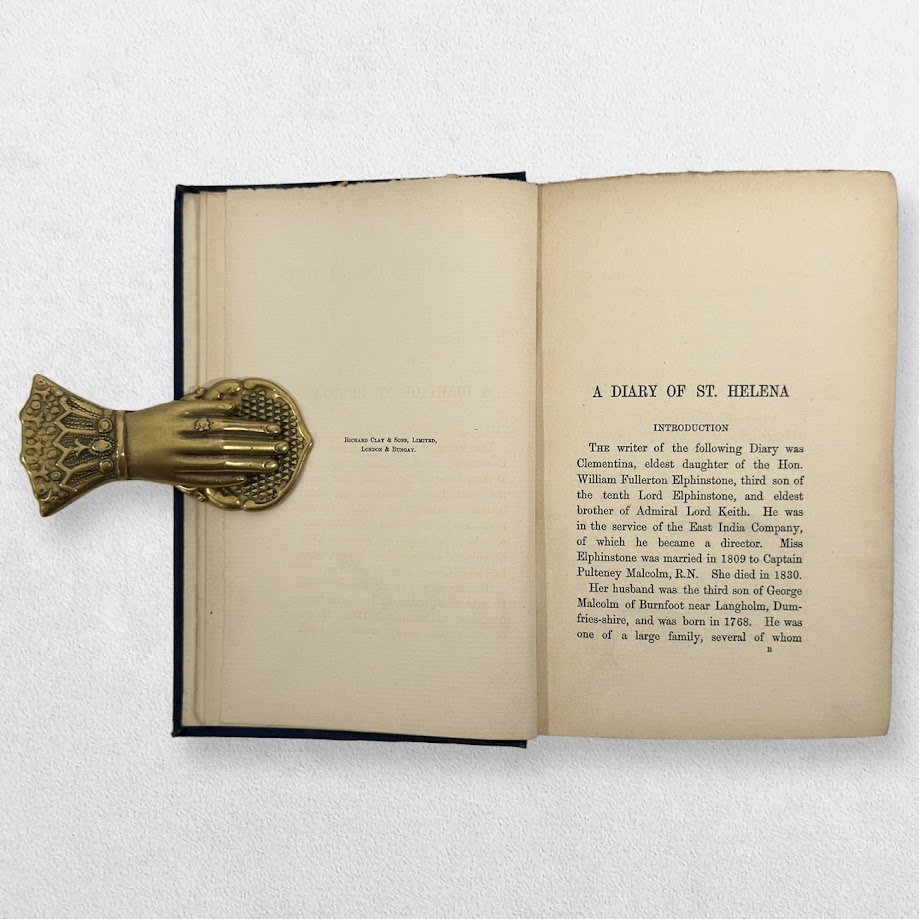
Title: A Diary of St. Helena (1816, 1817): The Journal of Lady Malcolm, Containing the Conversations of Napoleon with Sir Pulteney Malcolm
Publisher: A. D. Innes & Company Limited, London
Date: 1899
Edition: First Edition
Format: Octavo
Pagination: Preliminary leaves, 168 pages and publisher’s advertisements
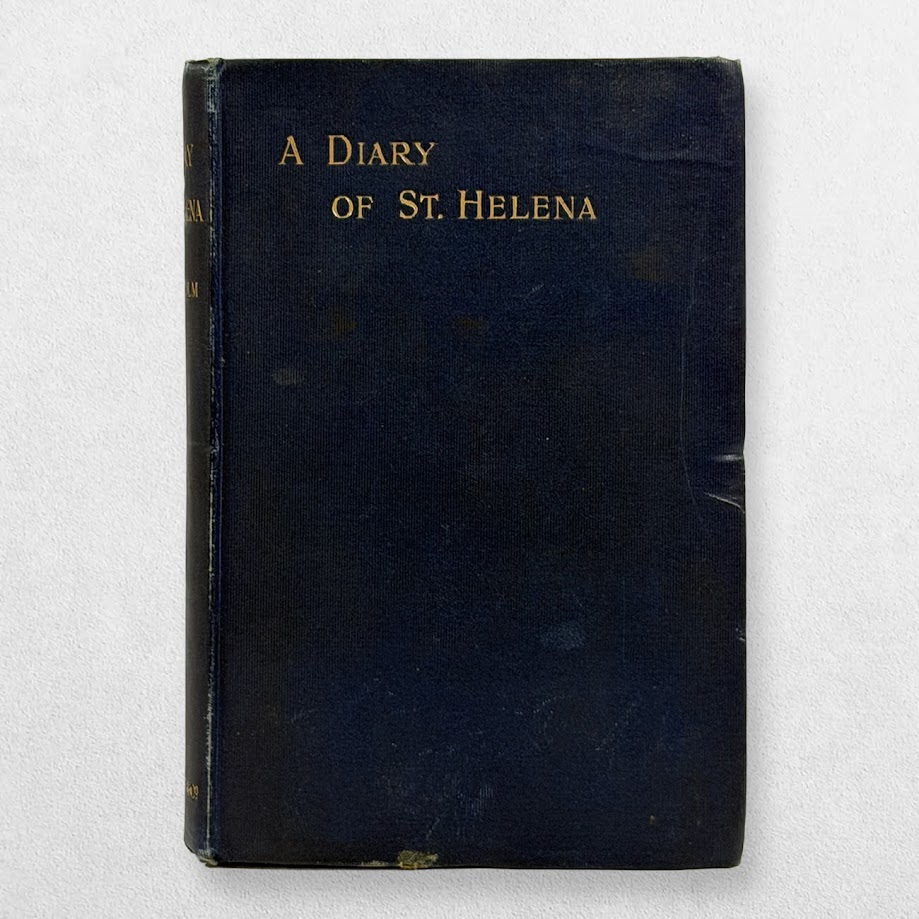
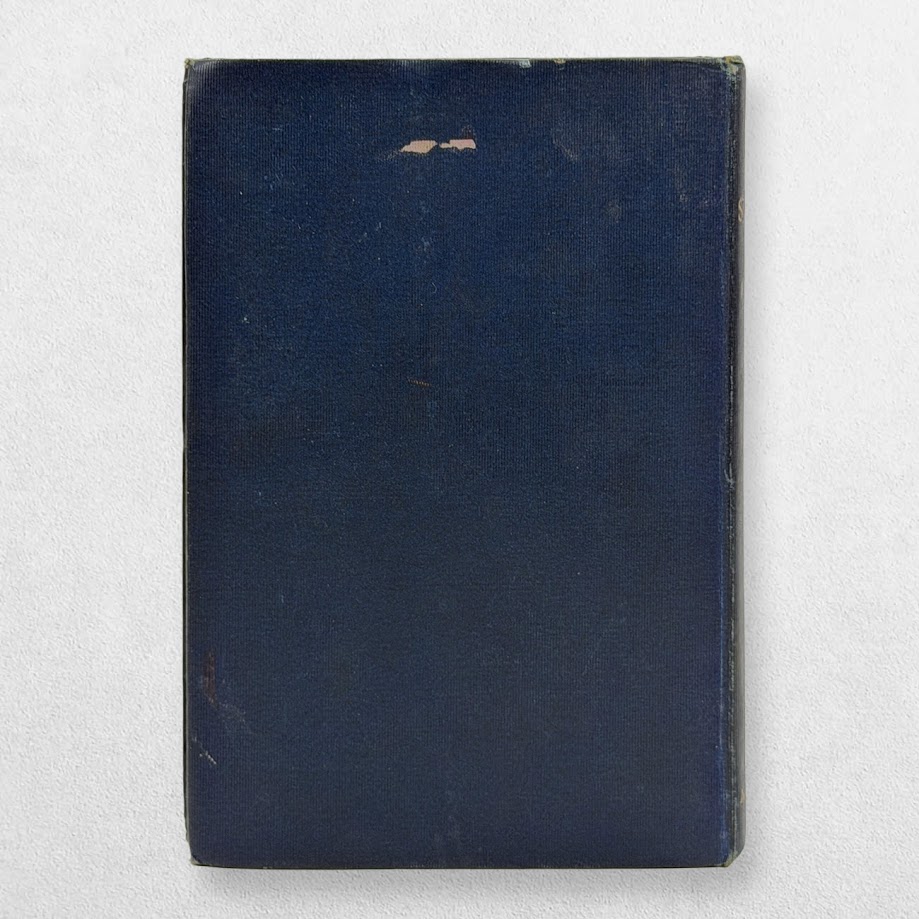
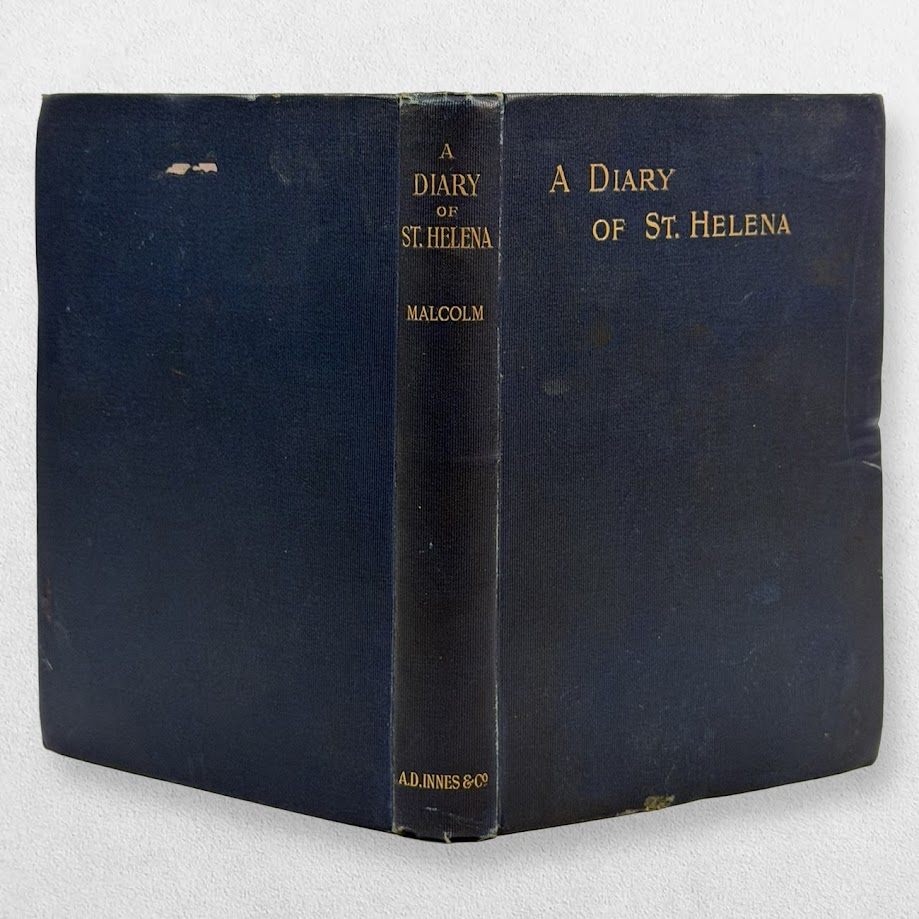
Binding: Original Publisher’s Dark Blue Cloth, Lettered in Gilt
Condition: Very Good
Stock Number: 004207
Location: Book Room
Description
A scarce first edition of A Diary of St. Helena (1816, 1817), the remarkable journal of Lady Clementina Malcolm, recording the conversations of Napoleon Bonaparte with her husband, Admiral Sir Pulteney Malcolm, during Napoleon’s exile on the remote South Atlantic island of St Helena. Edited by Sir Arthur Wilson and first published in London by A. D. Innes & Company in 1899, the book provides an important firsthand account of the former French Emperor during one of the most closely studied periods of his extraordinary life.
Following his defeat at the Battle of Waterloo in June 1815, Napoleon surrendered to the British and was subsequently transported to St Helena, where he remained under British supervision until his death in May 1821. His confinement brought him into contact with British naval and military officers, government representatives and members of the small European community resident on the island.
Among the most significant of these figures was Admiral Sir Pulteney Malcolm, whose naval responsibilities brought him to St Helena in 1816. Unlike some of the British officials responsible for Napoleon’s confinement, Malcolm developed a comparatively cordial relationship with the former Emperor, engaging him in conversations concerning European politics, military campaigns, British policy and the circumstances surrounding his downfall.
These conversations, preserved in the journal associated with Lady Malcolm, provide an unusually direct record of Napoleon’s opinions, recollections and personal observations during his captivity.
First published more than eighty years after the events described, the diary contributes an important British perspective to the extensive literature concerning Napoleon’s final exile.
Napoleon Bonaparte and His Exile on St Helena
Napoleon Bonaparte (1769–1821) remains one of the most influential and controversial figures in European history. Rising to prominence during the French Revolutionary Wars, he became First Consul of France in 1799 and Emperor of the French in 1804. His military campaigns and political reforms fundamentally reshaped Europe, while his eventual defeat brought an end to more than two decades of almost continuous conflict involving France and the principal European powers.
Following his first abdication in 1814, Napoleon was exiled to Elba, an island in the Mediterranean. His dramatic return to France in February 1815 initiated the Hundred Days, culminating in his decisive defeat by the Allied armies under Wellington and Blücher at Waterloo on 18 June 1815.
The British government determined that Napoleon should be removed to a location from which escape would be exceptionally difficult. St Helena, situated thousands of miles from Europe in the South Atlantic, was selected as his place of detention. Napoleon arrived on the island in October 1815 and was subsequently accommodated at Longwood House, where he remained under the supervision of the British authorities. His treatment, restrictions upon visitors and correspondence, disputes with the island’s Governor, Sir Hudson Lowe, and his deteriorating health became subjects of considerable controversy.
The accounts produced by those who encountered Napoleon during these years have consequently acquired lasting historical importance.
The journal of Lady Malcolm is particularly interesting because it records conversations from the relatively early period of his captivity, when Napoleon remained intellectually vigorous and frequently engaged in lengthy discussions of his military and political career.
Lady Clementina Malcolm and Sir Pulteney Malcolm
Lady Clementina Elphinstone Malcolm was the daughter of the Hon. William Fullerton Elphinstone, a member of a distinguished Scottish family with extensive connections to British naval and imperial service. In 1809 she married Captain Pulteney Malcolm of the Royal Navy, an officer whose career had already been marked by considerable distinction.
Admiral Sir Pulteney Malcolm (1768–1838) was born in Dumfriesshire and entered the Royal Navy at an early age. He served during the French Revolutionary and Napoleonic Wars, taking part in numerous naval operations and establishing a reputation as an experienced and capable officer.
He distinguished himself at the Battle of San Domingo in 1806 and subsequently held important naval commands during the latter stages of the war against Napoleon. In 1816 Malcolm was appointed to command the Cape of Good Hope Station, a responsibility that included the naval arrangements at St Helena. His position brought him into direct contact with Napoleon, whose confinement required the continued presence of a substantial British naval force.
Malcolm’s conversations with the former Emperor ranged across matters of considerable historical interest, including Napoleon’s military decisions, his relationships with other European rulers, British diplomacy and the conduct of the wars that had dominated European politics. Lady Malcolm was herself present at some of the encounters. Although the journal is traditionally known by her name, the surviving record also incorporates conversations reported or dictated by her husband following his visits to Napoleon. This distinction is important to the historical interpretation of the work: it preserves both Lady Malcolm’s personal observations and Sir Pulteney Malcolm’s recollections of his direct exchanges with Napoleon.
Napoleon’s Conversations with Sir Pulteney Malcolm
The most important feature of the book is its record of Napoleon’s conversations with a senior British naval officer who had fought against France during the Napoleonic Wars. Malcolm’s position was unusual. He represented the victorious British state, yet his duties did not involve the same daily administrative supervision of Napoleon’s household as those of the Governor, Sir Hudson Lowe.
This difference helped establish a more agreeable relationship and allowed discussions of considerable frankness. The diary records Napoleon reflecting upon his career, the conduct of European governments, the actions of British ministers and military commanders, and the circumstances surrounding his defeats.
His remarks are of particular interest because they were made after the collapse of his political and military power, at a time when he was already attempting to shape the historical interpretation of his career. Such accounts must inevitably be approached critically. Napoleon was highly conscious of his place in history and could use conversations with visitors to justify his decisions and influence the record of his reign.
Nevertheless, the diary is valuable precisely because it preserves the words and impressions reported by individuals who encountered him directly. It also offers an insight into the complicated relationships between Napoleon and the British officers charged with ensuring that he remained securely confined.
St Helena, Sir Hudson Lowe and the Politics of Captivity
The diary belongs to a particularly significant period in the history of Napoleon’s exile.
Sir Hudson Lowe (1769–1844) arrived on St Helena in 1816 to assume the governorship, becoming responsible for enforcing the restrictions imposed upon the former Emperor.
His relationship with Napoleon rapidly deteriorated. Disagreements over protocol, the restrictions governing Napoleon’s movements and visitors, and questions concerning the status to be accorded to the deposed Emperor contributed to an increasingly hostile atmosphere. British officers stationed on the island found themselves navigating a difficult environment in which considerations of security, military duty, diplomacy and personal courtesy frequently came into conflict.
Sir Pulteney Malcolm’s comparatively sympathetic treatment of Napoleon made his experiences particularly interesting. The conversations recorded in Lady Malcolm’s journal provide an alternative perspective to the more contentious accounts associated with Lowe and members of Napoleon’s household. They are consequently useful to historians investigating not only Napoleon’s own attitudes during captivity but also the differing opinions and conduct of the British officials with whom he came into contact.
The First Publication of Lady Malcolm’s Diary
The present volume is the first edition, published in 1899, of a journal that had remained unpublished for more than eighty years after the events it describes.
Edited by Sir Arthur Wilson, K.C.I.E., the book brought the Malcolm family’s record of Napoleon’s conversations to a wider readership at a time when interest in Napoleonic history remained substantial. Sir Arthur Wilson’s editorial introduction provides biographical information about Lady Malcolm and her husband, together with historical context for their experiences on St Helena.
The publication was an important addition to the body of memoirs, correspondence and eyewitness testimony relating to Napoleon’s captivity. The diary subsequently attracted attention from historians of Napoleon’s final years, including Lord Rosebery, whose study Napoleon: The Last Phase appeared in 1900. Its value lies in the proximity of its original material to the events described. Rather than a retrospective narrative written decades later, it derives from a contemporary record of encounters with Napoleon during his exile. The original 1899 edition is therefore of particular interest to collectors and researchers concerned with primary accounts of the Napoleonic period.
Historical Importance and Collectability
A Diary of St. Helena is of interest across several collecting fields, including Napoleonic history, the Battle of Waterloo and its aftermath, British naval history, nineteenth-century memoirs and the history of St Helena.
The work provides an unusual intersection of these subjects. It is simultaneously a record of Napoleon’s captivity, a contribution to the history of British naval operations in the South Atlantic and an account of the personal interactions between a defeated emperor and officers of the victorious power.
Condition
First Edition, 1899. Octavo. Preliminary leaves, 168 pages and publisher’s advertisements. Original publisher’s dark blue cloth, lettered in gilt to the spine and upper board.
The pages are generally very nice and clean, with light age-related toning. The binding remains nice and tight.
The original cloth is a little rubbed and marked, with some wear to the edges and extremities. There are also small areas of more noticeable rubbing and surface marking, including a little loss of colour to the rear board. The gilt lettering remains clear and attractive. It is now housed in an easily-removable clear acetate cover.
A very good copy overall of the scarce 1899 first edition of Lady Malcolm’s important journal recording Napoleon’s conversations with Sir Pulteney Malcolm during his exile on St Helena.
Stock Number: 004207
Location: Book Room
Why Buy From Us?
At Hornseys, we specialise in rare, signed and collectible books, maps, prints and works on paper, with an emphasis on accurate identification, careful research, condition assessment and clear cataloguing. Every item is examined individually before it is offered for sale, and we aim to describe each piece as precisely and transparently as possible.
Here’s what sets us apart:
- Research, Authenticity and Provenance: Every item is individually examined and researched. Where relevant, we verify edition points, publication details, signatures, inscriptions, provenance, institutional records, comparable examples and other bibliographical or historical evidence before cataloguing.
- Accurate and Detailed Descriptions: We provide clear information on edition, publisher, date, format, condition and distinguishing features. Significant faults, restoration, inscriptions, ownership marks and other relevant characteristics are recorded wherever identified.
- Specialist Experience: Hornseys has been dealing in books, maps, prints, art and related material since 1976. Our stock reflects decades of practical experience in assessing collectability, scarcity, historical significance and condition.
- Careful Curation: We select material for its quality, interest, provenance, rarity or historical importance rather than simply offering large quantities of undifferentiated stock. Each item must justify its place in the collection.
- Condition and Collation: Books and other multi-part items are checked as appropriate for completeness, binding integrity, plates, maps and other components. Condition is assessed carefully and described in a way intended to help buyers make an informed decision.
- Transparent Provenance: Where provenance or previous ownership is known and relevant, it is stated. Where attribution or identification remains uncertain, we distinguish clearly between established fact and informed interpretation.
- Customer Service: We aim to provide a knowledgeable, responsive and straightforward buying experience, supported by detailed photographs, careful packing and prompt dispatch.
- Returns Guarantee: Every item is covered by our unconditional returns policy. Items may be returned within fourteen days of receipt for any reason, provided we are notified in advance and the item is returned in the same condition as supplied. A full refund will then be issued.
Explore Our Collection
Hornseys offers a carefully researched selection of rare and signed books, first editions, military and historical maps, original prints, art and ephemera. Whether you are building a specialist collection, researching a particular subject or looking for an unusual historical object, our aim is to provide material that is both interesting and accurately described.
Our gallery is based in Ripon, North Yorkshire, and Hornseys has served collectors, readers, historians and art enthusiasts since 1976.
Thank you for looking.
Related products
-

Narrative Of The Kaffir War – 1850 – 1851 – 1852 – Facsimile Edition
£30.00Godlonton, R & Irving, Edward
-

-

-

Koortslijn Der Engelsche Tonnage – Critical Line Of English Tonnage
£150.00Churchill, Winston Spencer
You may also like…
-

11th Hussars (Prince Albert’s Own) — D Squadron — May 1944–May 1945 — Captain John Rennie Ballingal MC Association Copy
£275.00D Squadron, 11th Hussars (Prince Albert’s Own) & Ballingal, Captain John Rennie MC
-

Alexander of Tunis, Field-Marshal Earl — The Alexander Memoirs 1940–1945 — First UK Edition, 1962
£30.00Field-Marshal Earl Alexander of Tunis Edited by John North
-

Hanfstaengl, Ernst “Putzi” — Hitler: The Missing Years — First UK Edition, 1957
£40.00Hanfstaengl, Ernst “Putzi”
-
-
-
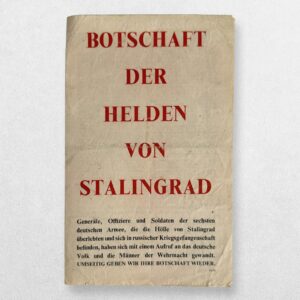
Botschaft der Helden von Stalingrad – Allied German-Language Propaganda Leaflet, G.82, 1943 – Robert Hastings / Steve Forbes Provenance.
£95.00(Churchill, Winston Spencer)
-
-

Alliiertes Oberkommando – Proclamation Concerning the French Forces of the Interior. Z.G.32. Churchill and Roosevelt on War Crimes – 1944 – Provenance: Robert Hastings; The Churchill Collection of Steve Forbes.
£95.00Churchill, Winston Spencer & Roosevelt, F. D.
-
