
Military History Photographs

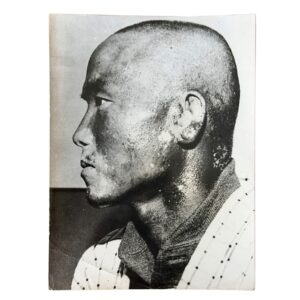
Associated Press Telephoto of Tadashi Yamamoto Following Radiation Exposure from the Castle Bravo Hydrogen Bomb Test – 30 March 1954
£175.00Associated Press – Unnamed Photographer
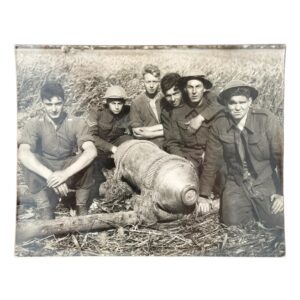
Original Associated Press Photograph of British Servicemen with Recovered German Bomb, Possibly South Shields, Second World War
£95.00Associated Press – Unnamed Photographer
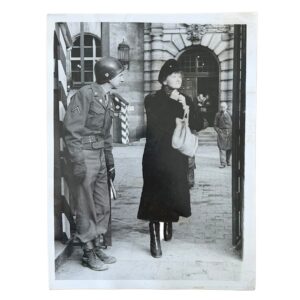
Keystone Press Photograph of Annelies von Ribbentrop Leaving the Palace of Justice, Nuremberg – 22 January 1945
£95.00Associated Press – Unnamed Photographer
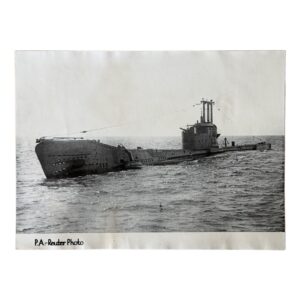
P.A.-Reuters Press Photograph of HMS Affray Reported Missing – 17 April 1951
£65.00P.A Reuter – Unnamed Photographer
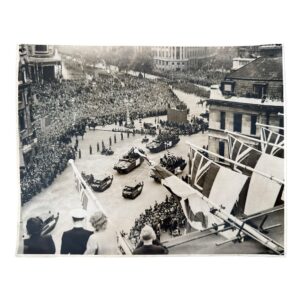
Original Press Photograph of the Liberation Column Passing Through Trafalgar Square During the London Victory Parade – 8 June 1946
£60.00Westminster Press – Unnamed Photographer
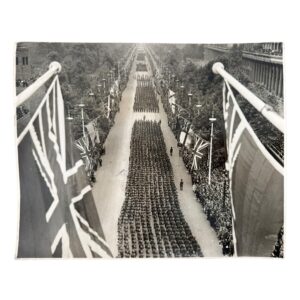
Victory Day 1946 – Original Press Photograph of the Marching Column Proceeding Along The Mall, London – 8 June 1946
£60.00Westminster Press – Unnamed Photographer
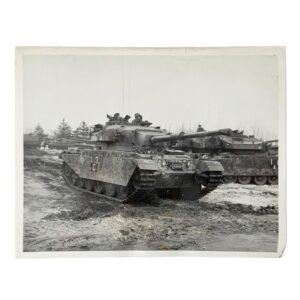
Cold War – Exercise Bold Adventure – Six Official British Army Photographs – March 1969
£50.00Unnamed Photographer
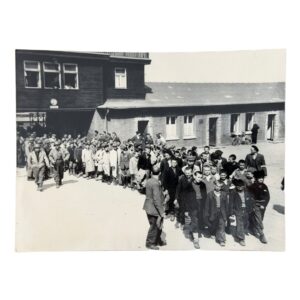
Buchenwald Concentration Camp Survivors Being Taken for Medical Treatment, 19 April 1945 – Associated Press Anniversary Photograph
£30.00Associated Press – Unnamed Photographer
Associated Press Feature Photograph of Hawk Anti-Aircraft Missiles at Key West Following the Cuban Missile Crisis – November 1963
£30.00Associated Press – Unnamed Photographer
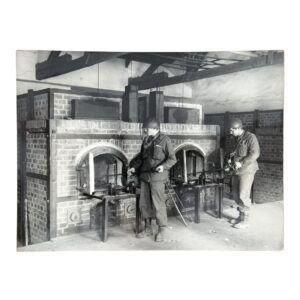
Associated Press Photograph of American Soldiers Inspecting the Crematorium Ovens at Dachau Concentration Camp, 1945 – Issued for the Fortieth Anniversary of VE Day – 1985
£30.00Associated Press – Unnamed Photographer
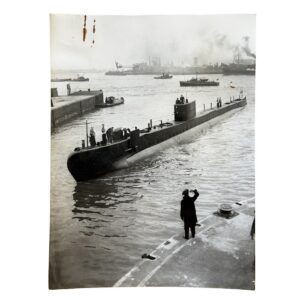
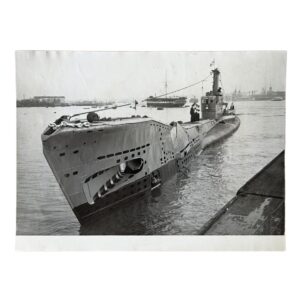
Associated Press Press Photograph of HMS Explorer, Britain’s Experimental High-Speed Submarine, Visiting London – 19 March 1957
£30.00Associated Press – Unnamed Photographer
Associated Press Press Photograph of HMS Alliance Departing for the First Anniversary Memorial of HMS Affray – 17 April 1952
£30.00Associated Press – Unnamed Photographer
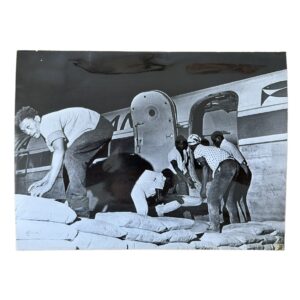
Associated Press Press Photograph – Humanitarian Food Airlift to Biafra During the Nigerian Civil War – 9 May 1969
£30.00Associated Press – Unnamed Photographer
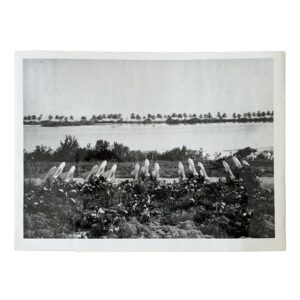
Associated Press Press Photograph – Block Ships at Port Said During the Suez Crisis – 19 November 1956
£30.00Associated Press – Unnamed Photographer

Military History Photographs
The Cambodian War: A Brief Description
The Cambodian War, also known as the Cambodian Civil War, was a prolonged conflict that engulfed Cambodia from 1967 to 1975. It was a complex and brutal struggle involving local factions and significant foreign intervention, driven by the broader context of the Cold War and the escalating Vietnam War. The war led to the rise of the Khmer Rouge, whose subsequent regime brought devastating consequences to the Cambodian people.
Background and Causes
The roots of the Cambodian War can be traced back to political instability, rural poverty, and resentment towards the Cambodian monarchy. The country’s head of state, Prince Norodom Sihanouk, attempted to maintain a neutral stance amid Cold War tensions, balancing relations with both the United States and communist North Vietnam. However, his position weakened as domestic dissent grew, particularly from leftist groups influenced by communist ideologies spreading across Southeast Asia.
- US Involvement in Vietnam: The United States had heavily escalated its involvement in the Vietnam War by the 1960s, and Cambodia’s proximity made it strategically significant. North Vietnamese forces, using Cambodian territory to supply their troops in South Vietnam via the Ho Chi Minh Trail, were a major concern for the Americans. Consequently, the US conducted extensive, often secret, bombing campaigns in eastern Cambodia from 1969 to 1973, targeting Vietnamese communist sanctuaries but also causing severe civilian casualties and fuelling resentment.
- Rise of the Khmer Rouge: The Khmer Rouge, a communist faction led by Pol Pot, began to gain support among rural Cambodians, capitalising on growing anti-government and anti-American sentiment. Initially a small and fringe group, the Khmer Rouge gained traction as popular frustration with the monarchy and the impact of US bombings intensified.
Escalation of the War (1970–1973)
In 1970, a pivotal event reshaped the conflict. General Lon Nol, with tacit US support, led a coup that deposed Prince Sihanouk while he was abroad. This action polarised Cambodian society, with Sihanouk calling upon his followers to support the Khmer Rouge in a bid to regain power. This alliance of convenience between royalists and communists created a powerful opposition against Lon Nol’s newly declared Khmer Republic.
- US Bombing Campaign: Following the coup, the US increased its bombing operations in Cambodia, focusing on suspected communist bases and supply routes. This bombardment caused extensive destruction in rural areas and inadvertently strengthened the Khmer Rouge’s position by creating conditions for anti-government sentiment to flourish.
- Intensified Fighting: The war became a vicious and widespread conflict, with the Khmer Rouge using guerrilla tactics, supported by North Vietnamese forces. The Khmer Republic army, despite US aid, struggled against this well-organised resistance. Rural areas increasingly came under Khmer Rouge control, while the government retained a tenuous hold on Phnom Penh and a few other cities.
The Fall of Phnom Penh (1975)
As the US began withdrawing from Vietnam, its support for Lon Nol’s government weakened. By 1975, the Khmer Rouge had effectively surrounded Phnom Penh. The city, cut off from resources and supplies, fell to the Khmer Rouge on 17 April 1975, marking the end of the Cambodian War and the beginning of a tragic chapter in Cambodian history.
The Khmer Rouge Regime
After seizing power, the Khmer Rouge, under Pol Pot, implemented a radical agenda aimed at transforming Cambodia into a self-sufficient, agrarian society. They renamed the country “Democratic Kampuchea” and launched a brutal social engineering programme. Urban populations were forcibly evacuated to rural areas, and anyone seen as an intellectual, dissenter, or ethnic minority was at risk. Schools, hospitals, and religious institutions were abolished, and private property was eliminated.
The Khmer Rouge’s rule resulted in one of the 20th century’s worst genocides, with an estimated 1.7 to 2 million Cambodians – around a quarter of the population – dying due to starvation, forced labour, disease, and executions.
Foreign Involvement and Legacy
The Cambodian War was heavily influenced by Cold War politics. The US intervention, largely through bombings and aid to Lon Nol, exacerbated the conflict and had long-term consequences. Meanwhile, China supported the Khmer Rouge, while Vietnam eventually invaded Cambodia in 1979 to oust the regime, leading to further conflict and occupation until the late 1980s.
The Cambodian War left deep scars on Cambodian society. The country’s infrastructure and institutions were devastated, and the Khmer Rouge’s atrocities have left an enduring legacy of trauma. Trials for crimes against humanity were eventually conducted in the early 21st century, aiming to bring some form of justice and closure to the Cambodian people.
The Cambodian War is remembered as a tragic example of how Cold War rivalries and foreign intervention, combined with extremist ideology, can lead to devastating consequences for a nation and its people.
The Vietnam War: A Brief Description
The Vietnam War, lasting from 1955 to 1975, was one of the 20th century’s most complex and devastating conflicts. Originating from the struggle for Vietnamese independence, the war expanded into a major Cold War battleground, drawing in the United States, the Soviet Union, China, and other nations. It reshaped Vietnam, left lasting scars on the American psyche, and sparked global anti-war movements.
1. Background and Origins
- French Colonial Rule: Vietnam had been a French colony since the late 19th century, part of French Indochina, which also included Laos and Cambodia. Resistance to colonial rule simmered for decades, intensifying under nationalist movements, particularly under the leadership of Ho Chi Minh, who founded the Communist-led Viet Minh.
- Japanese Occupation and Post-War Division: During World War II, Japan occupied Vietnam, but after Japan’s defeat in 1945, Ho Chi Minh declared Vietnamese independence. However, France sought to reassert control, sparking the First Indochina War (1946–1954) between French forces and the Viet Minh. The war ended with the 1954 Geneva Accords, which temporarily divided Vietnam at the 17th parallel, with Ho Chi Minh’s communist government in the north and an anti-communist government, supported by the US, in the south.
2. Escalation and the US Involvement (1955–1964)
- Formation of South Vietnam: The US backed Ngo Dinh Diem as the leader of the Republic of Vietnam (South Vietnam). Diem’s regime was autocratic and deeply unpopular, especially due to his persecution of Buddhists, leading to widespread unrest. Nonetheless, the US saw him as a bulwark against communism.
- Viet Cong Insurgency: In South Vietnam, the National Liberation Front (NLF), also known as the Viet Cong, formed with support from North Vietnam, aiming to overthrow the South Vietnamese government. The Viet Cong gained traction in rural areas, challenging Diem’s control.
- Gulf of Tonkin Incident: In 1964, an alleged attack on US Navy vessels by North Vietnamese forces in the Gulf of Tonkin prompted the US Congress to pass the Gulf of Tonkin Resolution, allowing President Lyndon B. Johnson to deploy combat troops without a formal declaration of war. This marked the beginning of direct US military involvement.
3. Full-Scale War (1965–1968)
- Operation Rolling Thunder: In 1965, the US launched a massive bombing campaign against North Vietnam, intended to cripple its economy and morale. However, the bombing had limited success, as the North Vietnamese adapted with underground tunnels and extensive supply networks like the Ho Chi Minh Trail.
- Troop Build-up: By 1968, over 500,000 US troops were deployed in Vietnam. The US adopted a “search and destroy” strategy, aiming to engage the Viet Cong and North Vietnamese forces. However, dense jungles and guerilla tactics gave the North Vietnamese an advantage, and US forces struggled with the harsh terrain and elusive enemy.
- Tet Offensive: In January 1968, the North Vietnamese and Viet Cong launched the Tet Offensive, a massive coordinated assault on cities and US bases across South Vietnam. Though a military failure for the communists, it shocked the American public and exposed the vulnerability of US forces, leading to increased anti-war sentiment in the US.
4. Turning Point and Vietnamization (1968–1973)
- Shift in US Public Opinion: The graphic media coverage of the war, including images of atrocities like the My Lai Massacre (1968), turned American public opinion against the war. Protests erupted, and the anti-war movement grew, calling for an end to US involvement.
- Vietnamization Policy: President Richard Nixon, elected in 1968, sought to reduce US involvement by implementing “Vietnamization” — training and equipping South Vietnamese forces to take over the fight, while gradually withdrawing US troops.
- Expansion into Cambodia and Laos: Despite plans to wind down the war, the Nixon administration expanded bombing campaigns into neighbouring Cambodia and Laos, aiming to disrupt North Vietnamese supply lines. This escalation stirred more anti-war protests, particularly in the US, where incidents like the Kent State shootings (1970) underscored the national division over the war.
5. The Paris Peace Accords and US Withdrawal (1973)
- After years of negotiation, the Paris Peace Accords were signed in January 1973, resulting in a ceasefire and the formal withdrawal of US combat troops. However, the agreement allowed North Vietnamese forces to remain in parts of South Vietnam, sowing the seeds for further conflict.
- The last US troops left Vietnam in March 1973, marking the official end of American involvement in the war. Despite the accords, fighting between North and South Vietnam resumed almost immediately.
6. Fall of Saigon and End of the War (1975)
- With US support gone, South Vietnam was increasingly vulnerable. North Vietnamese forces launched a full-scale invasion in early 1975. Facing dwindling supplies and morale, the South Vietnamese army crumbled.
- On 30 April 1975, North Vietnamese troops entered Saigon, capturing the city and effectively ending the war. The event, marked by chaotic evacuations and the iconic image of helicopters on the US embassy roof, symbolised the end of American influence in Vietnam.
7. Aftermath and Consequences
- Unification of Vietnam: Following the war, North and South Vietnam were officially reunified as the Socialist Republic of Vietnam, with Hanoi as the capital. The country faced severe economic challenges, worsened by international isolation and the lingering effects of wartime devastation.
- Human Cost: The Vietnam War was one of the bloodiest conflicts of the Cold War era. An estimated 2 to 3 million Vietnamese (including civilians and soldiers) were killed, and millions more were wounded or displaced. The US suffered over 58,000 deaths, with countless veterans affected by physical and psychological trauma.
- Environmental and Health Impacts: Extensive use of chemical agents like Agent Orange devastated Vietnam’s environment and caused long-term health issues for both Vietnamese civilians and US veterans. Generations have suffered from birth defects and other illnesses related to these chemicals.
- Political Impact in the US: The Vietnam War deeply divided American society, leading to widespread distrust in government and a shift in foreign policy. Known as the “Vietnam Syndrome,” this wariness of military intervention influenced US policy for decades, instilling a reluctance to engage in prolonged foreign conflicts.
8. Legacy
- The Vietnam War left a profound legacy in Vietnam, the US, and the world. In Vietnam, it symbolised a hard-fought victory for independence, albeit at a staggering cost. In the US, the war became a cautionary tale of foreign intervention, with many questioning the ethics and effectiveness of imposing ideology abroad.
- The conflict inspired literature, films, and songs that captured the sorrow, anger, and reflection of those who lived through it, becoming part of the cultural fabric of both nations. Additionally, the war influenced global movements, encouraging countries to pursue diplomacy over conflict in later Cold War confrontations.
The Vietnam War remains a powerful lesson in the complexities of war, the costs of intervention, and the resilience of the human spirit in the face of unimaginable hardship. Its history is a stark reminder of the consequences of geopolitical ambition and the struggles for self-determination.
Dwight Eisenhower: A Short Biography
Dwight D. Eisenhower, often referred to as “Ike,” was a distinguished military leader and the 34th President of the United States. His leadership during World War II and his presidency in the 1950s left a lasting legacy in both American and global history. Known for his moderate approach to domestic policy and his strategic foreign policy during the Cold War, Eisenhower remains one of America’s most respected leaders.
Early Life and Military Beginnings
- Birth and Family: Dwight David Eisenhower was born on 14 October 1890 in Denison, Texas. He was the third of seven sons born to David Jacob Eisenhower and Ida Elizabeth Stover. The family soon moved to Abilene, Kansas, where Eisenhower grew up in modest circumstances, developing a strong sense of discipline and resilience.
- Education and West Point: Eisenhower graduated from Abilene High School in 1909 and, after some years of working odd jobs to support his family, won an appointment to the United States Military Academy at West Point. He graduated in 1915, ranking in the middle of his class, and began his military career as a second lieutenant.
Early Military Career and World War I
- Initial Assignments: Eisenhower’s early military career was largely spent in the United States. He displayed an aptitude for leadership and organisational skills but spent most of World War I training tank crews at Camp Colt in Pennsylvania rather than serving overseas.
- Interwar Years: During the 1920s and 1930s, Eisenhower gained extensive experience through various military assignments, including positions under high-ranking officers such as General John J. Pershing, General Douglas MacArthur, and General George Marshall. These roles helped him develop an understanding of military logistics and strategy.
World War II and Supreme Allied Commander
- Rise to Prominence: When the United States entered World War II in 1941, Eisenhower was promoted rapidly due to his organisational abilities and diplomatic skills. He was soon assigned to plan and lead the Allied invasion of North Africa, known as Operation Torch, in 1942.
- D-Day and the Liberation of Europe: In 1944, Eisenhower was appointed Supreme Allied Commander in Europe and tasked with overseeing Operation Overlord, the Allied invasion of Nazi-occupied France. On 6 June 1944, D-Day, Allied forces stormed the beaches of Normandy in a decisive assault that marked the beginning of the end of Nazi control in Europe. Eisenhower’s careful planning and coordination were instrumental in the success of the invasion and subsequent liberation of Europe from German occupation.
- Victory in Europe: Eisenhower remained in command until the surrender of Germany in May 1945. He was celebrated as a national hero for his role in the Allied victory, and his leadership style, marked by patience, decisiveness, and diplomacy, won him admiration from both soldiers and civilians.
Post-War Career and NATO
- Chief of Staff and Columbia University: After the war, Eisenhower served as Army Chief of Staff from 1945 to 1948. In 1948, he retired from active duty and accepted the position of president of Columbia University. Although he found the academic environment challenging, he used the role to further his views on leadership and global security.
- NATO Commander: In 1951, Eisenhower was appointed the first Supreme Commander of NATO. This position was crucial in the early Cold War context, as NATO aimed to counter Soviet expansion in Europe. Eisenhower helped establish NATO’s command structure and solidified Western European defences.
Presidency (1953–1961)
In 1952, Eisenhower was persuaded to run for the presidency as a Republican, motivated by a sense of duty and concerns over the direction of US foreign policy. He won a decisive victory, becoming the 34th President of the United States.
Domestic Policy
- Economic Prosperity and Infrastructure: Eisenhower’s presidency is often remembered as a period of economic growth and relative peace. One of his most significant domestic achievements was the Interstate Highway System, launched in 1956, which transformed American infrastructure, commerce, and mobility.
- Moderate Approach: Eisenhower’s “Modern Republicanism” focused on balancing conservatism with practical governance. He was fiscally conservative yet supported social programs such as Social Security. He sought to avoid extremes, maintaining a balance between liberal and conservative positions.
- Civil Rights: Although cautious on civil rights, Eisenhower made important contributions. He signed the Civil Rights Act of 1957, the first civil rights legislation since Reconstruction, and used federal troops to enforce the desegregation of Little Rock Central High School in Arkansas in 1957, underscoring his commitment to upholding the law.
Foreign Policy
- Containment of Communism: Eisenhower’s foreign policy focused on containing the spread of communism through a strategy known as the “Eisenhower Doctrine.” He emphasised “massive retaliation,” maintaining that the US would respond to Soviet aggression with overwhelming force, including nuclear weapons if necessary.
- Ending the Korean War: One of Eisenhower’s first actions as president was to fulfil his campaign promise to end the Korean War. Through a combination of military pressure and diplomatic negotiations, an armistice was signed in July 1953, ending active combat and establishing a demilitarised zone between North and South Korea.
- Middle East and Asia: The Eisenhower Doctrine also extended US support to Middle Eastern countries resisting communist influence, especially in the context of the Suez Crisis in 1956. Eisenhower aimed to limit Soviet influence in the region, and US interventions in Lebanon and elsewhere illustrated this commitment.
- U-2 Incident and the Cold War: In 1960, the downing of an American U-2 spy plane over Soviet territory created a diplomatic crisis. Eisenhower initially denied involvement, but when the Soviet Union revealed evidence, it led to strained US-Soviet relations and marked a low point in his presidency.
Later Years and Legacy
- Farewell Address and Warning on the “Military-Industrial Complex”: In his 1961 farewell address, Eisenhower famously warned Americans about the growing influence of the “military-industrial complex,” highlighting the risk of excessive military spending and the potential for an unwarranted influence over national policy. This speech became one of his most enduring legacies, reflecting his commitment to balance, caution, and peace.
- Retirement and Legacy: After leaving office, Eisenhower retired to his farm in Gettysburg, Pennsylvania, where he spent his later years writing memoirs, meeting with foreign dignitaries, and advising subsequent presidents, particularly his former vice president, Richard Nixon. He passed away on 28 March 1969 at the age of 78.
Impact and Historical Significance
Eisenhower’s legacy as a statesman and military leader remains significant. His moderate policies helped maintain stability during a tumultuous period in US history, and his caution in foreign affairs prevented the Cold War from escalating into open conflict. His leadership style, emphasising diplomacy, strength, and pragmatism, has been widely praised. The infrastructure projects he initiated reshaped American society, while his warning about the military-industrial complex continues to resonate.
Eisenhower’s life, characterised by service, duty, and moderation, exemplified the values of his generation and set standards of leadership and integrity that are still celebrated today. His contributions to peace, stability, and progress make him a central figure in 20th-century history.
FEATURED PHOTOGRAPH:
Publisher:
Price:
Date:
Photograph Size:
Format: Original gelatin silver press photograph.
Edition:
Special Features: Photograph is dated on the reverse with copyright information and a description of the image
‘Shields Gazette’: A Brief History and Description
The Shields Gazette is a historic regional newspaper serving South Shields and the surrounding areas in the North East of England. Established in 1849, it holds the distinction of being one of the oldest newspapers in the region, with a rich heritage of reporting on local news, events, and issues.
Over the decades, the Shields Gazette has chronicled significant historical events, both locally and globally, providing a vital source of information for its readers. The newspaper is known for its comprehensive coverage of community news, sports, politics, and cultural events, reflecting the diverse interests and concerns of its readership.
In addition to its role as a news source, the Shields Gazette has maintained an extensive photographic archive. This archive includes images documenting key moments in history, local developments, and notable personalities. Some of the original photographs from this archive were dispersed at auction in July 2024 and are now being offered for sale by us.
Why Buy From Us?
At Hornseys, we only offer items that meet the highest standards of quality and authenticity. Our collection of prints and photographs is carefully curated to ensure each piece is genuine and of exceptional value.
Here’s what sets us apart:
Authenticity and Provenance: Every photograph is meticulously researched, collated, and verified for authenticity.
Expert Curation: Each photograph is selected with a keen eye for historical significance, condition, and rarity, ensuring a collection that is both diverse and distinguished.
Customer Satisfaction: We strive to provide an exceptional customer experience, from detailed descriptions and provenance to secure and prompt delivery of your purchase.
Returns Policy: We offer an unconditional guarantee on every item. If you wish to make a return, items may be sent back to us within fourteen days of receipt for any reason. We request advance notification of returns, and items must be returned in the same condition as sent for a full refund.
Explore Our Collection
Visit Hornseys to explore our fine collection of rare and antique prints and photographs. Whether you are an avid collector or looking for a unique historical piece, our selection offers something truly exceptional. Located in the picturesque Yorkshire Dales, our Ripon gallery has been a haven for art enthusiasts, historians, and collectors since 1976.
Thank you for looking.