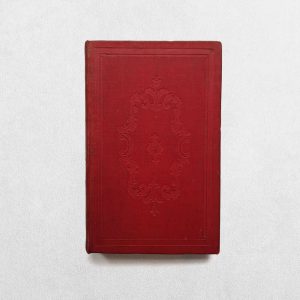
Sheikh Bab El Ehr The Rebel Leader – Figurines Tintin La Collection Officielle – 106 – Le Cheikh Bab El Ehr L’Insurgé

Hergé & Editions Moulinsart

£100.00

Availability: In stock

Product Description

Sheikh Bab El Ehr The Rebel Leader – Figurines Tintin La Collection Officielle – 106 – Le Cheikh Bab El Ehr L’Insurgé

Author: Hergé & Editions Moulinsart
Price: £100.00
Publisher: Editions Moulinsart
Publication date: 2015
Format: Original pictorial boards with passport and figurine
Condition: In near fine condition
Illustrations: Illustrated throughout

Description:

Original pictorial boards. Includes passport loosely inserted. Text in French. Includes the accompanying figurine. One from the collection of 111 books and figurines. Very slight wear. In very near fine, clean condition overall.

Sheikh Bab El Ehr The Rebel Leader: A Short Biography

Sheikh Bab El Ehr is a pivotal political and military figure in The Adventures of Tintin, appearing in Land of Black Gold (Tintin au pays de l’or noir).
He serves as the principal rival to Emir Mohammed Ben Kalish Ezab, ruler of the fictional Middle Eastern state of Khemed.

Through Bab El Ehr, Hergé explores the interplay of politics, oil, and foreign manipulation in the modern Middle East. Although he is presented as a “rebel,” his rebellion is part of a much broader web of international intrigue, making him one of Hergé’s more politically charged characters.

Character Overview

AttributeDescription
NameSheikh Bab El Ehr
Title in FrenchLe cheikh Bab El Ehr, l’insurgé
English Translation“Sheikh Bab El Ehr, the rebel leader”
First AppearanceLand of Black Gold (Tintin au pays de l’or noir, 1939; revised 1950 and 1971*)
NationalityKhemedian (fictional Arab state)
RoleRebel leader and political rival to Emir Ben Kalish Ezab
Personality TraitsProud, strategic, politically ambitious, pragmatic rather than ideological
SymbolismThe fragmentation of post-colonial power and the moral ambiguities of modern geopolitics

Historical and Political Context

When Hergé first conceived Land of Black Gold, Europe was on the brink of the Second World War and the Middle East was already a region of strategic interest for its oil reserves.
In the story, Khemed stands as a fictional composite of Arab states torn between tradition, modernity, and external influence. Sheikh Bab El Ehr leads an insurrection against Emir Ben Kalish Ezab, seeking to overthrow his government. Both sides are supported and manipulated by foreign powers, particularly by Dr Müller, who uses the conflict to destabilise the region for his own ends. The political backdrop — oil, espionage, and international interference — reflects the real-world tensions of the 1930s and 1950s, when Western interests vied for control of Middle Eastern resources.

Characterisation

Hergé portrays Sheikh Bab El Ehr not as a fanatic but as a charismatic tribal leader, intelligent and determined, yet vulnerable to outside manipulation.
He is an ambitious patriot who believes his leadership will bring strength and unity to Khemed, but his rebellion quickly becomes entangled in foreign schemes that reduce him to a pawn.

Key Traits

  • Commanding Presence: As a desert chieftain, Bab El Ehr embodies authority and confidence.
  • Pragmatic Intelligence: He forms alliances when advantageous but lacks full awareness of the forces controlling him.
  • Courage and Pride: His defiance of the Emir is driven as much by pride as by conviction.
  • Moral Ambiguity: Neither hero nor villain, he represents the grey zone between rebellion and exploitation.

Hergé’s more mature redrawn version softens the early caricature, lending the Sheikh greater dignity and realism, consistent with the author’s evolving respect for other cultures.

Narrative Function

Bab El Ehr’s rebellion provides the political setting for Land of Black Gold. Tintin’s mission to investigate sabotage in global petrol supplies brings him into the heart of this conflict, where he is captured and nearly executed by the Sheikh’s men before proving his innocence. The Sheikh’s camp scenes provide both tension and humour: his suspicion of Tintin contrasts with his later hospitality once misunderstandings are cleared up. In this way, Bab El Ehr functions as both antagonist and ally, a dynamic Hergé often employs to humanise his “villains.”

Thematic Significance

ThemeInterpretation
Colonial IntrigueThe Sheikh’s rebellion mirrors how local leaders become entangled in the ambitions of Western powers.
Oil and PowerHis uprising, though seemingly nationalistic, is exploited by corporations and secret agents for economic gain.
Ambiguity of MoralityBab El Ehr’s cause is justifiable in principle but corrupted in practice — a reflection of Hergé’s more adult political outlook.
Cultural IdentityHis traditional dress and authority evoke an ancient order threatened by modernity and greed.

The character thereby becomes a lens through which Hergé critiques both colonial interference and the naïve romanticisation of “noble rebels” in popular adventure fiction.

Relationship with Emir Ben Kalish Ezab

Sheikh Bab El Ehr’s rivalry with Emir Ben Kalish Ezab is central to the political landscape of Khemed. Where the Emir represents continuity, legitimate rule, and a degree of openness to progress, Bab El Ehr symbolises resistance, pride, and the power of tradition. Their opposition is not purely personal — it reflects a clash of ideologies within Khemed itself: modernisation versus conservatism, diplomacy versus militancy. However, by the end of the story, Tintin’s intervention restores balance, and the Emir’s authority is re-established, implying that reconciliation is preferable to perpetual revolt.

Artistic Depiction

Hergé’s illustration of Sheikh Bab El Ehr is marked by his signature ligne claire style, combining clarity of line with ethnographic detail.

  • Appearance: Tall, bearded, dressed in flowing desert robes and a keffiyeh.
  • Expression: Proud and commanding, occasionally suspicious.
  • Setting: His scenes are framed against arid landscapes and tents, reinforcing both his authority and his isolation.

By the 1971 edition, Hergé and his studio had reworked the artwork to remove caricatural exaggerations, giving Bab El Ehr a more human and dignified bearing consistent with the series’ later realism.

Symbolic Reading

Sheikh Bab El Ehr can be interpreted as a symbol of rebellion compromised by global politics. Though his motives are arguably patriotic, he is manipulated by external agents — notably Dr Müller — and by Western arms dealers. His rebellion, therefore, serves as a warning about how idealism can be subverted by greed and propaganda. In moral terms, he is closer to a tragic figure than a villain — a man caught between personal ambition, cultural pride, and the machinery of international power.

Summary

AspectDescription
NameSheikh Bab El Ehr
RoleRebel leader of Khemed
First AppearanceLand of Black Gold (1939–71)
PersonalityProud, ambitious, pragmatic, politically manipulated
SymbolismThe corrupted idealist; the political pawn of larger powers
RelationshipRival to Emir Ben Kalish Ezab; opponent turned indirect ally of Tintin
Visual PortrayalDignified desert chieftain in traditional dress
Narrative FunctionCatalyst for the story’s political conflict and backdrop for Tintin’s investigation

Conclusion

Sheikh Bab El Ehr, the rebel leader, represents one of Hergé’s more sophisticated political characterisations.
While his rebellion appears at first to mark him as the story’s antagonist, he ultimately emerges as a victim of circumstance and manipulation, emblematic of how small nations and local leaders were entangled in the geopolitics of oil and power.

Hergé’s treatment of Bab El Ehr demonstrates his shift from caricature to complexity, turning a potential stereotype into a figure of tragic realism.
Proud, misguided, and ultimately sympathetic, the Sheikh stands as a reminder that in Hergé’s later work, conflict is rarely simple and villainy seldom absolute.

Why Buy from Us?

At Hornseys, we are committed to offering items that meet the highest standards of quality and authenticity. Our collection of objects and rare books are carefully curated to ensure each edition is a valuable piece of bibliographical history. Here’s what sets us apart:

  • Authenticity and Provenance: Each item is meticulously researched and verified for authenticity and collation.
  • Expert Curation: Our selection process focuses on significance, condition, and rarity, resulting in a collection that is both diverse and distinguished.
  • Customer Satisfaction: We aim to provide an exceptional customer experience, from detailed descriptions to secure and prompt delivery of your purchase.
  • Returns Policy: We offer an unconditional guarantee on every item. If you wish to return an item, it may be sent back to us within fourteen days of receipt. Please notify us in advance if you wish to do so. The item must be returned in the same condition as it was sent for a full refund.

Cataloguer: Daniel Hornsey

Daniel Hornsey has specialised in fine and rare books, ephemera, and collectors’ editions for over thirty years. As a long-standing member of the antiquarian book trade, he has advised private collectors, curated catalogues, and sourced works for leading dealers, libraries and institutions across the world.

Hornseys’ exhibit regularly at book and map fairs in London and throughout the UK and are members of the Provincial Booksellers Fairs Association, the PBFA.

His fascination with Hergé’s work — especially ‘The Adventures of Tintin’ — began in childhood. Daniel recalls reading Tintin in original European editions and quickly recognising that these were not merely children’s books, but finely illustrated narratives crafted with artistic depth and wit.

As noted by the Musée Hergé in Louvain-la-Neuve, Hergé’s ‘ligne claire’ style has influenced generations of European comic artists and his original drawings and paintings command very high prices with his painting of ‘The Blue Lotus’ jar fetching £2.8m at auction in 2021.

By presenting these works through Hornseys’, he hopes to contribute to the continued appreciation of one of the 20th century’s most influential illustrators, helping new generations discover the artistry and legacy of Hergé.

You may also like…